
Dmitry Glukhovsky Books in Order
This page lists Dmitry Glukhovsky’s books in order, with summaries, series background, and where to start with his dystopian fiction.
Last updated:
As an Amazon Associate, we earn from qualifying purchases (at no extra cost to you).
Dmitry Glukhovsky books in publication order
6 books

Metro 2023: The Epilogue
by Dmitry Glukhovsky
2002
This short Metro companion piece revisits Glukhovsky’s underground world as a coda to the original story. It works best after Metro 2033, adding another glimpse of life, memory, and unease in the tunnels.
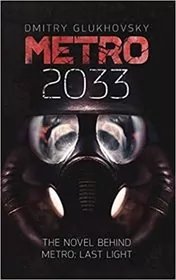
Metro 2033
by Dmitry Glukhovsky
2002
After nuclear war drives Moscow’s survivors underground, young Artyom leaves VDNKh to warn the Metro of a strange new threat. His journey turns the subway into a maze of fear, politics, faith, and hard choices.
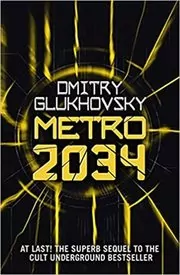
Metro 2034
by Dmitry Glukhovsky
2009
With Sevastopolskaya cut off from the rest of the Metro, Hunter, Homer, and Sasha move through poisoned tunnels in search of answers. The threat outside is real, but survival changes people too.
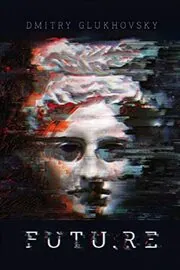
FUTU.RE
by Dmitry Glukhovsky
2013
In a future where aging has been stopped, humanity is packed into towers and childbirth carries a terrible price. Yan, an enforcer of the immortality laws, begins a mission that shakes the life he was trained to protect.
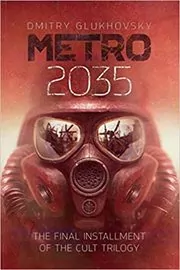
Metro 2035
by Dmitry Glukhovsky
2015
Artyom returns to the tunnels still convinced life exists beyond Moscow and that the surface can be reclaimed. As he hunts for proof, he runs into secrets powerful people have built their world to protect.

The Outpost
by Dmitry Glukhovsky
2024
After civil war shrinks Russia into the Moscow Empire, Yegor grows up guarding a bridge over the poisoned Volga. When someone arrives from the forbidden far bank, the quiet border post begins to unravel.
Where to start with Dmitry Glukhovsky
If you want the core Metro story: Metro 2033 → Metro 2034 → Metro 2035.
If you prefer a shorter companion piece: Metro 2023: The Epilogue after Metro 2033.
If you want big-idea dystopian science fiction: FUTU.RE.
If you want a newer post-apocalyptic border story: The Outpost.
Dmitry Glukhovsky sub-series and character series
Standalone Dmitry Glukhovsky books
Author bio
Dmitry Glukhovsky was born in Moscow on June 12, 1979, when the city was still part of the Soviet Union. He grew up riding the Moscow Metro, and those long trips through stations built deep under the city left him with an idea he could not quite shake: what if the tunnels really did become a shelter after the end of the world?
He started young.
Glukhovsky began writing Metro 2033 when he was 18. Before it became a printed novel, he put it online for free in 2002 and let readers respond as the story found its shape. The print edition followed in Russia in 2005, and the book later reached English-language readers and a much wider audience through the Metro video games.
His path to fiction ran through journalism. Glukhovsky studied journalism and international relations at the Hebrew University of Jerusalem, learned Hebrew while living in Israel, and later worked for news outlets including Euronews, Deutsche Welle, RT in its early years, and other broadcasters. That reporter background shows in his fiction, where ruined systems, state power, propaganda, and ordinary fear are usually close to the surface.
The tunnels made him famous, but they are not his only room.
The Metro novels, Metro 2033, Metro 2034, and Metro 2035, follow survivors of nuclear war inside the Moscow underground. Readers often come for the mutants, weapons, and station politics, then stay for the questions underneath: how people build myths, how communities turn cruel, and how hard it is to stay human when fear becomes a daily habit.
Glukhovsky has kept testing other versions of the same pressure. FUTU.RE imagines a Europe where aging has been beaten and childbirth has become a crime against population control. Text leaves the far future behind for a tense, present-day crime story about a young man crushed by a corrupt police system. The Outpost returns to post-apocalyptic ground, this time on the poisoned Volga, with an empire trying to guard its border against what it would rather not know.
His work often mixes science fiction with political unease. The settings can be tunnels, giant future towers, or border posts, but the question is usually simple: what happens to truth when people are trapped, hungry, watched, or lied to for too long?
Glukhovsky has also written for games, film, and theater, and his fiction has become a transmedia world rather than just a shelf of books. In recent years he has been open in his criticism of Russia’s war against Ukraine and the Russian political system. In 2023 a Moscow court sentenced him in absentia to eight years in prison, and he now lives in exile in Europe.
He still writes from the edge of the storm.






Edited by
Software engineer whose passion for tracking book recommendations from podcasts inspired the creation of MRB.
Lead investor at 3one4 Capital whose startup expertise and love for books helped shape MRB and its growth.
Comments
Did we miss something? Have feedback?
Help us improve this page by sharing your thoughts