
Metro Books in Order
Part ofDmitry Glukhovsky Books in OrderThis page lists the Metro books by Dmitry Glukhovsky in order, with summaries, reading order, series background, and where to start.
Last updated:
As an Amazon Associate, we earn from qualifying purchases (at no extra cost to you).
Metro books in publication order
4 books

Metro 2023: The Epilogue
by Dmitry Glukhovsky
2002
This short Metro companion piece revisits Glukhovsky’s underground world as a coda to the original story. It works best after Metro 2033, adding another glimpse of life, memory, and unease in the tunnels.
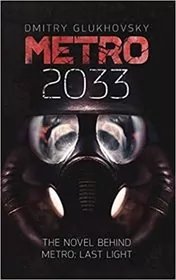
Metro 2033
by Dmitry Glukhovsky
2002
After nuclear war drives Moscow’s survivors underground, young Artyom leaves VDNKh to warn the Metro of a strange new threat. His journey turns the subway into a maze of fear, politics, faith, and hard choices.
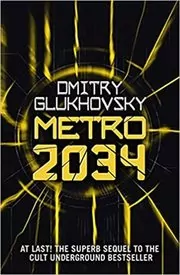
Metro 2034
by Dmitry Glukhovsky
2009
With Sevastopolskaya cut off from the rest of the Metro, Hunter, Homer, and Sasha move through poisoned tunnels in search of answers. The threat outside is real, but survival changes people too.
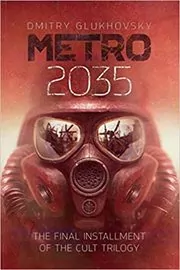
Metro 2035
by Dmitry Glukhovsky
2015
Artyom returns to the tunnels still convinced life exists beyond Moscow and that the surface can be reclaimed. As he hunts for proof, he runs into secrets powerful people have built their world to protect.
Metro books in chronological order
Series background & context
The Metro series begins with a simple nightmare: a nuclear war has ruined the surface, and the people who survived in Moscow now live in the subway system beneath the city. Stations become towns. Lines become roads. Tunnels become borders, battlefields, and ghost stories.
Metro 2033 follows Artyom, a young man from VDNKh station who is sent across the underground to warn others about a threat closing in on his home. The journey gives the series its shape. Every stop has its own rules, fears, leaders, and myths, so the Metro feels less like one shelter and more like a broken country squeezed under the streets.
It is dark, but it is not only monster fiction.
Glukhovsky uses the ruined Metro to talk about how people organize themselves when the old world disappears. Some stations become markets. Some turn into military outposts. Some rebuild old ideologies in miniature. That is a big part of the tension: Artyom and the later characters are not just dodging mutants and radiation, they are moving through human systems that can be just as dangerous.
Metro 2034 shifts the focus to Hunter, Homer, and Sasha after a station is cut off from the rest of the network. It is more of a psychological survival story, with less of Artyom’s coming-of-age sweep and more attention to memory, violence, and the urge to turn suffering into legend. Metro 2035 brings Artyom back as he keeps searching for proof that humanity can leave the tunnels and reconnect with the wider world.
The shorter Metro 2023: The Epilogue works best as a companion piece once you already know the first book’s bleak moral terrain. The wider Metro world is also tied closely to the video games, which helped carry Glukhovsky’s setting to readers and players outside Russia. The books and games do not always tell the same story in the same way, so book readers should treat the novels as their own path through the world.
Start with Metro 2033. It gives you the map, the mood, and Artyom’s reason for walking into the dark. After that, Metro 2034 and Metro 2035 broaden the question at the center of the series: if people survive the end of the world, what kind of world do they build next?















Edited by
Software engineer whose passion for tracking book recommendations from podcasts inspired the creation of MRB.
Lead investor at 3one4 Capital whose startup expertise and love for books helped shape MRB and its growth.
Comments
Did we miss something? Have feedback?
Help us improve this page by sharing your thoughts