
Demonwar Saga Books in Order
Part ofRaymond E Feist Books in OrderExplore the Demonwar Saga by Raymond E. Feist in order, with summaries, reading order notes, and background on Pug’s battle against demon hordes and the returning taredhel elves.
Last updated:
As an Amazon Associate, we earn from qualifying purchases (at no extra cost to you).
Demonwar Saga books in publication order
2 books
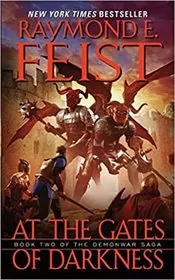
At the Gates of Darkness
by Raymond E. Feist
2009
In the wake of the taredhel’s arrival, Pug leads the battered remnants of the Conclave of Shadows against the magician Belasco and the demon forces he serves. From hidden lairs to hellish realms, they must strike before a full demon horde can pour into Midkemia and finish what others began.

Rides a Dread Legion
by Raymond E. Feist
2009
A lost race of star‑traveling elves, the taredhel, flee a demon horde and arrive on Midkemia convinced it is their ancestral home. Arrogant and desperate, they threaten the Kingdom even as the demons hunting them close in, forcing Pug and the Conclave to confront a new, two‑headed danger.
Demonwar Saga books in chronological order
Series background & context
The Demonwar Saga follows directly on from the events of Darkwar, bringing the long‑rumored demon threat fully into the open. While earlier books brushed up against demonic forces, here they become the primary enemy—and they don’t arrive alone.
The first volume, Rides a Dread Legion, opens ten years after the cataclysmic ending of Wrath of a Mad God. Midkemia is still nursing its wounds when a new group appears: the taredhel, or “people of the stars,” an elven race who have crossed vast distances fleeing a demon horde that destroyed their own empire. Convinced that Midkemia is their ancient home, they arrive with a sense of entitlement and a willingness to push aside anyone in their way.
Their arrival presents a double problem. On one hand, the taredhel are arrogant, dangerous and backed into a corner, which makes them volatile allies at best. On the other, the demons pursuing them are relentless, and their numbers and power echo old prophecies about world‑ending wars. Pug and the remnants of the Conclave of Shadows have to manage both: negotiating with proud refugees while preparing for a foe that feeds on devastation.
At the Gates of Darkness continues that story as the last threads of the Conclave regroup after terrible personal losses. Pug carries the weight of a prophecy that he will outlive everyone he loves, even as he and his allies hunt the sorcerer Belasco and try to cut off the demon invasion at its source. The battles range from hidden lairs and mountain passes to confrontations in demon‑tainted realms where the rules of magic and even reality skew against them.
Compared to the cosmic scale of Darkwar, the Demonwar Saga feels tighter and more focused, but the emotional stakes are high. Long‑standing characters suffer and change; younger figures must decide what kind of world they want to inherit. There’s a strong sense that every victory is buying time rather than delivering safety, which adds urgency to even smaller skirmishes.
For readers, these two books act as both climax and conduit. They pay off years of hints about demons and the Void, and they point directly toward the final act of the Riftwar Cycle in the Chaoswar Saga. Along the way, they showcase Feist’s blend of personal grief, battlefield heroism and wry humor in the face of impossible odds.
If you want to see Midkemia pushed to its breaking point by enemies from outside reality itself, the Demonwar Saga is where that pressure is at its most intense.









Edited by
Software engineer whose passion for tracking book recommendations from podcasts inspired the creation of MRB.
Lead investor at 3one4 Capital whose startup expertise and love for books helped shape MRB and its growth.
Comments
Did we miss something? Have feedback?
Help us improve this page by sharing your thoughts