
David Zucchino Books in Order
Explore David Zucchino's books in order, with quick summaries, a short biography, and clear guidance on where to start with his reported nonfiction.
Last updated:
As an Amazon Associate, we earn from qualifying purchases (at no extra cost to you).
David Zucchino books in publication order
3 books
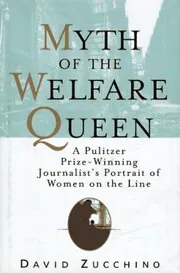
The Myth of the Welfare Queen
by David Zucchino
1997
Zucchino spends months with Odessa Williams and Cheri Honkala, two Philadelphia mothers navigating poverty, welfare rules, and impossible choices. The book pushes past slogans to show how families survive, organize, and keep going.
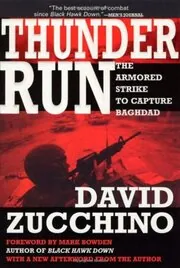
Thunder Run
by David Zucchino
2004
This close-up account follows the U.S. Army's 2nd Brigade, 3rd Infantry Division, during the armored push into Baghdad in 2003. Zucchino captures the speed, confusion, and human cost of a battle that changed the war.
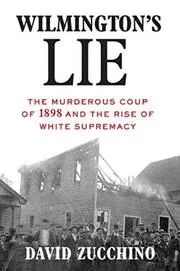
Wilmington's Lie
by David Zucchino
2020
Zucchino reconstructs the 1898 white supremacist coup in Wilmington, North Carolina, showing how propaganda, terror, and political violence destroyed a multiracial local government. It's a deeply reported history of the lie that followed.
Where to start with David Zucchino
If you want the essential book: Wilmington's Lie
If you want frontline combat reporting: Thunder Run
If you want social reporting at street level: The Myth of the Welfare Queen
If you want to read in publication order: The Myth of the Welfare Queen → Thunder Run → Wilmington's Lie
David Zucchino collections, short stories, and related book types
Non-Fiction
Author bio
David Zucchino was born in McPherson, Kansas, in 1951, and grew up in a military family that spent years on bases in Germany before settling in Fayetteville, North Carolina. Those North Carolina roots stayed with him. Much later, they would connect directly to Wilmington's Lie, his book about the 1898 white supremacist coup in Wilmington.
He knew early on what kind of work he wanted to do. By high school in Fayetteville, he was already interested in becoming a foreign correspondent. After graduating from the University of North Carolina at Chapel Hill in 1973, he started at The News & Observer in Raleigh. From there he moved to the Detroit Free Press, then to The Philadelphia Inquirer, where he spent two decades in a wide range of reporting and editing roles.
That long run at the Inquirer gave him room to do many kinds of journalism. He worked as a national correspondent, projects writer, foreign editor, and bureau chief in Nairobi, Johannesburg, and Beirut. Later, at the Los Angeles Times, he continued as a national and foreign correspondent. Across those jobs he reported from more than three dozen countries, including South Africa, Iraq, Libya, Afghanistan, Kenya, Lebanon, Israel, and the West Bank.
In 1989, his reporting from apartheid South Africa won the Pulitzer Prize for feature writing.
His books grew naturally out of that kind of close reporting. The Myth of the Welfare Queen follows two Philadelphia mothers, Odessa Williams and Cheri Honkala, through the daily pressure of poverty, housing trouble, childcare, and welfare rules. It pushes past easy political talking points and shows what survival looks like when every small decision carries a cost.
Thunder Run turns to the Iraq War and the U.S. Army's armored drive into Baghdad in 2003. Zucchino stays close to soldiers and commanders as the battle unfolds, which gives the book a very immediate feel. Readers who like it often respond to that sense of physical detail, the speed, the dust, the confusion, and the way big military decisions land on individual people.
He writes about power, but he usually shows it through people living inside its consequences.
That is a big part of what makes Wilmington's Lie work. The book reconstructs how white supremacists used propaganda, intimidation, and violence to overthrow an elected multiracial government in 1898. Zucchino built it from newspapers, letters, diaries, and official records, but it never feels dry. It moves through the lives of editors, politicians, workers, and families caught up in the violence and the long lie that followed. In 2021, the book won the Pulitzer Prize for General Nonfiction, making him a two-time Pulitzer winner.
Across all three books, a few patterns keep returning. He is drawn to the gap between public myth and lived reality, to institutions under strain, and to the voices of people who are usually talked about more than heard. Even when the subject is war or political violence, he keeps the human scale in view.
In recent years he has continued reporting as a contributing writer for The New York Times after leaving the Los Angeles Times. He still seems drawn to places where history is moving fast and the facts are hard won. That patient, on-the-ground approach is what ties his career and his books together.











Edited by
Software engineer whose passion for tracking book recommendations from podcasts inspired the creation of MRB.
Lead investor at 3one4 Capital whose startup expertise and love for books helped shape MRB and its growth.
Comments
Did we miss something? Have feedback?
Help us improve this page by sharing your thoughts