
Munro Leaf Books in Order
Browse Munro Leaf books in order, with short summaries, notes on his best-known titles, and simple tips on where to start reading his work today.
Last updated:
As an Amazon Associate, we earn from qualifying purchases (at no extra cost to you).
Munro Leaf books in publication order
24 books
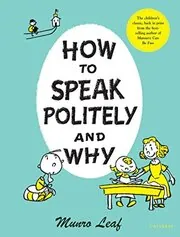
How to Speak Politely and Why
by Munro Leaf
1934
A playful guide to speaking clearly and politely, with simple lessons on grammar, word choice, and everyday usage. Leaf's stick figures turn rules about can, may, and better speech into something light and readable.

Robert Francis Weatherbee
by Munro Leaf
1935
Robert Francis Weatherbee refuses to read, write, or count, and he is sure that suits him just fine. Then everyday life shows him how quickly ignorance becomes a real problem.
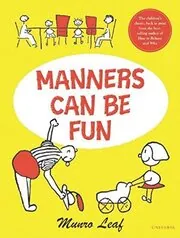
Manners Can Be Fun
by Munro Leaf
1936
Leaf explains manners as the art of living pleasantly with other people. Using plain language and funny drawings, he walks kids through courtesy at home, on the playground, and out in the world.
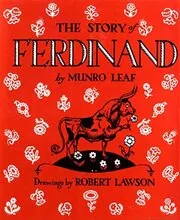
The Story of Ferdinand
by Munro Leaf
1936
Ferdinand is a gentle young bull who would rather sit under a cork tree and smell flowers than fight. One bee sting sends him to the bullring, where his quiet nature becomes the whole point of the story.
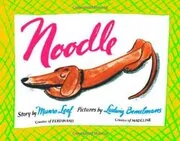
Noodle
by Munro Leaf
1937
Noodle is a dachshund who wishes he were built differently, so he could dig for bones with ease. Leaf and Ludwig Bemelmans turn that simple wish into a funny, odd little animal tale.
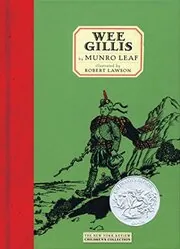
Wee Gillis
by Munro Leaf
1938
Wee Gillis spends half the year with his Highland relatives and half with his Lowland family in Scotland. When both sides want him to choose, he has to find a way of being fully himself.
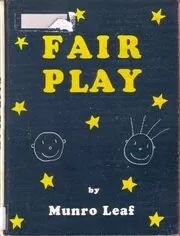
Fair Play
by Munro Leaf
1939
This plainspoken picture book is really about good citizenship in everyday life. Leaf uses small scenes of sharing, fairness, and public behavior to show why a world of only 'just me' would be a mess.
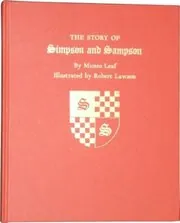
The Story of Simpson and Sampson
by Munro Leaf
1941
Simpson and Sampson are twin brothers, one stubbornly good and the other stubbornly bad, which makes home life confusing from the start. As they grow up and clash, Leaf turns the joke into a sly fable about opposites.
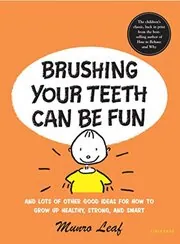
Brushing Your Teeth Can Be Fun
by Munro Leaf
1943
Leaf turns toothbrushing and basic health habits into a cheerful lesson instead of a chore. It is a simple, practical reminder that growing up strong and healthy starts with small things you do every day.
Boo, Who Used To Be Scared Of The Dark
by Munro Leaf
1948
Boo is afraid of almost everything, especially the dark. With help from a talkative cat named Alexander, he learns that courage can begin with looking at fear a little more plainly.
Sam and the Super
by Munro Leaf
1948
This lesser-known Leaf story pairs Sam with 'the super' in a quick, comic picture book. As with many of Leaf's stories, the fun comes from watching an everyday situation grow a little larger than life.
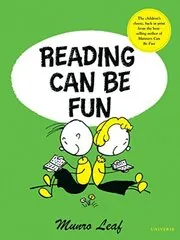
Reading Can Be Fun
by Munro Leaf
1953
This brisk little book makes the case for reading by showing how words, letters, and books open up the world. Leaf treats literacy as an adventure, not a lecture, and that is the charm.
Safety Can Be Fun
by Munro Leaf
1958
Leaf teaches basic safety through brisk examples and funny drawings that make the lesson easy to remember. It is aimed at young children, and it keeps the focus on simple habits that prevent accidents.
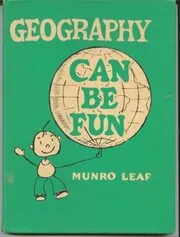
Geography Can Be Fun
by Munro Leaf
1962
Leaf takes big ideas about places, maps, and how people live around the world and breaks them into easy, child-sized pieces. It is a friendly introduction to geography with his usual plainspoken humor.
The Boy Who would Not go to School
by Munro Leaf
1963
In this edition of the Robert Francis Weatherbee story, a boy digs in his heels and refuses school. Leaf follows the joke to its practical end, showing how hard life gets when you cannot read, write, or count.
Who Cares? I Do
by Munro Leaf
1971
Leaf takes on litter, damage, and everyday carelessness, asking what happens when nobody looks after the world around them. It is a direct, practical nudge toward responsibility for shared spaces.
Metric Can Be Fun!
by Munro Leaf
1976
A light introduction to the metric system that uses everyday examples to make unfamiliar measurements less mysterious. Leaf's goal is simple, to show kids that meters, liters, and grams need not feel intimidating.
Gordon the Goat
by Munro Leaf
1988
Gordon is the kind of goat who never thinks much about what he is doing or why. Then a tornado shakes up his easygoing life, and the joke turns into a small lesson about paying attention.
Four-And-Twenty Watchbirds
by Munro Leaf
1990
In these Watchbird sketches, sharp-eyed little birds catch children being selfish, careless, or rude. The jokes are quick, the targets are familiar, and the moral lands with a wink instead of a sermon.
Being An American Can Be Fun
by Munro Leaf
2000
Leaf explains citizenship and the basics of American government in clear language children can follow. It is a civics primer built to make public life feel understandable, practical, and worth caring about.
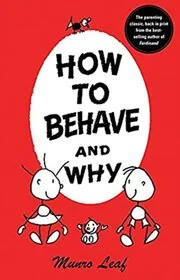
How to Behave and Why
by Munro Leaf
2002
Instead of handing out rules, Leaf asks what helps people live together happily. His answer is four sturdy ideas, honesty, fairness, strength, and wisdom, explained with humor and surprising directness.
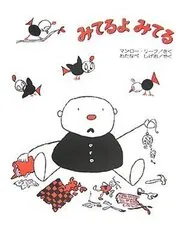
Flock of Watchbirds
by Munro Leaf
2007
Another collection from Leaf's Watchbirds series, this book turns bad habits and everyday misbehavior into short visual jokes. Each Watchbird spots what people are doing wrong, and the humor does the rest.
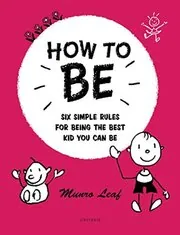
How to Be: Six Simple Rules for Being the Best Kid You Can Be
by Munro Leaf
2015
This later collection gathers short selections from Leaf's best-known guides to growing up well. It brings together his advice on behavior, speech, reading, and health in one easy entry point.
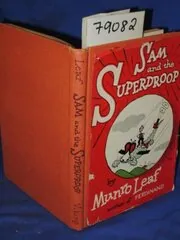
Sam and the Superdroop
by Munro Leaf
2020
Sam comes down with 'comic-bookitis' and gets swept into the company of Superdroop, a hero who makes adventure look ridiculous. Leaf uses the joke to spoof comic-book excess and steer Sam back toward real books.
Where to start with Munro Leaf
If you want the classic: The Story of Ferdinand → Wee Gillis
If you like gentle animal stories: Noodle → The Story of Ferdinand → Gordon the Goat
If you want his clearest behavior guides: How to Behave and Why → Manners Can Be Fun → How to Speak Politely and Why
If you want practical school and life lessons: Reading Can Be Fun → Brushing Your Teeth Can Be Fun → Being An American Can Be Fun
If you want his sharper social humor: Fair Play → Flock of Watchbirds → Four-And-Twenty Watchbirds
Munro Leaf sub-series and character series
Munro Leaf collections, short stories, and related book types
Children's Books
Standalone Munro Leaf books
Author bio
Munro Leaf was born in Hamilton, Maryland, in 1905 and grew up in Washington, D.C. He came out of a practical, workaday world, and that plainspoken streak never left him. Even at his most fanciful, his books sound like someone trying to explain things clearly to a child sitting right across from him.
He studied at the University of Maryland, where he played lacrosse and served as class treasurer, then earned a master's degree in English from Harvard. Before he wrote full-time, he taught English, moved to New York with his wife Margaret, and worked in publishing, first as a manuscript reader and later at F.A. Stokes, where he became an editor and director. He stayed there until leaving to write full-time in 1939.
He liked saying things simply.
That habit showed up early in Grammar Can Be Fun, the first of the books that turned school subjects and everyday behavior into something lighter and easier to approach. Later titles like Manners Can Be Fun, How to Behave and Why, How to Speak Politely and Why, and Reading Can Be Fun kept the same promise: talk to children directly, keep the sentences clear, and do not pretend a lesson has to be dull. Leaf's own scratchy stick figures helped, too. They made the books feel homemade, funny, and unintimidating.
A lot of Leaf's work circles around the same big question, just asked in different ways: how do people live decently with one another? Sometimes he answered it with manners or grammar. Sometimes he answered it with citizenship, health, or school life. Even the books that look like simple jokes usually have a sturdy moral center under the humor. He was not trying to impress adults. He was trying to make the reasons behind good behavior feel practical.
His best-known book is The Story of Ferdinand, published in 1936 and illustrated by his friend Robert Lawson. On the surface it is very small, a bull in Spain would rather smell flowers than fight. That small idea traveled a very long way. The book drew political controversy overseas, was adapted into Disney's 1938 short Ferdinand the Bull, and stayed in print while many louder books faded away.
Leaf could be funny without making a lot of noise.
He and Lawson worked together again on Wee Gillis, about a Scottish boy pulled between his Highland and Lowland relatives. Lawson's art for the book received a Caldecott Honor, and readers still like it for many of the same reasons they like Ferdinand: it is gentle, a little odd, and very sure of itself. Another favorite, Noodle, illustrated by Ludwig Bemelmans, shows Leaf's taste for offbeat animal comedy and characters who solve problems in their own crooked way.
He did not stay in one lane for long. He wrote picture books, behavior guides, civic primers, and little social satires. Books like Fair Play, Being An American Can Be Fun, and the Watchbirds collections all show the same interest in how communities work, and how quickly they fall apart when nobody thinks past himself. He could move from a story about a flower-loving bull to a lesson on brushing your teeth without changing his voice very much.
A large part of Leaf's adult life happened outside children's publishing. During World War II he served in the U.S. Army and collaborated with Theodor Geisel, later known as Dr. Seuss, on the malaria pamphlet This Is Ann. After the war he continued doing government work, including State Department and Foreign Service work, and later traveled with Margaret on lecture tours through Europe and Asia. He also created the Watchbirds cartoons, short pieces that poked fun at bad behavior with brisk visual jokes. When he spoke to schoolchildren, he often sketched as he talked, and he liked to make fun of his own artistic skill. Leaf died in Garrett Park, Maryland, in 1976. What lasts is the feeling that he never wanted to sound important. He just wanted to make things clear, and children have a way of recognizing that.





Edited by
Software engineer whose passion for tracking book recommendations from podcasts inspired the creation of MRB.
Lead investor at 3one4 Capital whose startup expertise and love for books helped shape MRB and its growth.
Comments
Did we miss something? Have feedback?
Help us improve this page by sharing your thoughts