
David Koepp Books in Order
This page shows David Koepp books in order, with quick summaries, where to start, and reading notes for his fast, high-concept suspense stories.
Last updated:
As an Amazon Associate, we earn from qualifying purchases (at no extra cost to you).
David Koepp books in publication order
3 books
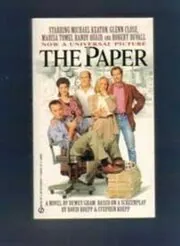
The Paper
by David Koepp
1994
During one chaotic day at a New York tabloid, metro editor Henry Hackett chases a story that could free two wrongly accused teens. Deadlines, office politics, and family pressure all hit at once.
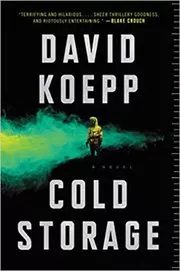
Cold Storage
by David Koepp
2019
A retired bioterror operative races to Kansas when a deadly, fast-mutating fungus escapes from a buried military site. With help from two shocked security guards, he has one night to stop an extinction-level outbreak.
Recommended by
1 person Stephen King recommended this book
Stephen King
"Gruesome, terrifying, pulse-pounding, and also pretty goddam funny in places." - Stephen King
Stephen King's recommendation of this book
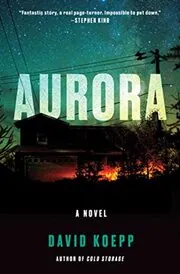
Aurora
by David Koepp
2022
A solar storm knocks out power across the world, and life shrinks to whatever one neighborhood can defend and share. Aubrey Wheeler and her estranged brother Thom face the blackout from very different worlds, with family tensions rising alongside the danger.
Where to start with David Koepp
If you want the best entry point: Cold Storage → Aurora
If you like large-scale disaster thrillers with family stakes: Aurora
If you want a sharp, fast newsroom story: The Paper
Standalone David Koepp books
Author bio
David Koepp was born in Pewaukee, Wisconsin, and grew up in small-town southeastern Wisconsin. Long before Hollywood, he was the kid writing short stories, watching old movies on local TV, and paying close attention to how scenes worked. You can feel that early movie obsession all through his later work.
Story came first for him, and film gave it shape.
After high school he spent time in the Midwest studying acting, but writing kept pulling harder. At the University of Wisconsin-Madison he shifted from theater toward playwriting and then screenwriting, and he later transferred to UCLA's film school. He has talked about those years as a real turning point, not just because of classes, but because he found collaborators, readers, and a community of people who took movies as seriously as he did.
His early breaks came step by step. He wrote with Martin Donovan on Apartment Zero, sold scripts like Bad Influence, and built a reputation as someone who could handle a sharp premise and move a story quickly. Then came Jurassic Park, which made him a major studio screenwriter while he was still young, and opened the door to a long run of big, very different projects.
That run is unusually broad. Koepp's credits include Death Becomes Her, Carlito's Way, The Paper, Mission: Impossible, Spider-Man, Panic Room, and War of the Worlds, and he has also directed films such as Stir of Echoes, Secret Window, and Premium Rush. What ties that body of work together is not one genre, but a feel for clean setups, mounting pressure, and characters who have to make decisions before they are ready.
He has always seemed drawn to pressure cookers.
A Koepp story often begins with a system that looks sturdy right up until it fails. Sometimes that system is a newsroom, sometimes a house, sometimes a security apparatus, and sometimes the power grid for half the planet. He likes deadlines, professional competence, and the moment when expertise meets chaos. He also likes a little bite in the tone. Even at his darkest, there is often a dry joke, a practical detail, or a slightly frazzled person trying to keep the whole thing from flying apart.
That sensibility carried neatly into fiction. His first novel, Cold Storage, became a biotech thriller about a deadly organism that escapes containment and forces a few ordinary people into a very bad night. Koepp has said that writing prose gave him freedoms screenplays do not, especially the ability to spend more time inside a character's thoughts and to linger over description. His second novel, Aurora, uses a global blackout as the big premise, but keeps the real drama close to home, with family tension, neighborhood survival, and hard local choices.
The Paper fits neatly into his larger pattern too, with its one-day newsroom rush and constant deadline pressure. He is interested in working people under strain, in institutions that wobble when the stakes rise, and in the thin line between competence and panic. Even when the setup gets huge, the stories stay personal.
Now he lives in New York City with his wife and children, and he continues to move between screen work and prose. The through line remains easy to spot: smart premises, tight clocks, strong mechanics, and people trying to stay decent when the machinery around them starts to fail.




Edited by
Software engineer whose passion for tracking book recommendations from podcasts inspired the creation of MRB.
Lead investor at 3one4 Capital whose startup expertise and love for books helped shape MRB and its growth.
Comments
Did we miss something? Have feedback?
Help us improve this page by sharing your thoughts