
David Graeber Books in Order
David Graeber is a series of 13 books written by David Graeber.
Here, you can see them all in order! (publication year included)
Last updated: 13 new books added
As an Amazon Associate, we earn from qualifying purchases (at no extra cost to you).
David Graeber books in publication order
13 books

Toward an Anthropological Theory of Value
by David Graeber
2001
David Graeber brings together economic, political and cultural approaches to value. Revisiting thinkers such as Marx and Mauss alongside ethnographic examples, he explores how people create meaning and why value cannot be reduced to market exchange.

Fragments of an Anarchist Anthropology
by David Graeber
2004
Graeber asks what anthropology could contribute to anarchist ideas about organizing society. Drawing on possibilities beyond familiar institutions, this short work explores cooperation, equality and forms of political life that resist hierarchy and alienation.

Lost People
by David Graeber
2007
In a community in central Madagascar, descendants of nobles and enslaved people confront an uneasy shared past. Graeber investigates local tensions through ethnography, examining how stories, historical knowledge and everyday relationships sustain or challenge inequality.

Possibilities
by David Graeber
2007
These essays connect anthropology with questions of political possibility, power and resistance. Moving from Madagascar to protest movements and the history of capitalism, Graeber considers how unfamiliar social arrangements can challenge assumptions about our own world.

Direct Action
by David Graeber
2009
Writing as both anthropologist and participant, Graeber follows activists organizing protests against the Summit of the Americas in Quebec City. Meetings, informal discussions and street confrontations reveal how a movement tries to practice its democratic ideals.

Revolutions in Reverse
by David Graeber
2009
This essay collection examines political strategy, debt, violence, creativity and the limits of prevailing economic assumptions. Written around the anti-globalization movement and the war on terror, it searches for possibilities beyond institutions that appear permanent.

The Democracy Project
by David Graeber
2013
Drawing on political history and his experience with contemporary activism, Graeber reconsiders what democracy means. He examines the limits of representative institutions and argues for forms of collective decision-making grounded in participation, equality and consensus.

The Utopia of Rules
by David Graeber
2013
Graeber explores why bureaucracy occupies so much of everyday life and how rules connect with power and violence. Moving between social theory and popular culture, he examines both our frustrations with administrative systems and their peculiar appeal.

On Kings
by David Graeber
2016
David Graeber and Marshall Sahlins examine kingship across societies, asking why rulers embody more than political sovereignty. Their essays explore royal authority, ritual and cosmology as ways to understand wider questions about power, meaning and human social life.

The Dawn of Everything
by David Graeber
2021
David Graeber and David Wengrow reconsider familiar stories about humanity's passage from small communities to complex societies. Archaeology and anthropology inform their challenge to assumptions that agriculture, cities and civilization inevitably required hierarchy and reduced freedom.
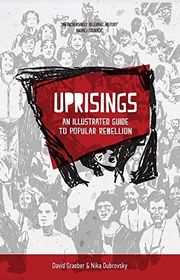
Uprisings
by David Graeber
2022
David Graeber and Nika Dubrovsky examine popular rebellions across history, emphasizing collective action rather than exceptional heroes. Combining historical analysis with visual material, they explore shared concerns and distinct aims among struggles against domination and inequality.

Pirate Enlightenment, or the Real Libertalia
by David Graeber
2023
Drawing on research in Madagascar, Graeber examines pirate communities and their descendants as experiments in political organization. He asks how their practices complicate familiar accounts of the Enlightenment and the supposedly European origins of democratic ideas.

The Ultimate Hidden Truth of the World...
by David Graeber
2024
This collection gathers Graeber's essays and interviews on democracy, inequality, technology, art and protest. Across decades of writing, he challenges accepted political assumptions and explores people's capacity to create different forms of social life.


















Edited by
Software engineer whose passion for tracking book recommendations from podcasts inspired the creation of MRB.
Lead investor at 3one4 Capital whose startup expertise and love for books helped shape MRB and its growth.
Comments
Spotted a missing book, a wrong order or a mistake? Tell us and we'll fix this page.
We're a reading guide, not the author or publisher, so we can't send books or pass on messages.