
Daniel Keyes Books in Order
Explore Daniel Keyes books in order, with quick summaries, standout reads, series background, and tips on where to start beyond Flowers for Algernon.
Last updated:
As an Amazon Associate, we earn from qualifying purchases (at no extra cost to you).
Daniel Keyes books in publication order
11 books
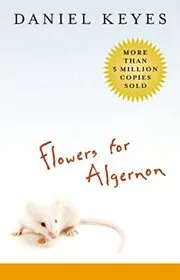
Flowers for Algernon / Charly
by Daniel Keyes
1959
Charlie Gordon agrees to an experimental operation that has already transformed a lab mouse named Algernon. As his intelligence rises, so do his memories, loneliness, and the awful knowledge that the change may not last.
The Touch / The Contaminated Man
by Daniel Keyes
1971
Barney and Karen Stark finally have a pregnancy to celebrate, then a radiation accident poisons everything around them. Fear, stigma, and uncertainty close in as an ordinary marriage turns into a nightmare.
The Fifth Sally
by Daniel Keyes
1980
Waitress Sally Porter blacks out under stress and wakes to the damage left by her other selves. As a psychiatrist tries to bring her personalities together, Keyes turns one woman's fractured life into intimate, uneasy suspense.
The Minds of Billy Milligan
by Daniel Keyes
1981
Keyes reconstructs the case of Billy Milligan, whose mind was said to hold twenty-four distinct personalities. Part true crime and part psychological study, the book follows the crimes, the trial, and the unsettling questions that follow.

Unveiling Claudia
by Daniel Keyes
1986
A woman named Claudia Elaine Yasko confesses to part of a shocking Ohio murder case, yet the killings keep going. Keyes follows detectives, contradictions, and buried trauma as he tries to explain how her story could seem so convincing.

The Milligan Wars
by Daniel Keyes
1994
This follow-up to The Minds of Billy Milligan tracks Billy through hospitals, court fights, media storms, and a desperate escape. It shifts from the trial to the long, messy struggle over treatment, freedom, and whether he can ever be whole.
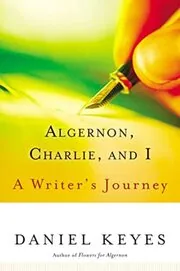
Algernon, Charlie, and I
by Daniel Keyes
2000
Keyes looks back on the life that led to Flowers for Algernon, from early jobs and teaching to rejections, revisions, and adaptations. Part memoir and part writing book, it shows how his most famous story took shape.
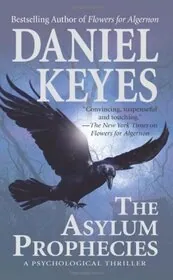
The Asylum Prophecies
by Daniel Keyes
2009
Raven wakes in an asylum after a suicide attempt, carrying buried knowledge of a looming terrorist attack. With kidnappers closing in and her mind split against itself, the race is on to unlock what she knows.
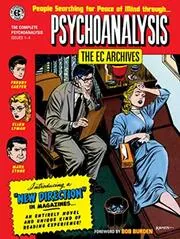
Psychoanalysis
by Daniel Keyes
2020
An unusual EC Archives collection built around an unnamed psychiatrist and the troubled patients who keep returning to his office. Daniel Keyes turns therapy sessions, buried memories, and family damage into quick, moody psychological suspense.

Confessions Illustrated
by Daniel Keyes
2022
This EC Archives volume collects the full run of Confessions Illustrated, a Picto-Fiction magazine of scandal, romance, and bad decisions. The short pieces are fast, melodramatic, and a revealing look at Keyes's early comics work.
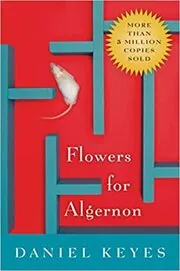
Flowers for Algernon
by Daniel Keyes
Charlie Gordon undergoes an experimental operation intended to increase his intelligence, following its success with a laboratory mouse named Algernon. His journals record extraordinary intellectual growth alongside increasingly painful discoveries about friendship, love, and his own past.
Recommended by
3 people Jordan Peterson recommended this book
Jordan Peterson
Recommended on Jordan Peterson's website.
Jordan Peterson's recommendation of this book  Naval Ravikant recommended this book
Naval Ravikant
Naval Ravikant tweeted about this book.
Naval Ravikant's recommendation of this book  PewDiePie recommended this book
PewDiePie
"Really fun to read from start to finish." - PewDiePie
PewDiePie's recommendation of this book
Where to start with Daniel Keyes
If you want his essential classic: Flowers for Algernon / Charly
If you want human-centered science fiction: Flowers for Algernon / Charly → The Touch / The Contaminated Man
If you want true crime and psychology: The Minds of Billy Milligan → The Milligan Wars
If you want fiction about split identities: The Fifth Sally → The Asylum Prophecies
If you want the story behind his best-known book: Algernon, Charlie, and I
Daniel Keyes sub-series and character series
Daniel Keyes collections, short stories, and related book types
Non-Fiction
Standalone Daniel Keyes books
Author bio
Daniel Keyes was born in New York City in 1927 and grew up in Brooklyn during the Depression. Money was tight, and his parents hoped he would become a doctor, but his life took a more winding path.
At seventeen he joined the U.S. Maritime Service and went to sea as a ship's purser. When he came back to New York, he finished a psychology degree at Brooklyn College in 1950, a choice that would quietly shape much of what he later wrote about intelligence, memory, trauma, and identity.
Before he became known as a novelist, Keyes learned storytelling the fast way. He worked in pulp and comics publishing, edited science fiction magazines, and wrote comic scripts for the kind of magazines that had to grab a reader right away. He also wrote for EC titles such as Psychoanalysis and Confessions Illustrated, sometimes under pseudonyms. Around the same period, he taught English in New York City schools and studied for a master's degree in English and American literature at night.
Then a classroom moment stayed with him.
While teaching students with different learning needs, Keyes kept coming back to a simple but unsettling question: what would it really mean to make someone smarter by artificial means? One student in particular helped fix that question in his mind. Out of that idea came Flowers for Algernon, first published as a short story in 1959 and later expanded into the 1966 novel. The book's progress-report form gave Charlie Gordon a voice that felt immediate, vulnerable, and painfully human.
That book made his name. Readers were pulled in by Charlie's longing, by the story's moral knot, and by the way Keyes treated intelligence as something more complicated than a prize. The short story won a Hugo Award, the novel won a Nebula, and the film Charly brought Cliff Robertson an Academy Award. Decades later, Flowers for Algernon is still the work most people start with, and it still sparks the same questions about dignity, loneliness, and what people owe one another.
Keyes kept returning to the mind from different angles. The Touch turns a radiation accident into a story about fear, marriage, and pregnancy. The Fifth Sally follows a woman living with multiple selves. In nonfiction, The Minds of Billy Milligan and Unveiling Claudia move into true crime, where psychology and the legal system keep colliding. He was never a writer who produced a book every year. Instead, he kept circling the same pressure points, identity, damage, memory, and the cost of being misunderstood.
Teaching mattered, too.
Keyes taught creative writing at Wayne State University and then spent many years at Ohio University, where he became a professor of English and creative writing and was later named professor emeritus. Much later he looked back on his own path in the memoir Algernon, Charlie, and I, a book about how Flowers for Algernon came to be and how stubborn a writer sometimes has to stay.
In later life he lived in South Florida. He died in Boca Raton in 2014, but his work keeps finding new readers because the questions at its center still feel close to the bone. Intelligence can change a life, his books suggest, but it cannot solve everything. That is part of why people still come back to him.





Edited by
Software engineer whose passion for tracking book recommendations from podcasts inspired the creation of MRB.
Lead investor at 3one4 Capital whose startup expertise and love for books helped shape MRB and its growth.
Comments
Did we miss something? Have feedback?
Help us improve this page by sharing your thoughts