
Daniel C. Dennett Books in Order
Daniel C. Dennett is a series of 19 books written by Daniel C. Dennett, Douglas R. Hofstadter and Daniel C. Dennett, Richard Dawkins.
Here, you can see them all in order! (publication year included)
Last updated: 14 new books added
As an Amazon Associate, we earn from qualifying purchases (at no extra cost to you).
Daniel C. Dennett books in publication order
19 books
Content and Consciousness
by Daniel C. Dennett
1969
Daniel Dennett examines how a physical account of the mind might explain mental content and conscious experience. Challenging Cartesian dualism, he draws on emerging cognitive science to develop an alternative framework for understanding the relationship between mind, body and explanation.
Brainstorms
by Daniel C. Dennett
1978
Seventeen philosophical essays bring questions of consciousness, free will and personhood into conversation with psychology and cognitive science. Dennett uses arguments and thought experiments to examine mental explanation, subjective experience and the assumptions that shape how people understand minds.
The Mind's I: Fantasies and Reflections on Self and Soul
by Douglas R. Hofstadter and Daniel C. Dennett
1981
Douglas Hofstadter and Daniel Dennett assemble and comment on writings about minds, identity, and selfhood. Fiction, essays, and thought experiments examine intelligence, experience, and what it might mean for a person or machine to have a mind.
Elbow Room
by Daniel C. Dennett
1984
Dennett argues that meaningful freedom and responsibility can coexist with a scientific account of human behavior. Drawing on philosophy, evolutionary biology and artificial intelligence, he separates practical questions about self-control and choice from anxieties that obscure the debate over free will.
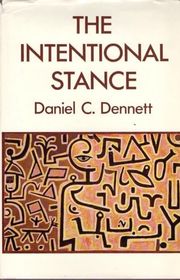
The Intentional Stance
by Daniel C. Dennett
1987
Daniel Dennett explores how attributing beliefs, desires and intentions helps people predict the behavior of others. Developing this interpretive strategy across humans and other systems, he examines its implications for philosophy of mind, cognitive science, artificial intelligence and evolutionary explanation.

Brainchildren
by Daniel C. Dennett
1998
These essays examine minds as products of biological evolution and social development, bringing philosophy into conversation with artificial intelligence and animal cognition. Written over more than a decade, they explore how complex mental capacities can arise and how they should be understood.
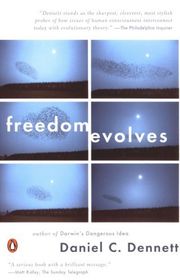
Freedom Evolves
by Daniel C. Dennett
2003
Daniel Dennett argues that meaningful human freedom can exist within a world governed by natural causes. Drawing on evolution, neuroscience and philosophy, he explores how self-control, morality and responsibility develop without requiring people to stand outside the natural processes that shape them.
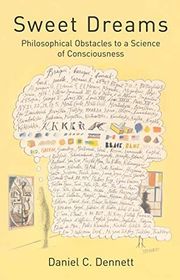
Sweet Dreams
by Daniel C. Dennett
2005
Revisiting his account of consciousness, Daniel Dennett addresses scientific advances and philosophical objections that have emerged since his earlier work. Thought experiments and examples challenge familiar intuitions about subjective experience while defending an approach grounded in psychology, neuroscience and observable mental activity.
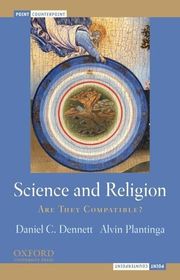
Science and Religion
by Daniel C. Dennett
2010
Daniel Dennett and Alvin Plantinga debate whether evolutionary science and religious belief can coexist. Their exchanges examine divine creation, natural selection and the assumptions underlying each position, presenting opposing arguments and replies that invite readers to assess the compatibility question for themselves.
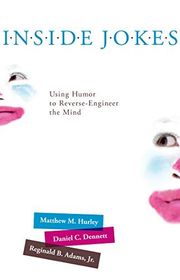
Inside Jokes
by Daniel C. Dennett
2011
Matthew Hurley, Daniel Dennett and Reginald Adams investigate why humor gives pleasure and why the mind finds certain mistakes funny. Their evolutionary account connects jokes and laughter with the cognitive work of detecting errors, examining how entertainment exploits mechanisms developed for thinking.
Intuition Pumps and Other Tools for Thinking
by Daniel C. Dennett
2013
Daniel Dennett introduces thought experiments and practical reasoning tools for navigating difficult questions about meaning, consciousness, evolution and free will. Alongside familiar logical techniques, he examines common traps in argument and shows how carefully chosen examples can reshape understanding.
Caught in the Pulpit
by Daniel C. Dennett
2015
Daniel Dennett and Linda LaScola investigate the experiences of clergy who no longer believe the doctrines they publicly teach. Interviews and analysis explore the personal, professional and social pressures that make leaving a religious role difficult after faith has changed.

The Four Horsemen
by Richard Dawkins
2019
This short book reproduces the transcript of a 2007 conversation between Dawkins, Christopher Hitchens, Sam Harris and Daniel Dennett, later dubbed the "four horsemen" of New Atheism. New essays frame their wide-ranging discussion of religion, doubt, ethics and how to argue in public.
Just Deserts
by Daniel C. Dennett
2021
Daniel Dennett and Gregg Caruso debate free will, moral responsibility and punishment through three extended conversations. Their opposing accounts ask whether people deserve blame and praise, and what accepting or rejecting that belief would mean for relationships, ethics and legal institutions.
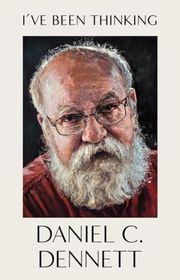
I've Been Thinking
by Daniel C. Dennett
2023
Daniel Dennett reflects on his intellectual life, revisiting the people, experiences and arguments that shaped his thinking about consciousness, evolution and freedom. His memoir connects philosophical disputes and scientific inquiry with sailing, farming, creativity and relationships beyond academic life.
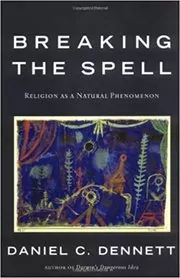
Breaking the Spell
by Daniel C. Dennett
Daniel Dennett argues that religion should be examined as a natural phenomenon open to scientific inquiry. Drawing on biology, history, and psychology, he explores how beliefs develop, persist, and shape behavior, challenging resistance to studying their origins and effects.

Consciousness Explained
by Daniel C. Dennett
Daniel Dennett presents a model of consciousness grounded in physical and cognitive processes, drawing on neuroscience, psychology, and artificial intelligence. He challenges familiar assumptions about subjective experience and explores how interacting mechanisms might produce the sense of an aware self.

Darwin's Dangerous Idea
by Daniel C. Dennett
Daniel Dennett examines natural selection and its implications for questions about mind, meaning, and morality. His philosophical account explores how evolutionary processes can generate complex outcomes, extending discussion beyond biology into debates about human nature and explanation.
Recommended by
1 person David Deutsch recommended this book
David Deutsch
David Deutsch recommended this book in his book "The Fabric of Reality."
David Deutsch's recommendation of this book

From Bacteria to Bach and Back
by Daniel C. Dennett
Daniel Dennett explores how minds could arise through natural selection without an intelligent designer. Drawing on biology and computer science, he traces connections among competence, understanding, language, and cultural evolution in his account of the development of human consciousness.
Recommended by
3 people Ray Dalio recommended this book
Ray Dalio
Ray Dalio mentioned this book on "The Tim Ferriss Show" podcast.
Ray Dalio's recommendation of this book  Vinod Khosla recommended this book
Vinod Khosla
"Long but worth every page." - Vinod Khosla
Vinod Khosla's recommendation of this book  Esther Dyson recommended this book
Esther Dyson
"How consciousness arises, and how much it depends on a sense of past, present, and future (plus a lot of other interesting insights)." - Esther Dyson
Esther Dyson's recommendation of this book














Edited by
Software engineer whose passion for tracking book recommendations from podcasts inspired the creation of MRB.
Lead investor at 3one4 Capital whose startup expertise and love for books helped shape MRB and its growth.
Comments
Spotted a missing book, a wrong order or a mistake? Tell us and we'll fix this page.
We're a reading guide, not the author or publisher, so we can't send books or pass on messages.