
Codex Alera Books in Order
Part ofJim Butcher Books in OrderSee the Codex Alera books by Jim Butcher in order, with short summaries, series background, and tips on where to start with Tavi and Alera.
Last updated:
As an Amazon Associate, we earn from qualifying purchases (at no extra cost to you).
This series has 1 recommender.

Codex Alera books in publication order
6 books
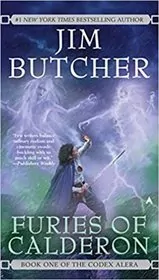
Furies of Calderon
by Jim Butcher
2004
In a world where nearly everyone commands elemental furies, young Tavi has none. When war and betrayal reach the Calderon Valley, he survives by wits alone and becomes part of something much bigger.
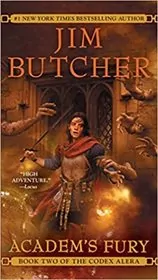
Academ's Fury
by Jim Butcher
2005
Tavi arrives at the Academy and finds politics, danger, and unrest simmering beneath imperial order. While Alera starts to fracture, he has to rely on nerve and intelligence in a world still built for the gifted.
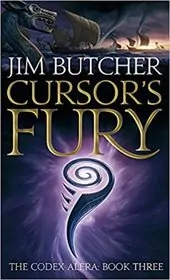
Cursor's Fury
by Jim Butcher
2006
Civil war erupts across Alera, and Tavi is pulled into the legions as the realm starts to break apart. Bigger battles, shifting alliances, and new enemies push the series into full military fantasy mode.
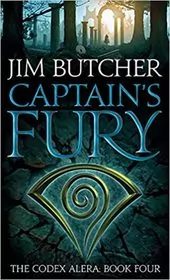
Captain's Fury
by Jim Butcher
2007
Now a captain, Tavi sees that the Canim are not the only threat facing Alera. To stop the Vord, he must build an alliance no one wants and lead soldiers on both sides of the divide.
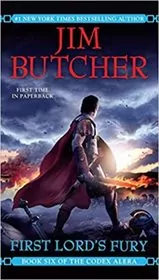
First Lord's Fury
by Jim Butcher
2008
The final Codex Alera novel brings Tavi's rise and Alera's war with the Vord to a head. It is the payoff book, full of siege pressure, political reckoning, and large-scale last stands.
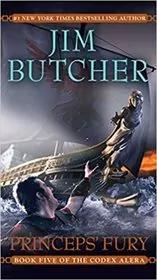
Princep's Fury
by Jim Butcher
2008
Recognized at last as Gaius Octavian, Tavi escorts the Canim home and finds their land ravaged by the Vord. Survival means Alerans and Canim fighting together, whether history likes it or not.
Codex Alera books in chronological order
Series background & context
Codex Alera starts with a simple, useful question: what happens to a boy with no magic in a culture where everyone else has it? In the world of Alera, people bond with elemental spirits called furies and use them for everything from farming and healing to travel, craft, and war. Tavi, the series' central figure, has no such gift. At first that makes him look small. In practice, it forces him to survive by attention, nerve, and brains.
The world around him is not small at all. Alera is shaped by Roman-style legions, noble houses, frontier forts, and a lot of political stress hiding under official order. The Calderon Valley, where the story begins, sits on the edge of the empire and feels the pressure first. That frontier setting matters. Raids, local loyalties, and bad decisions from powerful people can turn into full military crises very quickly.
Tavi is the spine of the series, but he is not the only viewpoint that matters.
Butcher also spends time with characters like Amara, a Cursor who works as a spy and courier, Bernard, a practical steadholt leader, and Isana, whose protectiveness and secrets have huge consequences. As the books go on, the cast widens, and the story starts moving between battlefield strategy, court politics, espionage, and survival. Furycraft keeps the action feeling physical and inventive, because weather, stone, metal, beasts, and even simple movement can all become part of a fight.
These books move.
What begins as a coming-of-age fantasy becomes a much larger story about civil war, invasion, and what it takes to hold a country together when nearly everyone in power thinks they should be the one in charge. The Canim, the Marat, and eventually the Vord are not just monster threats dropped in for spectacle. They keep forcing Alera to confront the limits of its own system, and they push Tavi to grow from clever outsider to leader.
The tone is more straightforwardly epic than The Dresden Files, but it still feels like Jim Butcher. Plans matter. Loyalty matters. People talk like people under stress, not history textbooks. Battles are big, but the books keep coming back to choices made by tired soldiers, stubborn rulers, and young people growing into responsibilities they did not ask for.
Because the series is complete at six books, it has a strong sense of build. Each novel raises the scale, but the story stays coherent, and Tavi's growth gives the whole thing its emotional center. If you want fantasy with military campaigns, political plotting, elemental magic, and a hero who wins as often with wit as with force, this is a very easy series to sink into.













Edited by
Software engineer whose passion for tracking book recommendations from podcasts inspired the creation of MRB.
Lead investor at 3one4 Capital whose startup expertise and love for books helped shape MRB and its growth.
Comments
Did we miss something? Have feedback?
Help us improve this page by sharing your thoughts