
Claire Messud Books in Order
Explore Claire Messud books in order, with quick summaries, notes on her novels and essays, and clear guidance on where to start reading, all in one place.
Last updated:
As an Amazon Associate, we earn from qualifying purchases (at no extra cost to you).
Claire Messud books in publication order
10 books
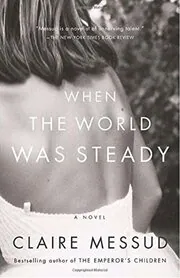
When the World Was Steady
by Claire Messud
1994
Two estranged sisters set out on separate journeys as their carefully arranged lives begin to come apart. From Bali to the Isle of Skye, Messud follows their search for freedom, faith, and a way back to each other.
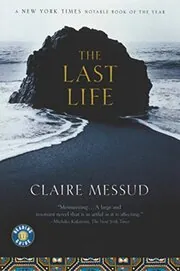
The Last Life
by Claire Messud
1999
Teenage Sagesse LaBasse grows up in a French Algerian family shaped by exile, secrets, and old loyalties. Moving between Algeria, southern France, and New England, the novel traces how history presses into private life.
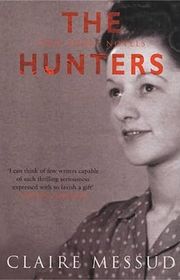
The Hunters
by Claire Messud
2001
These two novellas explore loneliness from very different angles: an aging Ukrainian immigrant looking back on a hard life in Canada, and an academic in London growing obsessed with the neighbors downstairs. Quiet, tense, and deeply observant.
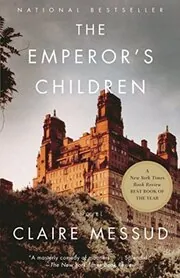
The Emperor's Children
by Claire Messud
2006
Set in Manhattan on the eve of 9/11, this novel follows three privileged friends stumbling through ambition, love, and self-invention. Messud turns their social world into a sharp, funny, and uneasy portrait of a city about to change.
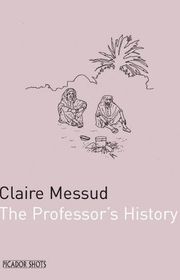
The Professor's History
by Claire Messud
2006
A French historian travels to Algeria during World War I to investigate the brutal roots of French rule there. As he digs into forgotten violence, the story becomes a spare meditation on memory, empire, and what history leaves buried.
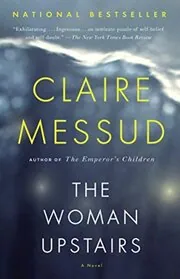
The Woman Upstairs
by Claire Messud
2013
In Cambridge, teacher and would-be artist Nora Eldridge is drawn into the orbit of the Shahid family, a glamorous couple and their young son. Admiration turns into obsession, desire, and a betrayal that cracks open Nora's carefully managed life.
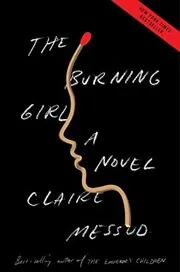
The Burning Girl
by Claire Messud
2017
Julia and Cassie have been inseparable since childhood in a small Massachusetts town. As adolescence pulls them apart and Cassie's life grows darker, Julia tries to understand how a friendship can fail just when it feels most necessary.
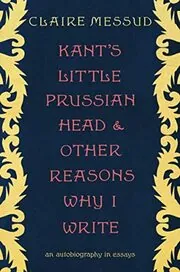
Kant's Little Prussian Head and Other Reasons Why I Write
by Claire Messud
2020
Part memoir, part literary reflection, this essay collection opens up Messud's life as a reader, daughter, teacher, and novelist. She writes about family, art, memory, and the stubborn reasons writing still matters.
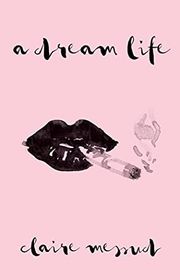
A Dream Life
by Claire Messud
2021
In 1971, Alice Armstrong arrives in Sydney with her family and finds herself installed in a grand house that feels more like a trap than a fantasy. This short novel turns domestic comedy into a sharp study of class, marriage, and dislocation.
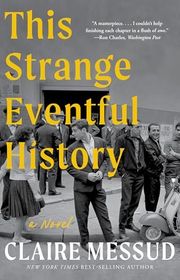
This Strange Eventful History
by Claire Messud
2024
Beginning in 1940, this multigenerational novel follows the Cassar family across war, migration, and the collapse of French Algeria. Messud tells a sweeping family story about displacement, inheritance, and the uneasy search for home.
Where to start with Claire Messud
If you want the big New York social novel: The Emperor's Children
If you want art, anger, and obsession: The Woman Upstairs
If you want a shorter coming-of-age story: The Burning Girl
If you want a sweeping family saga: This Strange Eventful History → The Last Life
If you want memoir and essays: Kant's Little Prussian Head and Other Reasons Why I Write
Claire Messud collections, short stories, and related book types
Short Stories/Novellas
Non-Fiction
Standalone Claire Messud books
Author bio
Claire Messud was born in Greenwich, Connecticut, in 1966, to a Canadian mother and a French Algerian father. She grew up in Sydney and Toronto, spent part of her teens at boarding school in the United States, and also felt the pull of France through family summers there. That mixed upbringing shows up all through her work, in characters who are never fully settled in one place and who carry several histories at once.
She grew up between countries, languages, and family stories.
Messud has said that she wanted to be a writer as soon as she realized that the bedtime stories she loved had been made up by someone. At six, she asked for a typewriter for Christmas. She has also spoken about her mother's gift for letters and close observation, the kind of everyday noticing that later became part of her own fiction.
She studied comparative literature at Yale and then earned a master's in English at Cambridge, where she met her husband, the critic James Wood. Before her novels found their audience, she worked in London journalism, including a stint as deputy editor of the Women's Page at the Guardian, and then as a freelance writer. That mix of literary study and newsroom discipline seems to have given her fiction both patience and bite.
Her debut novel, When the World Was Steady, follows two estranged sisters on separate journeys and was a finalist for the PEN/Faulkner Award. The Last Life turned to a French Algerian family marked by exile and memory, and went on to win Britain's Encore Award. The Hunters, a pair of novellas, showed how much pressure she could pack into smaller forms. Even early on, her subjects were clear: displacement, class, family strain, and the uneasy gap between private longing and public life.
Then The Emperor's Children brought her a much wider readership.
Set in Manhattan just before 9/11, it tracks a circle of educated, ambitious New Yorkers with sharp social comedy and a feeling that history is closing in. Readers who come to Messud through The Woman Upstairs often remember something different: the furious inward voice of Nora Eldridge, a teacher and frustrated artist whose careful life is cracked open by obsession. And The Burning Girl narrows the lens again, turning to girlhood friendship in Massachusetts and the painful mystery of how two people who know each other so well can still lose each other.
What many readers like most in Messud's books is that tension between clear social surfaces and restless inner lives. Her characters are often outsiders, or half-outsiders: girls on the edge of a friendship, adults stranded inside marriage or ambition, families carrying old political wounds into supposedly ordinary rooms. She writes about exile, but also about the smaller daily versions of it.
Her 2020 essay collection, Kant's Little Prussian Head and Other Reasons Why I Write, makes the line between life and work easier to see. In it, she writes about family, literature, art, and the stubborn reasons a person keeps reading and writing. More recently, This Strange Eventful History returned to the territory of inherited upheaval, drawing on her own family history for a large, multigenerational novel about French Algeria, war, migration, and belonging.
Alongside the books, Messud has built a long teaching life, with stops at several colleges and writing programs, and she has taught fiction at Harvard since 2015. Along the way she has received Guggenheim and Radcliffe fellowships, among other honors. She lives in Cambridge, Massachusetts, with her family. The setting may be steadier now, but the questions that animate her work, about home, memory, desire, and how people narrate themselves, are still very much in motion.






Edited by
Software engineer whose passion for tracking book recommendations from podcasts inspired the creation of MRB.
Lead investor at 3one4 Capital whose startup expertise and love for books helped shape MRB and its growth.
Comments
Did we miss something? Have feedback?
Help us improve this page by sharing your thoughts