
Cities in Flight Books in Order
Part ofJames Blish Books in OrderExplore the Cities in Flight books by James Blish in order, with summaries, series background, and help choosing the best place to begin.
Last updated:
As an Amazon Associate, we earn from qualifying purchases (at no extra cost to you).
Cities in Flight books in publication order
4 books
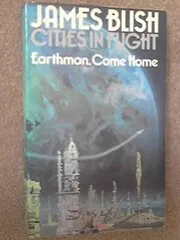
Earthman, Come Home
by James Blish
1956
Mayor John Amalfi guides the flying city of New York through a hard, mobile life among the stars. Each new job and planet brings fresh danger as the city struggles to stay independent and keep moving.
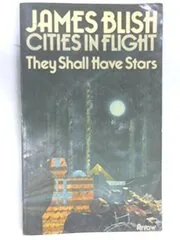
They Shall Have Stars / Year 2018!
by James Blish
1956
In a future where Earth has grown rigid and fearful, a small group risks everything to restart space exploration. Their work on gravity-defying science lays the foundation for the flying cities to come.
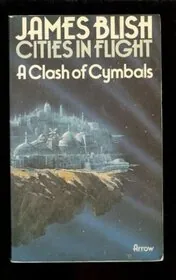
The Triumph of Time / A Clash of Cymbals
by James Blish
1958
The wandering cities of Earth face a crisis on a cosmic scale. John Amalfi and his people must confront the end of the universe itself in the immense final movement of Blish's Cities in Flight sequence.
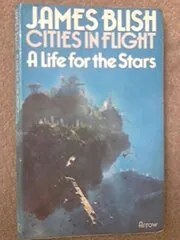
A Life for the Stars
by James Blish
1962
Teenager Chris deFord escapes a controlled Earth by joining a city that travels between the stars. Learning the hard rules of life aboard a wandering metropolis, he finds danger, work, and a future far beyond home.
Cities in Flight books in chronological order
Series background & context
The Cities in Flight series imagines a future in which entire Earth cities can leave the ground and travel between the stars. James Blish's key invention is the spindizzy, a gravity-manipulating drive that makes the impossible possible. It turns New York, Chicago, and other cities into self-contained spacecraft, carrying their people, politics, businesses, troubles, and old habits into deep space.
The series is often called the Okie sequence because its wandering cities resemble migrant workers searching for work. Once Earth tightens its controls and opportunity becomes scarce, cities lift off and sell their skills across the galaxy. They are mobile communities, not clean futuristic utopias. They need fuel, contracts, leadership, and somewhere to go next.
The usual reading order begins with They Shall Have Stars. It shows the political and scientific conditions that lead to the invention of the spindizzy and the first steps toward spacefaring cities. A Life for the Stars follows Chris deFord, a teenager who leaves Earth and grows into the rough, practical life of a traveling city.
Then comes the long road.
Earthman, Come Home places Mayor John Amalfi and the city of New York at the center of a sprawling galactic journey. Amalfi is a shrewd leader, always balancing the needs of his citizens against the risks of a universe where the city can become stranded, unwanted, or caught in conflicts much larger than itself. The book is made from linked episodes, which suits a series about a community always moving on.
The Triumph of Time, also published as A Clash of Cymbals, pushes the premise toward its biggest scale. By this point, the questions are no longer only about survival, money, or local politics. The fate of the universe itself becomes part of the problem. Blish does not rush there, though. He earns the larger stakes through the accumulated history of people who have spent centuries treating space as a place to make a living.
The series combines space opera, political argument, coming-of-age adventure, and huge leaps in time. Its future can be harsh and strange, but the cities remain recognizably human. Residents argue, improvise, make deals, complain about management, and try to keep home together when home is a flying machine. Read in chronological story order: They Shall Have Stars, A Life for the Stars, Earthman, Come Home, then The Triumph of Time.





Edited by
Software engineer whose passion for tracking book recommendations from podcasts inspired the creation of MRB.
Lead investor at 3one4 Capital whose startup expertise and love for books helped shape MRB and its growth.
Comments
Did we miss something? Have feedback?
Help us improve this page by sharing your thoughts