
After Such Knowledge Books in Order
Part ofJames Blish Books in OrderSee the After Such Knowledge books by James Blish in order, with summaries, themes, series background, and advice on the best place to start.
Last updated:
As an Amazon Associate, we earn from qualifying purchases (at no extra cost to you).
After Such Knowledge books in publication order
4 books

A Case of Conscience
by James Blish
1958
Jesuit scientist Father Ruiz-Sanchez studies Lithia, an alien world whose people seem moral without religion or sin. His investigation becomes a tense clash between faith, science, and the consequences of bringing Lithia to Earth's attention.

Doctor Mirabilis
by James Blish
1964
This historical novel follows Roger Bacon, the thirteenth-century scholar whose hunger for knowledge collides with church authority and political danger. Blish portrays a man trying to pursue science in a world suspicious of new ideas.

Black Easter
by James Blish
1968
An arms dealer hires a black magician to free every demon in Hell for one day. The plan is meant as a controlled experiment, but Blish turns it into a cold, unsettling story about power, faith, and consequences.
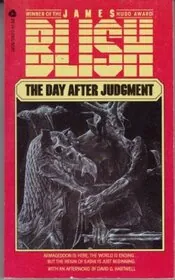
The Day After Judgment
by James Blish
1971
Hell's demons have been released on Earth, and the world has not ended the way anyone expected. This direct sequel to Black Easter follows the survivors through a grim new order where theology and power have become terrifyingly real.
After Such Knowledge books in chronological order
Series background & context
James Blish called After Such Knowledge a trilogy, though it is better understood as a thematic sequence than a conventional continuing story. The books move from an alien planet to medieval Europe to a modern world where Hell has been deliberately let loose. Their common concern is knowledge, especially what happens when people learn or use something they may not be morally ready to handle.
A Case of Conscience is the most direct entry point. A Jesuit priest and biologist joins an expedition studying Lithia, a planet whose inhabitants seem to live decent, peaceful lives without religion or a concept of sin. Father Ramon Ruiz-Sanchez must decide what that means for his faith, his science, and the future relationship between Earth and Lithia. It is both a first-contact story and a serious argument carried through character and plot.
Doctor Mirabilis goes back to the thirteenth century and follows Roger Bacon, the English scholar and Franciscan friar. Blish presents Bacon as a restless thinker caught between intellectual curiosity, religious authority, and the political pressures of his time. It is historical fiction, but it belongs here because it asks many of the same questions about forbidden learning and the cost of seeing further than everyone around you.
Then the series gets much darker.
In Black Easter, an arms dealer hires a black magician to release the demons of Hell for one day. The book treats its occult rules with unnerving seriousness, mixing Cold War logic, legalistic demonology, and a steadily widening sense of catastrophe. The Day After Judgment continues that story and should be read directly after Black Easter.
The books do not share one cast, setting, or plotline. They do share a pressure point: intelligence without wisdom can be dangerous, and moral certainty may be harder to find than people hope. Blish uses Catholic theology, scientific inquiry, history, magic, and political fear as tools for exploring that pressure.
Read the novels in publication order if you want to see the range of the project: A Case of Conscience, Doctor Mirabilis, Black Easter, then The Day After Judgment. If you only want the connected narrative, begin with Black Easter and continue immediately to its sequel. Readers should come prepared for ideas as much as action, and for stories that do not offer easy answers.















Edited by
Software engineer whose passion for tracking book recommendations from podcasts inspired the creation of MRB.
Lead investor at 3one4 Capital whose startup expertise and love for books helped shape MRB and its growth.
Comments
Did we miss something? Have feedback?
Help us improve this page by sharing your thoughts