
Caroline Criado Perez Books in Order
See Caroline Criado Perez books in order, with short summaries, reading order help, where to start, and a quick guide to her feminist nonfiction.
Last updated:
As an Amazon Associate, we earn from qualifying purchases (at no extra cost to you).
Caroline Criado Perez books in publication order
2 books
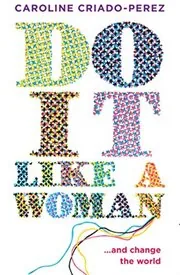
Do It Like a Woman... and Change the World
by Caroline Criado Perez
2015
Part reportage, part profile collection, this book introduces women who challenged limits in politics, sport, protest, and public life. Criado Perez looks at what their stories reveal about power, freedom, and the work of changing the world.
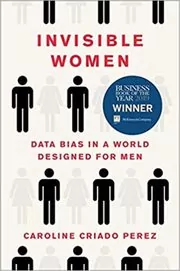
Invisible Women
by Caroline Criado Perez
2019
Criado Perez shows how data built around male defaults shapes medicine, work, transport, and public life. The result is a clear, unsettling look at the hidden costs women pay when half the population is treated as an afterthought.
Where to start with Caroline Criado Perez
If you want her signature book first: Invisible Women
If you want the clearest path through her work: Do It Like a Woman... and Change the World → Invisible Women
If you want real-world stories before the data-heavy argument: Do It Like a Woman... and Change the World
Caroline Criado Perez collections, short stories, and related book types
Non-Fiction
Author bio
Caroline Criado Perez was born in Brazil in 1984, but she has said she left when she was just one year old. Her childhood was mobile and sometimes disorienting. Because of her father's international work, she grew up moving between countries including Spain, Portugal, Taiwan, and Britain, which gave her an early sense that what looks normal in one place can seem strange in another.
That habit of looking twice became central to her writing.
She did not begin as a feminist writer. As a young adult, she worked for a time and then went back to study English Language and Literature at Keble College, Oxford, as a mature student. While she was there, a class on language and gender, especially reading Deborah Cameron, shifted her thinking. Criado Perez has said that Oxford was the place that turned her into a feminist, because it made her notice how often men are treated as the default and women as the exception.
From there, writing and campaigning started to run together. She became known for public campaigns around representation, including the push to put Jane Austen on the British £10 note, efforts that helped force social media companies to take abuse reporting more seriously, and the campaign for the first statue of a woman in Parliament Square. After the banknote campaign, she was subjected to rape and death threats online, an experience that made her even more direct about the cost of pushing women out of public life.
In 2015 she was appointed an OBE for services to equality and diversity, particularly in the media. That same year she published her first book, Do It Like a Woman... and Change the World. It introduced readers to women from many different countries and backgrounds who had pushed back against limits placed on them, often in practical, stubborn, unglamorous ways.
That first book already shows what readers often respond to in her work. She likes systems, but she never forgets people. In Do It Like a Woman... and Change the World, the big subject is power, who gets it, who is denied it, and what women do anyway. The book moves through activism, politics, sport, journalism, and public life without slipping into jargon.
Invisible Women took that argument to a much bigger audience.
Published in 2019, Invisible Women made the gender data gap impossible to ignore for many readers. The book looks at how male-centered data shapes medicine, transport, work, technology, disaster planning, and everyday design, and how those blind spots can waste women's time, money, health, and safety. It became a number one bestseller, sold more than a million copies, was translated into more than 30 languages, and won major prizes including the Royal Society Science Book Prize and the Financial Times Business Book of the Year Award. What gives the book its force is not just the statistics, but how clearly it shows the human consequences of supposedly neutral decisions.
Across her books and public work, certain themes keep returning. She writes about missing data, missing role models, and missing voices. She is interested in the gap between what institutions say is universal and who those institutions were really built for. Her style is journalistic and plainspoken, which helps when the material is dense or technical, because she keeps pulling the reader back to daily life.
These days, she continues to write, speak, and campaign on the politics of data, design, and public policy. She publishes a regular newsletter and has said she is working on a new book about the fertility crisis. The through line in all of it is simple enough: look carefully at what has been treated as normal, and ask who had to disappear to make it look that way.














Edited by
Software engineer whose passion for tracking book recommendations from podcasts inspired the creation of MRB.
Lead investor at 3one4 Capital whose startup expertise and love for books helped shape MRB and its growth.
Comments
Did we miss something? Have feedback?
Help us improve this page by sharing your thoughts