
Calling Crow Books in Order
Part ofPaul Clayton Books in OrderRead Paul Clayton's Calling Crow books in order, with quick summaries, series background, and clear advice on where to start this historical trilogy.
Last updated:
As an Amazon Associate, we earn from qualifying purchases (at no extra cost to you).
Calling Crow books in publication order
3 books
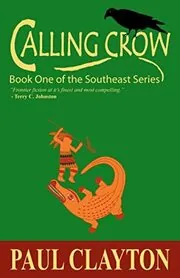
Calling Crow
by Paul Clayton
2011
In the mid-1500s, a young Muskogee man is captured by Spanish slavers and taken to Hispaniola. Brutal captivity forces him to learn his enemies' ways, and to dream of getting home in time to warn his people.
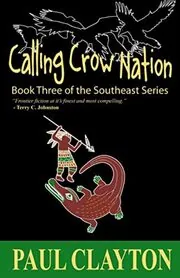
Calling Crow Nation
by Paul Clayton
2011
Now chief of the Coosa, Calling Crow faces a new threat as the Timucua gain Spanish guns and move north for slaves and conquest. Help from English sailors might save his people, or invite in another danger.
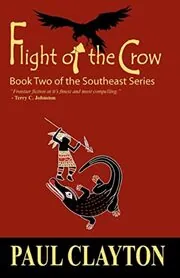
Flight of the Crow
by Paul Clayton
2011
Searching the Southeast for Juana, the woman he lost to the Spanish, Calling Crow is wounded and taken in by the Coosa. As French and Spanish settlements edge toward war, he must protect his adopted people and choose where his heart belongs.
Calling Crow books in chronological order
Series background & context
The Calling Crow books are historical adventures set in the mid-sixteenth-century Southeast, at the moment when Spanish slavers, soldiers, missionaries, and rival Native nations are all reshaping the land. The trilogy follows one man across that upheaval and keeps the story close to the ground. Instead of treating conquest as distant background, Paul Clayton shows what it feels like when it arrives in a village, a family, and a body.
In Calling Crow, the hero is a young Muskogee man whose life is still rooted in his own people's customs, loyalties, and expectations. Then Spanish raiders seize him and carry him to Hispaniola, where slavery, forced labor, and humiliation change him for good. What drives the series from that point on is not only survival, but knowledge. Calling Crow learns the language, religion, weapons, and habits of the invaders because he knows his people will need more than courage to face what is coming.
Nothing stays simple for long.
By Flight of the Crow, the story widens from personal captivity to a larger struggle across the coast and interior. Calling Crow goes searching for Juana, the woman he lost in the first book, but he is pulled into Coosa life instead and nursed back to health by Green Bird Woman. That gives the middle novel its emotional tension. He is torn between old loyalties, new ties, and the fact that French and Spanish colonies are now pushing their conflicts into Native territory. The books work best when that intimate pull and the bigger historical danger are happening at the same time.
The final book, Calling Crow Nation, is about leadership under pressure. Calling Crow is no longer just reacting to events. He has to decide how a people survives when the Timucua gain Spanish firearms and move north for slaves and conquest. English sailors offer help, but help from outsiders always comes with a price. The series keeps asking the same hard question: how do you fight one empire without making room for the next one?
That is the heart of the series.
The setting matters a lot here. Forests, rivers, coastal settlements, missions, forts, and sea routes are not just scenery. They shape who can travel, who can trade, who can hide, and who can strike first. So do disease, religion, and new weapons. The tone is serious, grounded, and often grim, but it is still driven by character and momentum rather than by lectures. If you like historical fiction that stays close to ordinary lives while larger powers close in, this trilogy does that well.
These books are best read in order, because Calling Crow's relationships, losses, and hard-won understanding build from one novel to the next. Expect action, but also long consequences. The real through line is not simply battle. It is what happens to a man and a people when the world they know is forced to change.






Edited by
Software engineer whose passion for tracking book recommendations from podcasts inspired the creation of MRB.
Lead investor at 3one4 Capital whose startup expertise and love for books helped shape MRB and its growth.
Comments
Did we miss something? Have feedback?
Help us improve this page by sharing your thoughts