
Paul Clayton Books in Order
Browse Paul Clayton books in order, with quick summaries, series notes, and tips on where to start, from Calling Crow to later standalones.
Last updated:
As an Amazon Associate, we earn from qualifying purchases (at no extra cost to you).
Paul Clayton books in publication order
13 books
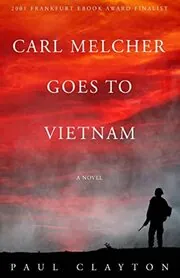
Carl Melcher Goes to Vietnam
by Paul Clayton
2003
Drafted in 1968, Carl Melcher arrives in Vietnam with more hope than sense. As patrols, deaths, and racial tension wear down his company, he learns how quickly war strips away innocence.
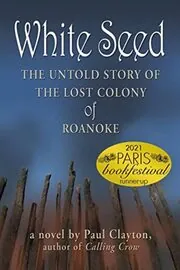
White Seed
by Paul Clayton
2009
This novel imagines the fate of the Lost Colony of Roanoke through settlers, soldiers, and Native intermediaries caught in a failing outpost. Hunger, fear, and bad leadership turn a famous mystery into a tense human story.
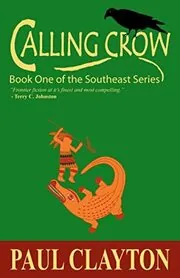
Calling Crow
by Paul Clayton
2011
In the mid-1500s, a young Muskogee man is captured by Spanish slavers and taken to Hispaniola. Brutal captivity forces him to learn his enemies' ways, and to dream of getting home in time to warn his people.
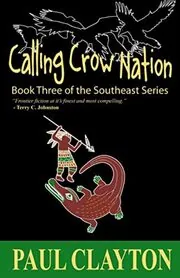
Calling Crow Nation
by Paul Clayton
2011
Now chief of the Coosa, Calling Crow faces a new threat as the Timucua gain Spanish guns and move north for slaves and conquest. Help from English sailors might save his people, or invite in another danger.
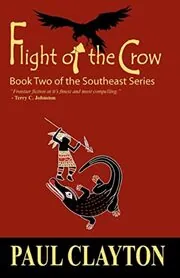
Flight of the Crow
by Paul Clayton
2011
Searching the Southeast for Juana, the woman he lost to the Spanish, Calling Crow is wounded and taken in by the Coosa. As French and Spanish settlements edge toward war, he must protect his adopted people and choose where his heart belongs.
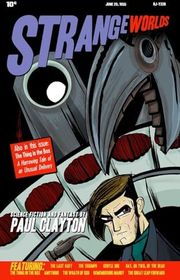
Strange Worlds
by Paul Clayton
2012
This collection moves through dystopias, strange resurrections, dark jokes, and near-future warnings. The setups vary, but the through line is ordinary people facing bizarre worlds that feel uncomfortably close to home.
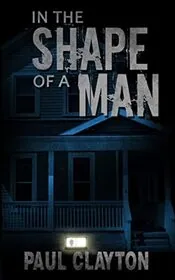
In the Shape of a Man
by Paul Clayton
2013
In a working-class California neighborhood, a worn-out tech worker dodges trouble at home while a child suffers and his neighbors drift toward crises of their own. It is a dark, uneasy story about neglect, temptation, and the cost of looking away.
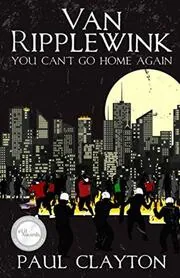
Van Ripplewink
by Paul Clayton
2016
A Philadelphia teenager wakes to a world that has moved on without him and barely resembles the one he knew. As he stumbles through violence, poverty, and racial tension, Van has to find a place in a city that no longer feels like home.
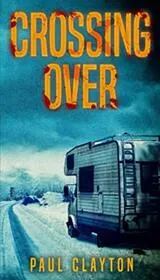
Crossing Over
by Paul Clayton
2018
When America starts sliding into a second civil war, Mike McNerney packs up his wife and vulnerable daughter and heads for Canada. The road north is crowded, dangerous, and full of people just as desperate as they are.

Talk to a Real, Live Girl
by Paul Clayton
2019
A lonely miner on a distant world discovers that real human connection may be rarer, and riskier, than robotic company. The title novella anchors a small sci-fi collection about work, desire, and uneasy futures.
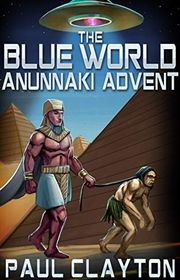
The Blue World
by Paul Clayton
2020
In this compact speculative tale, the Anunnaki come to Earth to mine gold and end up engineering humanity to do the work for them. Clayton turns ancient-astronaut lore into a brisk origin story with a dark edge.

Escape From the Future and Other Stories
by Paul Clayton
2022
A grieving inventor's time machine sends his family from 1962 into a rougher future, and that is only the start of this collection. These stories mix science fiction ideas with ordinary people, hard choices, and societies tipping the wrong way.
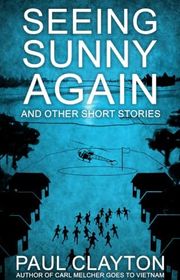
Seeing Sunny Again
by Paul Clayton
2026
This collection moves from awkward teen romance to war memories, family strain, and immigrant survival. Clayton keeps the focus on ordinary people and the private hurts that shape middle-class American life.
Where to start with Paul Clayton
If you want his core historical saga: Calling Crow → Flight of the Crow → Calling Crow Nation
If you want the most personal war novel: Carl Melcher Goes to Vietnam
If you like early American history: White Seed
If you want speculative fiction fast: The Blue World → Strange Worlds → Escape From the Future and Other Stories
If you prefer contemporary social fiction: Van Ripplewink → Crossing Over → Seeing Sunny Again
Paul Clayton sub-series and character series
Paul Clayton collections, short stories, and related book types
Short Stories/Novellas
Short Story Collections
Standalone Paul Clayton books
Author bio
Paul Clayton was born in Chester, Pennsylvania, in 1948. He writes across historical fiction, war fiction, social novels, and speculative short fiction, but the books tend to share one thing: people under pressure, trying to keep their bearings while the world shifts beneath them.
The turning point came early. Clayton was drafted in 1968 and served with an infantry line company in the 4th Infantry Division in Vietnam, in Pleiku Province. He has said that the war made him a writer. The experience gave him a close look at fear, boredom, friendship, and sudden violence, and those things stayed with him.
After the Army, he studied English literature at Temple University and earned his degree in 1976. Publication took time. His first published fiction arrived in 1995, and from the start he was drawn to places where history and ordinary lives collide.
That shows up clearly in Calling Crow, Flight of the Crow, and Calling Crow Nation. Those novels follow an Indigenous protagonist through the Spanish conquest of the Floridas and the wider Southeast. Readers who like them usually talk about the lived-in historical setting, the survival story at the center, and the way Clayton keeps the big sweep of empire tied to one man's hard choices.
Then he turned toward a war much closer to home.
Carl Melcher Goes to Vietnam draws on Clayton's own service and follows a young GI through the confusion and grind of 1968. It is less interested in battlefield swagger than in what army life feels like from the inside: the waiting, the racial tension, the strange humor, the friendships, and the fact that luck can run out at any moment. The novel later became a finalist for the Frankfurt eBook Awards.
History kept calling him back.
In White Seed, he imagines the fate of the Lost Colony of Roanoke through settlers, soldiers, translators, and Native leaders trapped in a bad experiment that is starting to fail. Even when he moves away from straight historical fiction, that same interest in pressure, belief, and social breakdown keeps showing up in later books like In the Shape of a Man, Van Ripplewink, Crossing Over, Strange Worlds, The Blue World, and Escape From the Future and Other Stories. Some are contemporary social novels. Some lean into science fiction or fantasy. But again and again, Clayton writes about people who discover that the system around them is shakier, stranger, or crueler than they thought.
He also keeps circling back to a few favorite concerns: war and its aftereffects, clashing cultures, the pull of history, vulnerable families, and the uneasy line between decency and self-protection. Even his speculative stories stay grounded in recognizable human problems. The future may get weird. The people in it still have to make choices.
Clayton has lived and worked in the San Francisco Bay Area, and his later work shows a writer comfortable moving between centuries and genres without losing his eye for ordinary detail. Whether he is writing about sixteenth-century conquest, Vietnam, Roanoke, a fractured America, or a stranger future, he tends to start in the same place: one person trying to make sense of a world that no longer plays fair.





Edited by
Software engineer whose passion for tracking book recommendations from podcasts inspired the creation of MRB.
Lead investor at 3one4 Capital whose startup expertise and love for books helped shape MRB and its growth.
Comments
Did we miss something? Have feedback?
Help us improve this page by sharing your thoughts