
Brotherhood of War (W.E.B. Griffin) Books in Order
Part ofW.E.B. Griffin Books in OrderThis page lists the Brotherhood of War books by W.E.B. Griffin in order, with short summaries, series background, and an easy where-to-start guide.
Last updated:
As an Amazon Associate, we earn from qualifying purchases (at no extra cost to you).
Brotherhood of War (W.E.B. Griffin) books in publication order
9 books

The Captains
by W.E.B. Griffin
1982
The same circle of officers moves up a rank, and the stakes rise with it. Missions become more complex, loyalties are tested, and the Army’s internal politics start to matter as much as the enemies everyone expects to face.

The Lieutenants
by W.E.B. Griffin
1982
Newly commissioned officers step into the uncertain world after World War II, where occupation duty and politics replace clear battle lines. As friendships form and ambitions clash, the lieutenants learn that careers are shaped by both competence and connections.

The Colonels
by W.E.B. Griffin
1983
As careers climb, the colonels face decisions with real political weight. Command is no longer theoretical, and a single error can ruin years of work. The novel tracks ambition, loyalty, and the high cost of protecting an institution’s image.

The Majors
by W.E.B. Griffin
1983
Promotion brings bigger responsibility, and the officers now have to manage missions and people, not just follow orders. Rivalries sharpen, reputations harden, and the choices they make as majors will shape who ends up running the Army later.

The Berets
by W.E.B. Griffin
1985
Special operations and unconventional warfare pull the officers into a new kind of fight. Training, secrecy, and moral compromise become part of daily life, and the men learn that elite status does not protect you from bad orders or worse enemies.

The Generals
by W.E.B. Griffin
1986
Now at the top of the ladder, the generals have to steer an institution in a tense, changing world. Personal rivalries and old favors collide with national strategy, and the decisions made in offices and briefings carry consequences for everyone below.
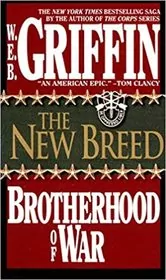
The New Breed
by W.E.B. Griffin
1987
War creates new units and new leaders, and a group of Marines has to prove itself in high-risk assignments. The story blends action with the practical reality of building a fighting force, where mistakes are punished immediately and success is never guaranteed.

The Aviators
by W.E.B. Griffin
1988
Air operations add a new layer of danger and responsibility as Marine aviators and their allies take on missions that can change a campaign. The book focuses on training, risk, and teamwork, showing how a pilot’s split-second choice affects everyone on the ground.

Special Ops
by W.E.B. Griffin
2001
An elite mission draws Marines into a high-risk operation where secrecy matters as much as firepower. The team has to rely on training, improvisation, and trust, because one leak, or one misread signal, could turn the whole job into a disaster.
Brotherhood of War (W.E.B. Griffin) books in chronological order
Series background & context
Brotherhood of War is W.E.B. Griffin’s sweeping Army series, built around a group of officers whose careers begin in the shadow of World War II and stretch into the Cold War. The early books drop you into the occupied postwar world, where the fighting has stopped but the pressure is still constant, and the rules change depending on who is watching. From there the series follows the ripple effects of the war into intelligence work, Pentagon politics, and the uneasy early decades of the next conflict.
At its heart, this is a series about professional friendships and rivalries. Young officers learn quickly that ability matters, but so do mentors, politics, and timing. Promotions come, but every step up seems to pull them closer to decisions that can ruin a career or save lives. “Brotherhood” here is real, but it is also tested.
These books love the meeting before the mission.
Griffin spends time on the machinery of the Army: training, paperwork, inspections, intelligence work, and the competing priorities of commanders who do not agree on what “the job” is anymore. The action sequences hit hard when they arrive, but the tension often comes from the slow build, the briefing room debate, or the moment someone realizes they have been used.
Because the cast is large, you get multiple angles on the same institution. Some characters are drawn to combat arms, others to intelligence, aviation, or special operations. Many are ambitious, and not always for the same reasons. The series has room for personal lives, marriages, and family ties, but those threads usually connect back to the core question of how you stay loyal to people while navigating an organization that rewards self-protection.
As the books move forward, the historical background shifts too. The immediate postwar scramble turns into Cold War maneuvering, with Soviet pressure, secrets worth killing for, and a steady sense that another fight is always around the corner. The series is not a dry history lesson, though. It stays grounded in character, in grudges, in who owes whom, and in the quiet compromises people make to keep moving.
The tone is pragmatic and procedural, with plenty of sharp dialogue and a steady interest in competence. It is less about grand speeches and more about what a colonel says to a major in a hallway, or how a lieutenant learns to keep their mouth shut at the wrong moment.
Read Brotherhood of War in publication order, starting with The Lieutenants. The books are built like a long arc, with relationships and old favors carrying forward. If you like military fiction that takes the institution seriously, including its flaws, this is one of Griffin’s best places to settle in.









Edited by
Software engineer whose passion for tracking book recommendations from podcasts inspired the creation of MRB.
Lead investor at 3one4 Capital whose startup expertise and love for books helped shape MRB and its growth.
Comments
Did we miss something? Have feedback?
Help us improve this page by sharing your thoughts