
British Library Crime Classics (Mavis Doriel Hay) Books in Order
Part ofMavis Doriel Hay Books in OrderSee the British Library Crime Classics books by Mavis Doriel Hay in order, with short summaries, reprint background, and tips on where to start.
Last updated:
As an Amazon Associate, we earn from qualifying purchases (at no extra cost to you).
British Library Crime Classics (Mavis Doriel Hay) books in publication order
3 books

Murder Underground
by Mavis Doriel Hay
1934
Miss Euphemia Pongleton is murdered on the stairs at Belsize Park station, and suspicion falls across the residents of her north London boarding house. As gossip spreads and loyalties shift, an everyday Tube journey opens into a clever closed-circle mystery.

Death on the Cherwell
by Mavis Doriel Hay
1935
When four Persephone College undergraduates find the bursar dead in a canoe on the Cherwell, they launch their own inquiry. Oxford gossip, college politics, and buried secrets turn a student lark into a sharp, fast-moving mystery.
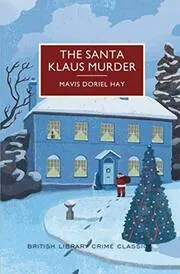
The Santa Klaus Murder
by Mavis Doriel Hay
1936
A tense family Christmas at Flaxmere turns deadly when Sir Osmond Melbury is found shot on Christmas Day. With motives everywhere and two Santa Klauses in the house, Colonel Halstock must pick his way through lies, resentment, and shifting alibis.
British Library Crime Classics (Mavis Doriel Hay) books in chronological order
Series background & context
This is a very short run of books, but it has a clear shape. The Mavis Doriel Hay titles in the British Library Crime Classics line collect all three of her detective novels, and each one stands alone. There is no long-running sleuth to follow from book to book. Instead, the pleasure comes from watching Hay take three classic Golden Age setups and give each one its own mood.
Murder Underground opens in north London with the death of the unpleasant Miss Euphemia Pongleton on the stairs at Belsize Park station. Much of the story grows out of the Frampton Private Hotel, where the other boarders all have opinions, grudges, and half-hidden loyalties. It is a closed-circle mystery, but not in a grand house. The boarding-house setting, the Tube, and the constant gossip make it feel busy, intimate, and slightly comic in a very English way.
Then Hay changes the scenery completely.
Death on the Cherwell moves to Persephone College, a fictional women's college at Oxford. Four undergraduates find the college bursar dead in a canoe on the river and decide to investigate for themselves. That gives the book a younger, brisker energy than many puzzle mysteries of the same period. You still get suspects, secrets, and official police work in the background, but you also get college rooms, river life, student rituals, and the confidence of young women trying to outthink the adults around them.
There is no single detective star here.
The Santa Klaus Murder leans hardest into the country-house tradition. At a Christmas gathering at Flaxmere, Sir Osmond Melbury is found shot, and Chief Constable Colonel Halstock has to sort through a family full of motive, resentment, and contradictory stories. It is festive, but not soft. The map, the timings, the changing accounts, and the question of who was really wearing the Santa suit make this the most openly puzzle-driven of the three.
What links the books is Hay's interest in groups under pressure. She likes places where people cannot easily escape one another, a boarding house, a college, a family Christmas, and she lets suspicion spread through those spaces in funny, awkward, and chilly ways. Her tone is more witty than brutal, and she cares more about social friction and clue work than violence. Because these books are standalones, you can start with whichever setting appeals most, but taken together they make a neat little sampler of Golden Age crime beyond the biggest names.
Other Series









Edited by
Software engineer whose passion for tracking book recommendations from podcasts inspired the creation of MRB.
Lead investor at 3one4 Capital whose startup expertise and love for books helped shape MRB and its growth.
Comments
Did we miss something? Have feedback?
Help us improve this page by sharing your thoughts