
Arthur Miller Books in Order
See the major plays and books by Arthur Miller in order, with short summaries, background notes, and where to start, plus a guide to key works.
Last updated: 22 new books added
As an Amazon Associate, we earn from qualifying purchases (at no extra cost to you).
Arthur Miller books in publication order
34 books

The Man Who Had All the Luck
by Arthur Miller
1940
David Beeves seems to succeed effortlessly while those around him suffer repeated setbacks. His unexplained good fortune becomes a source of dread, pushing him to question whether life follows any moral order or is governed entirely by chance.

Focus
by Arthur Miller
1945
When new glasses cause others to mistake Lawrence Newman for a Jewish man, he experiences the prejudice he once ignored. Amid wartime Brooklyn's hostility, he and his wife develop a connection with a Jewish immigrant facing persecution.
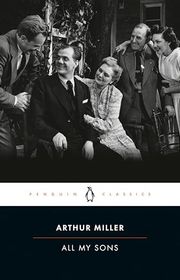
All My Sons
by Arthur Miller
1947
Prosperous manufacturer Joe Keller’s wartime business dealings cast a shadow over his family’s future. When his son plans to marry his imprisoned former partner’s daughter, buried questions about defective aircraft parts force a reckoning with loyalty and responsibility.
The Crucible
by Arthur Miller
1953
Witchcraft accusations spread through seventeenth-century Salem, turning private grudges and frightened testimony into public trials. As Elizabeth Proctor is accused, her family confronts a community whose religious certainty and collective fear threaten to destroy innocent lives.
A Memory of Two Mondays
by Arthur Miller
1955
Workers in a Brooklyn automobile-parts warehouse struggle through the Great Depression, trapped by poverty, exhaustion, and limited prospects. Among them, a young man dreams of college, confronting the distance between his hoped-for future and the lives around him.
A View from the Bridge
by Arthur Miller
1955
Brooklyn longshoreman Eddie Carbone’s predictable life changes when relatives from Italy arrive in his household. His niece Catherine’s growing independence exposes feelings he cannot acknowledge, setting family loyalty against jealousy and a dangerous need for control.
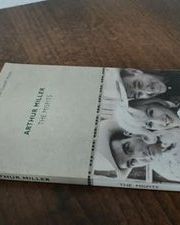
The Misfits
by Arthur Miller
1961
Four unsettled people meet in Reno: Roslyn, who has never felt she belonged, and three men surviving on rodeo work. Their search for freedom brings conflicting desires and loyalties into focus, revealing the costs of living outside conventional expectations.

Incident at Vichy
by Arthur Miller
1964
In occupied France, eight men and a boy wait after being seized by collaborationist authorities. Uncertainty about their fate exposes fear, prejudice, and private guilt as each detainee confronts the danger of persecution and the choices available to him.

The Price
by Arthur Miller
1968
Estranged brothers Victor and Walter Franz reunite to sell their father’s possessions in a brownstone attic. The furniture revives old resentments, forcing them to reconsider the sacrifices, ambitions, and competing memories that shaped their separate lives.

In Russia
by Arthur Miller
1969
Arthur Miller's observations of Soviet life accompany Inge Morath's photographs in this account of their travels. Encounters with artists, workers, and ordinary people explore the country's culture, daily routines, and relationship with its literary heritage.

The Creation of the World and Other Business
by Arthur Miller
1972
God’s satisfaction with creation is unsettled by Adam and Eve’s failure to multiply, prompting Lucifer to intervene. Miller’s comic reworking of Genesis follows temptation, exile, and family conflict while questioning the origins of responsibility and moral ambiguity.

In the Country
by Arthur Miller
1977
Inge Morath's photographs and Arthur Miller's accompanying text portray country life around Roxbury, Connecticut. The book observes local people and their surroundings, including neighbors whose lives helped inspire characters in Miller's work.
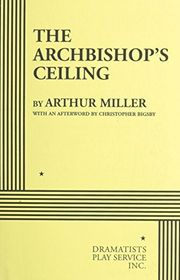
The Archbishop's Ceiling
by Arthur Miller
1977
In a former archbishop’s palace, writer Sigmund must choose between fleeing an oppressive regime and facing imprisonment. Friends debate his options in a room that may be bugged, where political beliefs, intimate histories, and uncertainty complicate every conversation.

The Theater Essays Of Arthur Miller
by Arthur Miller
1978
Miller examines tragedy, dramatic writing, and the role of theater through essays spanning decades of his career. Reflections on his own plays sit alongside arguments about American theater's institutions and its place in public life.

Chinese Encounters
by Arthur Miller
1979
Arthur Miller's commentary and Inge Morath's photographs record their encounters in China, including Beijing and Shanghai. The book considers everyday life, politics, and artistic expression through the people and places they visit.
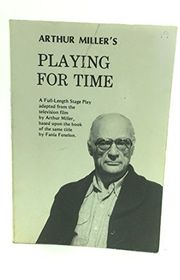
Playing for Time
by Arthur Miller
1981
Jewish singer Fania Fénelon is imprisoned at Auschwitz and recruited into its women’s orchestra. Performing for her captors offers a chance to survive, but she and her fellow musicians must confront the moral costs of making music amid atrocity.
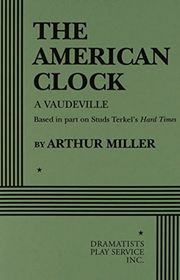
The American Clock
by Arthur Miller
1981
The wealthy Baum family loses its fortune in the stock-market crash, joining a nation struggling through the Great Depression. Interwoven scenes of farmers, workers, and aspiring performers show how economic collapse reshapes families, ambitions, and everyday survival.

Some Kind of Love Story
by Arthur Miller
1983
Private detective Tom presses Angela for information about a long-unresolved case involving an imprisoned man. Her evasions and psychological distress complicate his investigation, drawing him toward a disturbing network of corruption and a truth she has struggled to reveal.

Salesman in Beijing
by Arthur Miller
1984
Miller recounts directing a Chinese production of Death of a Salesman in Beijing in 1983. His rehearsal diary follows the cast's work and the cultural and linguistic challenges of bringing an American family tragedy to a Chinese stage.

Timebends
by Arthur Miller
1987
Miller looks back on his childhood, education, political development, and career in this autobiography. Memories of personal relationships and public controversies accompany reflections on the successes, disappointments, and experiences that shaped his writing.

The Ride Down Mt. Morgan
by Arthur Miller
1991
A car crash puts wealthy Lyman Felt in hospital, where two women discover that both are married to him. With his double life exposed, he tries to justify his choices while confronting the gulf between self-image and responsibility.
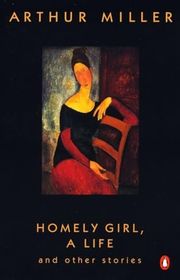
Homely Girl, A Life
by Arthur Miller
1992
Janice grows up hating her appearance but begins to understand herself through a relationship with a blind musician. Two companion Manhattan stories, “Fame” and “Fitter’s Night,” extend the collection’s exploration of work, honor, identity, and desire.

Broken Glass
by Arthur Miller
1994
In Brooklyn, Sylvia Gellburg suddenly loses the ability to walk without an obvious physical explanation. Her fixation on reports from Nazi Germany becomes the key to a mystery that unsettles assumptions about her condition and the life surrounding it.
Elegy for a Lady
by Arthur Miller
1998
A man enters a boutique seeking a gift for his seriously ill mistress and confides his fears to the proprietor. Their conversation explores an unhappy marriage, the limits of material success, and the difficulty of committing fully to another person.
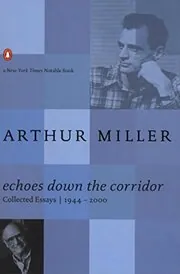
Echoes Down the Corridor
by Arthur Miller
2001
Essays and reportage written between 1944 and 1999 trace Miller's responses to social, political, and cultural events. These previously uncollected pieces connect his public arguments with his concerns as a writer and private citizen.

On Politics and the Art of Acting
by Arthur Miller
2001
Miller examines how political leaders perform for the public and how entertainment shapes democratic judgment. Considering presidential personalities and the disputed 2000 election, he asks what acting reveals about power and political persuasion.
Presence
by Arthur Miller
2004
Miller’s final story collection gathers shorter fiction first published in literary magazines. Pieces including “Bulldog,” “Beavers,” and “The Performance” offer another side of the dramatist’s writing through the concentrated form of the short story.

Resurrection Blues
by Arthur Miller
2006
A Latin American general captures a revolutionary rumored to perform miracles and plans a televised crucifixion. Selling the broadcast rights turns punishment into entertainment, exposing the collision of political power, commercial ambition, belief, and individual moral responsibility.
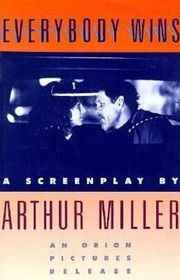
Everybody Wins
by Arthur Miller
2007
Private detective Tom O’Toole is hired by enigmatic Angela Crispini to investigate a young man convicted of murder. Attraction draws him deeper into a declining Connecticut town where corruption and evasions threaten to keep the truth hidden.
Collected Essays
by Arthur Miller
2016
This selection gathers Miller's writing on theater, individual plays, and social and political questions. Edited by Susan C. W. Abbotson, the collection follows his concerns from the Depression through the early twenty-first century.
Little Bastards of Yorkville
by Arthur Miller
2017
Artie Miller recalls growing up in New York's Yorkville neighborhood during the 1950s and 1960s. Street games, pranks, friendships, and working-class tenement life shape this memoir of childhood in a diverse urban community.

An Enemy of the People
by Arthur Miller
Dr. Stockmann discovers contamination in the water that supports his Norwegian town’s spa business. Reporting the danger turns his neighbors against him, forcing a confrontation between public health, economic self-interest, and the authority of the majority.

Death of a Salesman
by Arthur Miller
Aging salesman Willy Loman struggles with a failing career and the gap between his ambitions and his family's lives. Memories mingle with present conflicts as his hopes for his sons intensify a crisis over success, identity, and belonging.
Recommended by
1 person Daniel Pink recommended this book
Daniel Pink
"I had a completely different view of [this book] once I became a father versus before I became a father." - Daniel Pink
Daniel Pink's recommendation of this book

I Don't Need You Any More
by Arthur Miller
This collection brings together nine short stories spanning different themes and styles. It includes “The Misfits,” Miller’s story later adapted into the film starring Marilyn Monroe and Clark Gable, alongside other examples of his shorter fiction.
Standalone Arthur Miller books






Edited by
Software engineer whose passion for tracking book recommendations from podcasts inspired the creation of MRB.
Lead investor at 3one4 Capital whose startup expertise and love for books helped shape MRB and its growth.
Comments
Did we miss something? Have feedback?
Help us improve this page by sharing your thoughts