
Antony Beevor Books in Order
Explore Antony Beevor books in publication order, with short summaries and series lists to help you compare titles and choose your next book to read.
Last updated:
As an Amazon Associate, we earn from qualifying purchases (at no extra cost to you).
Antony Beevor books in publication order
16 books

The Violent Brink
by Antony Beevor
1975

The Enchantment Of Christina Von Retzen
by Antony Beevor
1989
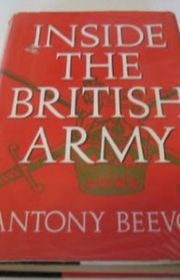
Inside the British Army
by Antony Beevor
1990
Returning to the army years after leaving it, Antony Beevor examines its customs, hierarchy and everyday life. Interviews with soldiers and commanders across Germany and Northern Ireland reveal an institution responding to political and social change.
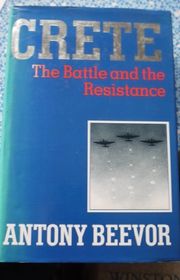
Crete
by Antony Beevor
1991
Antony Beevor reconstructs the German airborne invasion of Crete and the resistance that followed. Participants' accounts and original documents illuminate battlefield decisions, intelligence failures and the experiences of those caught in the struggle for the island.

Paris
by Antony Beevor
1994
Paris rebuilds its political and cultural life after liberation in this account drawn from diaries, archives and interviews. Antony Beevor follows the city's changing intellectual movements, theatrical experiments and fashions amid the unsettled aftermath of war.
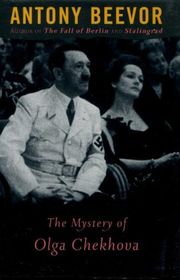
The Mystery of Olga Chekhova
by Antony Beevor
2004
Olga Chekhova escaped revolutionary Russia and became a celebrated actress in Nazi Germany, raising enduring questions about her loyalties. Antony Beevor investigates her remarkable career and the possibility that she secretly served Soviet intelligence.
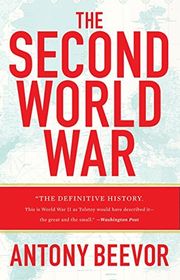
The Second World War
by Antony Beevor
2012
Antony Beevor traces the Second World War across its major theaters, connecting military operations with political decisions and human experience. The single-volume narrative places campaigns in a wider global sequence, helping readers understand how events in different regions interacted.
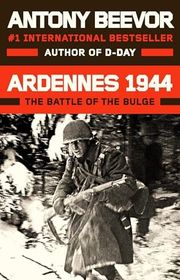
Ardennes 1944
by Antony Beevor
2015
Hitler's winter offensive in the Ardennes catches the Allies off guard and forces soldiers and civilians into desperate choices. Antony Beevor reconstructs the campaign's planning, brutal conditions and costly resistance through evidence from both sides.
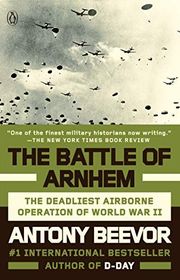
The Battle of Arnhem
by Antony Beevor
2018
Antony Beevor reconstructs Operation Market Garden, the Allied attempt to seize Dutch bridges and end the war swiftly. Accounts from multiple countries expose flawed planning, fierce resistance and the consequences for civilians who supported the advancing troops.
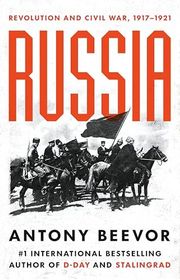
Russia
by Antony Beevor
2022
After the tsarist empire collapses, Russia descends into civil war involving revolutionaries, monarchists and foreign armies. Antony Beevor follows the conflict through leaders and ordinary witnesses, examining how escalating terror reshaped the country and its future.
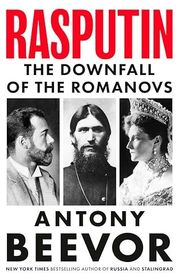
Rasputin
by Antony Beevor
2026
Antony Beevor examines Rasputin's rise from Siberian peasant to intimate of Russia's imperial family. Newly explored testimony separates his conduct from surrounding rumors, tracing how influence, exploitation and scandal contributed to the Romanovs' loss of authority.
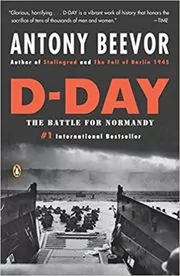
D-Day
by Antony Beevor
Antony Beevor follows the Normandy campaign from the Allied landings through the fighting that led to Paris's liberation. Drawing on military records and personal accounts, he examines commanders' decisions alongside the experiences of soldiers and French civilians.
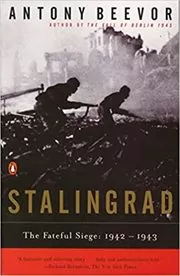
Stalingrad
by Antony Beevor
Antony Beevor reconstructs the battle of Stalingrad using German and Soviet sources, moving between military strategy and individual experience. His account follows the brutal fighting, civilian suffering, encirclement, and collapse of the German forces during the 1942-1943 campaign.
Recommended by
1 person Richard Branson recommended this book
Richard Branson
Richard Branson recommended this book on his "70 must-read books" blog post.
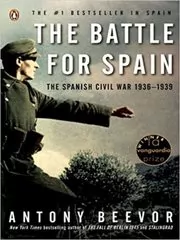
The Battle for Spain
by Antony Beevor
Antony Beevor examines the Spanish Civil War through political divisions, military campaigns, and foreign intervention. Drawing on Spanish, Russian, and German archives, he follows the conflict's development while exploring the rivalries and violence within both opposing camps.
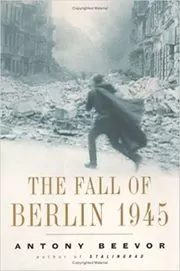
The Fall of Berlin 1945
by Antony Beevor
Antony Beevor traces the Soviet advance into Germany and the final struggle for Berlin in 1945. Military decisions and accounts from soldiers and civilians reveal the destruction, fear, reprisals, and daily efforts to survive as the Third Reich collapses.
Recommended by
1 person Christopher Hitchens recommended this book
Christopher Hitchens
"[The author's] heart-freezing account [...] of the rape and murder and humiliation that fell on Germans in the territory taken by the Soviet army in 1945." - Christopher Hitchens
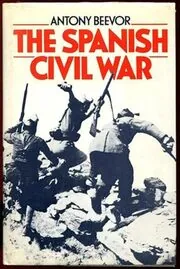
The Spanish Civil War
by Antony Beevor
Antony Beevor traces the origins and course of the Spanish Civil War, examining political conflict alongside military operations. His history explores divisions within the opposing sides and the international involvement that made Spain a battleground for competing ideologies.
Recommended by
1 person- Noah Smith recommended this book
Noah Smith
"Great book." - Noah Smith
Where to start with Antony Beevor
For a focused introduction: Stalingrad
For the wider conflict: The Second World War
For Normandy and the later western campaigns: D-Day → The Battle of Arnhem → Ardennes 1944
For Spain: The Battle for Spain
Standalone Antony Beevor books
Author bio
Antony Beevor is a historian of war whose books connect military operations with the experiences of soldiers and civilians. His subjects range from Spain and the Second World War to the Russian Revolution and its aftermath. Alongside those histories, his career includes fiction, a study of the British Army and a collaborative account of postwar Paris.
Beevor was educated at Winchester and Sandhurst, where he studied under military historian John Keegan. He became a regular officer in the 11th Hussars, serving in Germany and England, and left the Army after five years to write. The novels on this page, including The Violent Brink and The Enchantment Of Christina Von Retzen, sit beside the nonfiction that became the main focus of his career.
His history gives space to people caught inside events.
Beevor has explained that readers want to understand individual experience as well as decisions made by leaders. Diaries, letters and interviews can provide that closeness, but they need a wider context. He argues for bringing fresh material from different archives into the account, allowing the civilian and the serviceman, women and men, to appear within the same historical picture.
That view developed partly while he was researching Stalingrad in Moscow. In 1995, disappointing sales of books marking the end of the Second World War initially seemed to suggest declining public interest. Beevor later understood the moment differently: readers were seeking accounts that connected large events to individual lives. The problem was not simply whether people still wanted to read about the war, but how its history was being told.
Stalingrad brought several major awards.
It won the Samuel Johnson Prize, the Wolfson History Prize and the Hawthornden Prize in 1999. Crete also received the Runciman Award. These focused accounts offer a different scale from The Second World War, while D-Day, Ardennes 1944 and The Battle of Arnhem provide further routes through particular campaigns. A reader can begin with a single battle or choose the broader history first.
Beevor has also returned to earlier work as new evidence became available. The Battle for Spain substantially revises his original The Spanish Civil War, incorporating material from Spanish sources and foreign archives. With Russian researcher Lyubov Vinogradova, he edited and translated Vasily Grossman’s wartime papers in A Writer at War. Both projects reflect the importance of source material to his historical writing.
Collaboration also shaped Paris, written with his wife, historian Artemis Cooper, about the city after liberation. The Mystery of Olga Chekhova follows the Chekhov and Knipper families across revolution and war, giving readers a more concentrated family story. Russia and Rasputin extend the catalogue’s Russian subjects, while the books on individual Second World War campaigns remain useful choices for readers arriving with a particular place or operation in mind.








Edited by
Software engineer whose passion for tracking book recommendations from podcasts inspired the creation of MRB.
Lead investor at 3one4 Capital whose startup expertise and love for books helped shape MRB and its growth.
Comments
Spotted a missing book, a wrong order or a mistake? Tell us and we'll fix this page.
We're a reading guide, not the author or publisher, so we can't send books or pass on messages.