
Roger Sheringham Cases Books in Order
Part ofAnthony Berkeley Books in OrderThis page lists the Roger Sheringham Cases by Anthony Berkeley in order, with summaries, series background, character notes, and reading tips.
Last updated:
As an Amazon Associate, we earn from qualifying purchases (at no extra cost to you).
Roger Sheringham Cases books in publication order
11 books
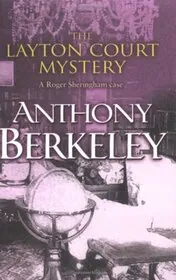
The Layton Court Mystery
by Anthony Berkeley
1925
At Layton Court, wealthy Victor Stanworth is found shot in a locked library, and suicide seems the easy answer. Guest Roger Sheringham is not convinced, beginning his career as a nosy, witty amateur sleuth.
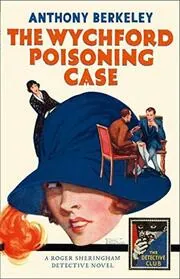
The Wychford Poisoning Case
by Anthony Berkeley
1926
Mrs. Jacqueline Bentley appears doomed when arsenic evidence piles up after her husband's death. Roger Sheringham thinks the case is too obvious, and his investigation turns a village poisoning into a study of motive and character.
Roger Sheringham and the Vane Mystery
by Anthony Berkeley
1927
Roger Sheringham travels to Ludmouth to report on Mrs. Vane’s fall from a cliff, then finds the accident story too neat. With his cousin Anthony Walton, he digs into a coastal case of jealousy and misdirection.
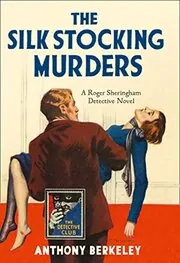
The Silk Stocking Murders
by Anthony Berkeley
1928
When a parson’s daughter disappears in London and is found strangled with her own silk stocking, the death looks like suicide. Roger Sheringham suspects a pattern and follows the clues into a darker city mystery.
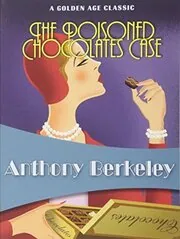
The Poisoned Chocolates Case
by Anthony Berkeley
1929
A poisoned box of chocolates kills Joan Bendix after it was meant, apparently, for Sir Eustace Pennefather. Roger Sheringham’s Crimes Circle offers solution after solution, each persuasive, and each more unsettling than the last.
The Second Shot
by Anthony Berkeley
1930
A murder game at Minton Deeps Farm turns real when Eric Scott-Davies is shot dead. With suspicion falling on Cyril Pinkerton, Roger Sheringham arrives to untangle a house party full of motives.
Top Storey Murder
by Anthony Berkeley
1931
When Miss Adelaide Barnett is strangled in her top-floor flat, Scotland Yard sees a burglar’s routine violence. Roger Sheringham notices details that do not fit, especially around the victim’s niece and the residents of Monmouth Mansions.
Murder in the Basement
by Anthony Berkeley
1932
Newlyweds Reginald and Molly Dane find a woman's body buried under their basement floor. Chief Inspector Moresby turns to Roger Sheringham, whose unfinished school novel may hold the odd key to the victim's identity.
Dead Mrs. Stratton / Jumping Jenny
by Anthony Berkeley
1933
At Ronald Stratton’s murder-themed party, a rooftop gallows is only meant as decoration until Ena Stratton is found hanging from it. Roger Sheringham must decide whether truth or mercy matters more.
Panic Party
by Anthony Berkeley
1934
Roger Sheringham joins a cruise party run by Mr. Pidgeon, whose social experiment strands the group on an island and whispers of murder. Polite manners collapse fast when the game turns deadly.
The Avenging Chance and Other Mysteries from Roger Sheringham's Casebook
by Anthony Berkeley
2004
This collection gathers Roger Sheringham and Chief Inspector Moresby stories, including the case that grew into The Poisoned Chocolates Case. The puzzles range from fake suicides to disappearing corpses, with Sheringham often as wrong as he is confident.
Roger Sheringham Cases books in chronological order






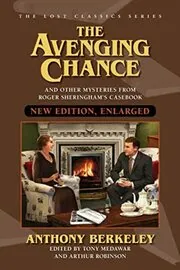
The Avenging Chance and Other Mysteries from Roger Sheringham's Casebook
by Anthony Berkeley
2004Roger Sheringham Cases, Book 11
Series background & context
The Roger Sheringham Cases are Anthony Berkeley's main detective series, but they do not behave like a neat, predictable detective franchise. Roger begins in The Layton Court Mystery as a crime novelist and amateur sleuth who is sure he can see what others miss. He is clever, talkative, vain, and often more amusing to watch than he would be to meet in person.
That fallibility matters.
Berkeley uses Roger as both detective and test subject. In early books such as The Wychford Poisoning Case and Roger Sheringham and the Vane Mystery, he charges into suspicious deaths with a mix of confidence and curiosity, often leaning on psychology as much as physical clues. The cases are fair-play puzzles, but they are also interested in how people explain behavior, and how easily a smart person can argue himself into the wrong answer.
The settings move through familiar Golden Age ground: country houses, villages, seaside cliffs, London flats, schools, and private parties. The tone changes from book to book. The Silk Stocking Murders has a darker city edge, The Poisoned Chocolates Case turns detection into a formal game of competing solutions, and Murder in the Basement asks investigators to work backward from a body whose identity is itself a mystery.
Chief Inspector Moresby of Scotland Yard appears in several cases and gives the series a useful counterweight. He is not just a slow official waiting for the amateur to shine. Berkeley often lets the police be sensible, patient, and sometimes closer to the truth than Roger is. That makes the books feel less like hero worship and more like a sly conversation about how detective stories are supposed to work.
The later books push the formula harder. In Jumping Jenny, Roger faces a murder-party setup where justice and legality do not point in the same direction. In Panic Party, he is part of a group stranded on an island, where the real question is how civilized people behave once fear takes over.
You can read the series in publication order if you want to watch Roger change. You can also start with The Poisoned Chocolates Case if you want Berkeley at his most puzzle-minded, then circle back to The Layton Court Mystery for the character's beginning. Either way, expect sharp games, human mess, and a detective who is interesting partly because he is not always right.














Edited by
Software engineer whose passion for tracking book recommendations from podcasts inspired the creation of MRB.
Lead investor at 3one4 Capital whose startup expertise and love for books helped shape MRB and its growth.
Comments
Did we miss something? Have feedback?
Help us improve this page by sharing your thoughts