
Annalee Newitz Books in Order
Browse Annalee Newitz books in order, with quick summaries, standout sci-fi and nonfiction picks, and simple guidance on where to start reading.
Last updated:
As an Amazon Associate, we earn from qualifying purchases (at no extra cost to you).
Annalee Newitz books in publication order
12 books

Pretend We're Dead
by Annalee Newitz
2006
Newitz reads zombies, serial killers, mad doctors, and cyborgs as monsters shaped by capitalist pressure. Part horror study and part cultural critique, the book asks what popular nightmares reveal about work, profit, and dehumanization.
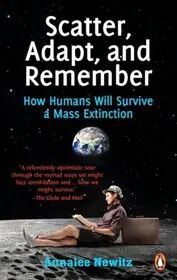
Scatter Adapt and Remember
by Annalee Newitz
2013
Newitz looks at Earth's past mass extinctions to ask how humans might survive the next one. The book blends deep history, science, and practical speculation into a surprisingly hopeful case for resilience, adaptation, and long-term thinking.
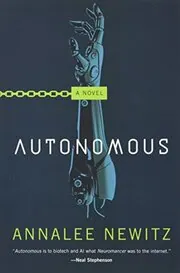
Autonomous
by Annalee Newitz
2017
In 2144, drug pirate Jack tries to outmaneuver a brutal patent system, but her newest medicine causes a deadly work addiction. As a military agent and his robot partner close in, the chase becomes a story about freedom, labor, and ownership.

Old Media
by Annalee Newitz
2019
Set in the world of Autonomous, this short story follows a freed slave and a robot professor as they watch old anime and puzzle through desire, memory, and love. It is tender, strange, and quietly funny.
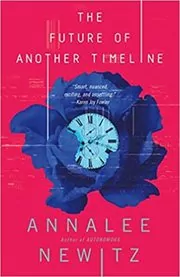
The Future of Another Timeline
by Annalee Newitz
2019
A murder after a riot grrrl show pulls teenager Beth into a dangerous pact, while time traveler Tess fights to rewrite a safer future. Their stories collide in a fierce battle over history, power, and who gets to shape the timeline.
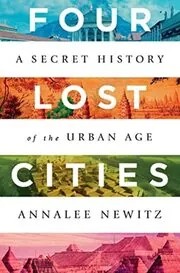
Four Lost Cities
by Annalee Newitz
2020
Newitz visits Çatalhöyük, Pompeii, Angkor, and Cahokia to ask how great cities rise, change, and disappear. It is lively archaeology and travel writing, with ancient urban experiments shedding light on the pressures modern cities still face.

#Selfcare
by Annalee Newitz
2021
In near-future San Francisco, Edwina is barely hanging on at a luxury skin-care chain when her boss picks a fight with the fae online. Gig work satire meets sharp workplace fantasy, with beauty culture turning literally monstrous.
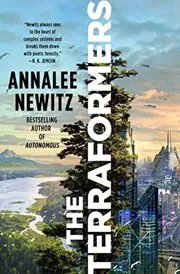
The Terraformers
by Annalee Newitz
2023
On the planet Sask-E, ranger Destry helps build a living world for future settlers. When she discovers a hidden city inside a volcano, the mission becomes a multigenerational struggle over ecology, corporate control, and who gets to belong.

Stories Are Weapons
by Annalee Newitz
2024
Newitz traces how propaganda, disinformation, and psychological warfare moved from military campaigns into American culture wars. The book links old tactics to online influence battles, while asking how people might disarm these stories and build something better.

Automatic Noodle
by Annalee Newitz
2025
In a war-scarred future San Francisco, a crew of leftover robots reopen an abandoned ghost kitchen and start making unforgettable noodles. Their small business becomes a fight for dignity, community, and survival when a wave of bad reviews turns them into a target.

Sneak Peek for Automatic Noodle
by Annalee Newitz
2025
This short sampler introduces Automatic Noodle, where abandoned food-service robots reopen a ghost kitchen in future San Francisco. It offers an early taste of the novella's humor, community spirit, and very serious noodle making.

A Wall Is Also a Road
by Annalee Newitz
2026
Gardenpath, an alien graduate student from a slime mold civilization, arrives on Earth expecting a research triumph. Instead they find Pompeii, meet a woman named Murtis, and start questioning science, ambition, and what it means to truly know another world.
Where to start with Annalee Newitz
If you want a sharp biotech thriller: Autonomous
If you want punk time travel and feminist history: The Future of Another Timeline
If you want hopeful, community-minded science fiction: Automatic Noodle → The Terraformers
If you want smart nonfiction first: Four Lost Cities → Stories Are Weapons → Scatter Adapt and Remember
Annalee Newitz collections, short stories, and related book types
Short Stories/Novellas
Non-Fiction
Standalone Annalee Newitz books
Author bio
Annalee Newitz is from Irvine, California, and grew up there before moving to Berkeley in 1987. They later earned a PhD in English and American Studies at UC Berkeley, writing about monsters, capitalism, and American pop culture. That research eventually fed into Pretend We're Dead, an early nonfiction book that already shows one of their lasting interests, the way stories can reveal who holds power and who gets shut out.
They started freelance writing in the mid-1990s and built a career by following science, technology, and culture wherever those subjects got messy. Over the years they worked at the San Francisco Bay Guardian, received a Knight Science Journalism Fellowship at MIT, founded io9, and later served as editor-in-chief of Gizmodo. In 2019 they also became a contributing opinion writer for The New York Times, adding one more lane to a career that has always moved easily between reporting, criticism, and big ideas.
Then fiction caught up with the journalism.
You can feel that background all through Autonomous, Newitz's first novel. It starts like a fast future thriller, with a drug pirate, a dangerous pharmaceutical hack, and a military agent on the hunt, but it keeps opening into bigger questions about labor, patents, consent, and whether a person can really be free in a world built on ownership. It won the Lambda Literary Award, and it is still the cleanest place to start if you want to see how Newitz thinks on the page.
The Future of Another Timeline shows a different side of their work. It mixes punk music, time travel, and feminist politics, following women who are literally fighting over history. Then The Terraformers zooms out to planetary scale, with workers, animals, and engineered beings struggling over land, ecology, and the right to belong. Even Automatic Noodle, which is smaller and warmer on the surface, keeps those questions in play as abandoned robots try to build a life through food and community in a recovering San Francisco.
Their nonfiction has the same curious, grounded feel. Four Lost Cities travels through Çatalhöyük, Pompeii, Angkor, and Cahokia to ask why cities rise, change, and sometimes empty out. Scatter, Adapt, and Remember takes an even longer view, looking at past mass extinctions and arguing, in plain language, that survival is less about lone heroes and more about flexibility, cooperation, and planning ahead. Readers who like Newitz's journalism usually respond to that mix of deep research and direct, readable prose.
Big systems, weird futures, and ordinary people trying to live inside them, that is the through line.
That same instinct shapes Stories Are Weapons, where Newitz traces how propaganda and psychological warfare moved from military strategy into American culture wars. Across fiction and nonfiction alike, they keep returning to a few core questions: who gets counted as human, who controls the narrative, and how communities push back when institutions get too powerful. The books are full of ideas, but they are rarely cold. There is usually humor in the mix, plus a real affection for people improvising their way toward better futures.
These days, Newitz still moves easily between journalism and books. They write a monthly column for New Scientist, contribute widely as a science journalist, and are part of the Flaming Hydra collective. They were also the co-host of the Hugo Award-winning podcast Our Opinions Are Correct. If you like speculative fiction that is smart without being stiff, or nonfiction that treats the past as a working tool for thinking about the future, Newitz is a very good writer to keep on your shelf.









Edited by
Software engineer whose passion for tracking book recommendations from podcasts inspired the creation of MRB.
Lead investor at 3one4 Capital whose startup expertise and love for books helped shape MRB and its growth.
Comments
Did we miss something? Have feedback?
Help us improve this page by sharing your thoughts