
Ann Petry Books in Order
Browse Ann Petry books in reading order, with short summaries for each book and a clear title list to help you find a starting point.
Last updated:
As an Amazon Associate, we earn from qualifying purchases (at no extra cost to you).
Ann Petry books in publication order
7 books
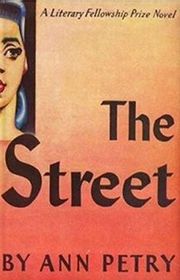
The Street
by Ann Petry
1946
Lutie Johnson seeks a better life for herself and her son in Harlem, but poverty, violence, and racial prejudice obstruct her efforts. Her struggle reveals the pressures that surround a determined mother trying to build an independent future.
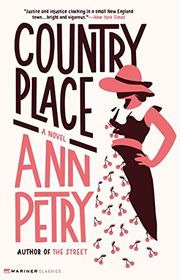
Country Place
by Ann Petry
1947
Returning from World War II, Johnnie Roane hears rumors that unsettle his faith in his marriage. As a hurricane approaches his Connecticut hometown, concealed resentments and private betrayals threaten to erupt beneath its outwardly peaceful surface.

The Drugstore Cat
by Ann Petry
1949
A small cat's quick temper makes patience a difficult lesson to learn. This children's story follows the challenge of managing strong feelings and developing the self-restraint needed when an immediate reaction is not the best response.
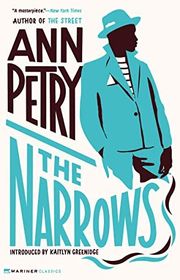
The Narrows
by Ann Petry
1953
After rescuing a white woman from danger, Black bartender Link begins a secret relationship with her across their town's racial divide. Her wealth and marriage complicate an affair already threatened by prejudice and unequal opportunities.

Harriet Tubman
by Ann Petry
1955
Born enslaved, Harriet Tubman escapes and then repeatedly risks her freedom to help others reach safety. Petry's biography for young readers follows her childhood, abolitionist work, and Civil War service through a life defined by courage and resistance.

Tituba of Salem Village
by Ann Petry
1964
Enslaved in a minister's household, Tituba becomes a target as frightened Salem villagers seek explanations for the girls' strange fits. Her skills and fortune-telling are treated as evidence, placing her life at risk amid accusations of witchcraft.
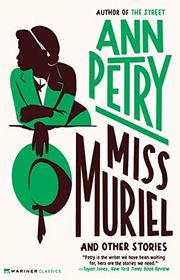
Miss Muriel and Other Stories
by Ann Petry
1971
These stories explore Black lives shaped by racism, aspiration, love, and fear in twentieth-century America. A pharmacist's family, a vulnerable teacher, and a girl observing adult relationships reveal how public prejudice enters private lives with lasting consequences.
Where to start with Ann Petry
For her Harlem novel: The Street
For New England communities under pressure: Country Place → The Narrows
For short fiction: Miss Muriel and Other Stories
For historical writing for younger readers: Harriet Tubman → Tituba of Salem Village
Standalone Ann Petry books
Author bio
Ann Petry wrote novels and stories about people whose ambitions meet the pressure of racism, money and other people's power. Born in Old Saybrook, Connecticut, in 1908, she trained in pharmacy and worked in the family business. She was already writing short stories during those years, before a move to Harlem brought journalism and a different range of experiences into her working life.
She moved to Harlem in 1938.
That neighborhood became the setting of The Street, her first novel. Its central character, Lutie Johnson, wants a better life for herself and her son. Hard work seems to offer a route forward, but the people who control housing, employment and opportunity place demands on her that effort alone cannot answer. Petry makes the places Lutie moves through part of that pressure: a home or a possible job can also expose her to danger.
The novel became the first by an African American woman to sell more than a million copies. Its success brought attention that Petry did not welcome. She and her husband returned to Old Saybrook in 1947, and she kept a firm boundary between her writing and the public's interest in her personal life.
Connecticut was another important fictional landscape.
Country Place looks beneath the surface of a small New England town, finding lies and dissatisfaction within an apparently settled community. The Narrows takes a broader view of an industrial waterfront town, with an interracial relationship at its center. Link Williams and Camilo Sheffield move through a society in which race and class shape how their actions are understood. The setting lets Petry bring different households and social positions into the same story.
Miss Muriel and Other Stories offers a shorter route into those concerns. Its characters include members of a pharmacist's family and a teacher exposed to cruelty, with private relationships repeatedly affected by public prejudice. Read beside the novels, the stories show how a small encounter or a familiar workplace can carry the same weight as a larger social conflict.
Petry also wrote for younger readers. Harriet Tubman tells the life of the woman who helped enslaved people escape to freedom, while Tituba of Salem Village uses historical fiction to examine accusation and fear around an enslaved woman. These are different kinds of books, so readers should choose between biography and a novel rather than expect a continuing series.
Petry died in 1997. Begin with The Street for her Harlem fiction, then turn to The Narrows for another community under scrutiny. Her books ask readers to look closely at who has room to choose, and who must live within choices made by others.










Edited by
Software engineer whose passion for tracking book recommendations from podcasts inspired the creation of MRB.
Lead investor at 3one4 Capital whose startup expertise and love for books helped shape MRB and its growth.
Comments
Spotted a missing book, a wrong order or a mistake? Tell us and we'll fix this page.
We're a reading guide, not the author or publisher, so we can't send books or pass on messages.