
Allen M Steele Books in Order
Explore Allen M Steele books in order, with quick summaries, guides to the Coyote and Near Space series, and clear advice on where to start reading.
Last updated: 7 new books added
As an Amazon Associate, we earn from qualifying purchases (at no extra cost to you).
Allen M Steele books in publication order
51 books
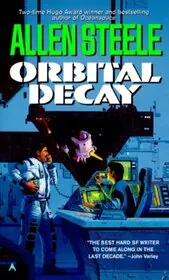
Orbital Decay
by Allen M Steele
1989
Construction crews in Earth orbit think they are building a solar power satellite, until the job starts to look far darker. Steele's debut brings blue-collar grit and political anger to a very plausible near future.
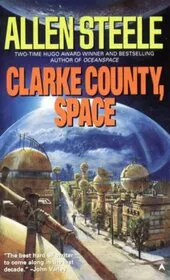
Clarke County, Space
by Allen M Steele
1990
On a huge orbital colony, Sheriff John Bigthorn has to juggle mob violence, local politics, and separatist tension. It is a lively Near-Space story that mixes frontier law, crime, and orbital realism.
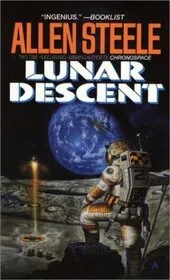
Lunar Descent
by Allen M Steele
1991
Life at a lunar mining station is already hard enough before trouble erupts far from help. Steele focuses on the workers, security staff, and fragile machinery that make a Moon settlement feel real.
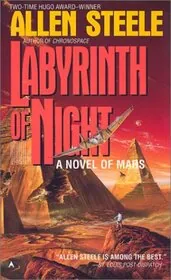
Labyrinth of Night
by Allen M Steele
1992
An expedition to the Face on Mars uncovers a far older mystery beneath the dust. Steele turns one of science fiction's favorite Martian myths into an adventure about ruins, obsession, and what humans hope to find.

Rude Astronauts
by Allen M Steele
1993
Steele's first collection brings together stories and essays about spaceflight, hard luck, and the less glamorous side of the high frontier. The mood is skeptical, funny, and deeply interested in working people.
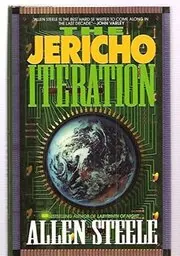
The Jericho Interation
by Allen M Steele
1994
A murder case in a battered near-future America pulls an ex-cop toward a larger conspiracy. It is one of Steele's grittier thrillers, more street level than cosmic, but just as interested in pressure and consequence.

The Death of Captain Future
by Allen M Steele
1995
In Steele's Near-Space future, one man's devotion to an old pulp hero turns into something far more dangerous and sad. The story contrasts dream-filled fandom with a rough, realistic solar-system frontier.

The Good Rat
by Allen M Steele
1995
Told by a barely literate professional test subject, this short work follows a man selling pieces of himself to get by. It is grim, compassionate, and unusually intimate.

The Weight
by Allen M Steele
1995
Set in Steele's Near-Space future, this short novel follows human beings under crushing pressure aboard a commercial spacecraft. The journey is tense, intimate, and shaped by how little margin space ever allows.

All-American Alien Boy
by Allen M Steele
1996
This collection broadens Steele's range, mixing science fiction with darker and more offbeat pieces about outsiders, workers, and strivers. The stories keep his plain style but wander far beyond rockets and moons.
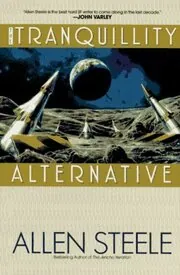
The Tranquillity Alternative
by Allen M Steele
1996
In this alternate history, the United States placed nuclear missiles on the Moon and later must reckon with them. A mission to stop a lunar crisis turns into a tense mix of politics, hardware, and cold-war paranoia.
A King of Infinite Space
by Allen M Steele
1997
A man expecting death wakes more than a century later in a new body and a very different society. Steele uses that premise to ask who owns a life, and what freedom means when the future has already claimed you.

Zwarte Piet’s Tale
by Allen M Steele
1998
Two Martian settlers try to bring a kinder version of Christmas back to the scattered colonies by becoming traveling gift-givers and medics. The result is funny, generous, and quietly moving.

Sex and Violence in Zero-G
by Allen M Steele
1999
This big collection gathers Steele's Near-Space stories into one place, including award-winning work set across Earth orbit, the Moon, and Mars. It is the best single map to his grounded solar-system future.

Agape Among the Robots
by Allen M Steele
2000
Two former lovers compete to build the first truly marketable household robot, and their rivalry gets complicated fast. Steele uses the setup for a quick, funny story about AI behavior and human baggage.
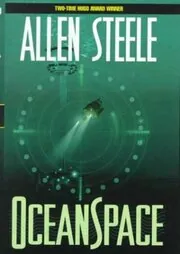
OceanSpace
by Allen M Steele
2000
A high-risk expedition into the deep ocean chases scientific discovery in a realm as dangerous as outer space. Steele trades rockets for submersibles without losing his taste for pressure, mystery, and frontier danger.
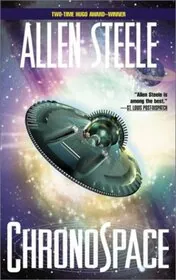
Chronospace
by Allen M Steele
2001
A trip back to the Hindenburg landing goes wrong when the disaster never happens and history begins to unravel. Steele blends time travel, aliens, and alternate history into a smart, fast-moving thriller.

Stealing Alabama
by Allen M Steele
2001
A crew of dissidents plots to steal humanity's first interstellar starship before an authoritarian America can use it for its own future. This novella lays the groundwork for the whole Coyote saga.

The Days Between
by Allen M Steele
2001
Leslie Gillis wakes far too early on the long voyage to Coyote and must endure the silence between worlds. It is a lonely, moving story about duty, isolation, and the slow passage of interstellar time.
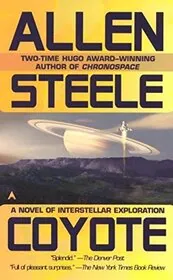
Coyote
by Allen M Steele
2002
In an authoritarian future America, dissidents hijack the interstellar starship Alabama and flee to a distant habitable moon. What follows is part colony tale, part political breakaway story, and part frontier survival novel.
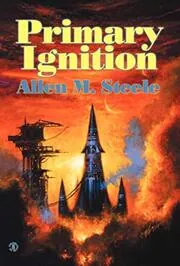
Primary Ignition
by Allen M Steele
2003
A collection of essays from 1997 to 2001, this book gathers Steele's thoughts on science fiction, spaceflight, fandom, and writing. It is sharp, opinionated, and useful for readers who like the nonfiction side of the field.
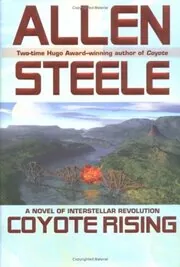
Coyote Rising
by Allen M Steele
2004
The first settlers of Coyote wanted freedom, but fresh arrivals from a new Earth regime bring control, hierarchy, and conflict. Revolution grows out of frontier life as the colony fights to choose its own future.
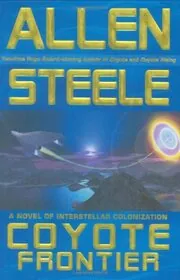
Coyote Frontier
by Allen M Steele
2005
Coyote has become a functioning colony, but survival still depends on a difficult relationship with Earth. Trade, migration, and political pressure force both worlds to decide whether cooperation is possible.
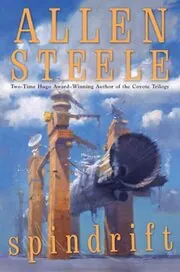
Spindrift
by Allen M Steele
2007
A prisoner gets one shot at redemption when he joins a mission to investigate a baffling alien world drifting between the stars. The trip becomes a first-contact story full of wonder, suspicion, and hard choices.

The Hard Stuff
by Allen M Steele
2007
This nonfiction collection shows Steele as an essayist and critic, writing about science fiction, space, and the arguments around hard SF. It is a good glimpse of the ideas behind the fiction.

The River Horses
by Allen M Steele
2007
On Coyote, a band of settlers pushes into the interior to build a life beyond the established towns. Their rough journey turns into a frontier adventure about community, risk, and second chances.
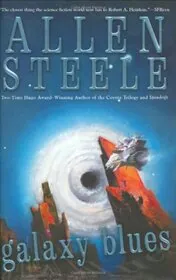
Galaxy Blues
by Allen M Steele
2008
Disgraced pilot Jules Truffaut lands on Coyote with nowhere to go and little luck. A shady job sends him toward alien worlds, black-hole danger, and the kind of trouble that can finally force him to grow up.

The Last Science Fiction Writer
by Allen M Steele
2008
This collection samples several corners of Steele's career, from Near-Space pieces to Coyote stories and alternate history. It works well as a cross-section of the themes he returns to again and again.
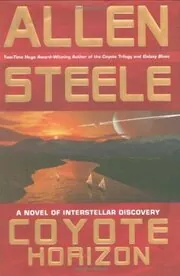
Coyote Horizon
by Allen M Steele
2009
Hawk Thompson returns from the wilderness with secrets about Coyote's native intelligence and a new sense of how strange the planet really is. His search for answers opens the series toward first contact and deeper history.

Where Angels Fear to Tread
by Allen M Steele
2009
Sent to observe the Hindenburg disaster, a time traveler instead watches history veer wildly off course. This award-winning novella mixes time travel, alternate history, and first contact in a tight, elegant package.
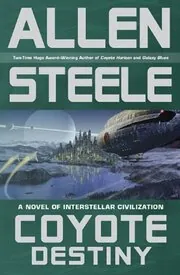
Coyote Destiny
by Allen M Steele
2010
As Coyote steps onto a larger interstellar stage, its settlers face new alliances, old wounds, and discoveries that could change their world again. The final Coyote novel ties colony politics to the wider fate of human civilization.

The Emperor of Mars
by Allen M Steele
2010
A working man signs on for a Martian stint hoping to earn a better life, then finds loneliness, camp politics, and a strange local legend waiting for him. Steele gives frontier Mars a human, blue-collar texture.

Angel of Europa
by Allen M Steele
2011
When only one pilot returns from a Europa expedition, an investigator has to decide whether she is lying, guilty, or the lone witness to something astonishing beneath the ice. Steele plays the setup as a compact space mystery.
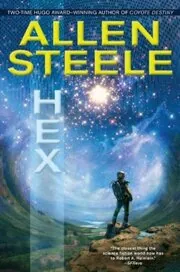
Hex
by Allen M Steele
2011
Captain Andromeda Carson and her estranged son travel to inspect a supposedly habitable world offered by alien allies. What they find instead is a staggering engineered mystery that could reshape humanity's place in the stars.
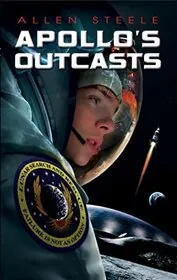
Apollo's Outcasts
by Allen M Steele
2012
Moon-born Jamey Barlowe can barely function in Earth's gravity, but a desperate flight to the Moon changes everything. Part refugee adventure, part lunar survival story, it gives him a chance to stand on his own at last.

Escape From Earth
by Allen M Steele
2014
A small-town teenager whose dreams have narrowed to almost nothing has a startling encounter with three kids from somewhere else. Steele turns it into a brisk young adult adventure with wonder and heart.
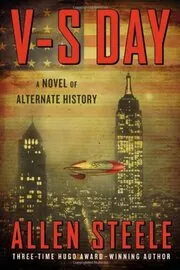
V-S Day
by Allen M Steele
2014
In an alternate Second World War, Robert Goddard and Wernher von Braun race to build the first manned rocket. Steele turns the early space race into a tense story of science, espionage, and wartime stakes.

Tales of Time and Space
by Allen M Steele
2015
Twelve stories range from grounded near-future science fiction to playful pulp homage and Coyote tales. It is a varied, approachable collection that shows how flexible Steele can be at shorter lengths.
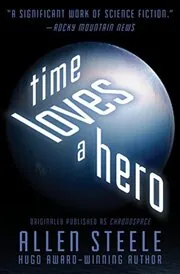
Time Loves a Hero
by Allen M Steele
2015
A time traveler arrives in 1937 to witness the Hindenburg disaster, only to find history suddenly off course. Fixing the damage will take a reluctant scientist, a tangled timeline, and a race to save the future.
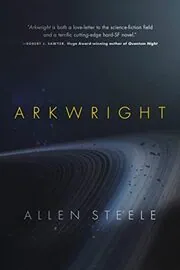
Arkwright
by Allen M Steele
2016
An aging science fiction writer leaves behind a foundation with an audacious goal, send human life to another star. The novel follows generations of the Arkwright family as that dream pulls them together and tears them apart.
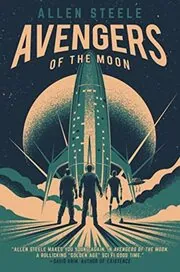
Avengers of the Moon
by Allen M Steele
2017
Raised in a hidden Moon base by a strange trio of mentors, Curt Newton goes hunting for his parents' killer and stumbles into a Martian conspiracy. It is a brisk reboot of Captain Future with pulp adventure and modern science.

Sanctuary
by Allen M Steele
2017
A tired private detective takes a case inside a strange human enclave on Tau Ceti-e and uncovers the colony's buried history. The story mixes noir investigation with alien politics and the aftermath of a crash colony.

The Doppler Effect and Other Stories
by Allen M Steele
2017
Three novellas mix science fiction with mystery and crime, from a fake alien signal to a detective case on an old-style Venus and an alternate-history mission involving Einstein. It is lean, clever, and fun.
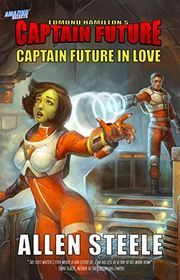
Captain Future in Love
by Allen M Steele
2019
An emergency at a colony orbiting Venus brings Curt Newton and the Futuremen back to the place where he first fell in love. Memories of a young thief complicate a mission that draws his past into the present.
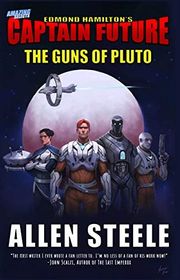
The Guns of Pluto
by Allen M Steele
2020
The Black Pirate seizes hostages at an isolated prison on Pluto and demands Captain Future come to their rescue. Racing across the solar system, Curt Newton and his companions suspect an old enemy has prepared a trap.

1,500 Light Years from Home
by Allen M Steele
2021
A stolen warp drive carries Ul Quorn and a hijacked spaceliner to a world orbiting Deneb. Caught up in the journey, Captain Future faces alien horrors and a doomsday weapon whose discovery could endanger Earth.
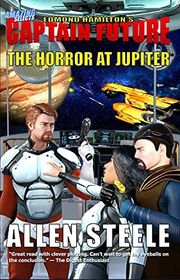
The Horror at Jupiter
by Allen M Steele
2021
Imprisoned for the assassination of the Solar Coalition president, Curt Newton faces trial while Ul Quorn returns with a weapon capable of destroying worlds. Captain Future and his allies must stop an attack on Earth.
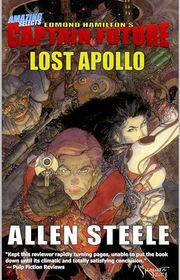
Lost Apollo
by Allen M Steele
2024
An Apollo spacecraft emerges near the Moon from a mission that never existed in recorded history. Captain Future investigates its displaced astronauts, seeking their original timeline while uncovering a threat reaching across multiple universes.

Snowdance
by Allen M Steele
2025
Three teens from three different centuries are sent to a frozen alien world after a research team goes silent. Snow, sabotage, and culture clash turn the rescue into a survival mystery.
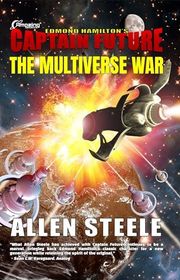
The Multiverse War
by Allen M Steele
2025
Captain Future and his crew arrive in a parallel universe where Earth has been destroyed and an old friend has become an enemy. Their struggle against invaders who command stellar power threatens the survival of countless other worlds.
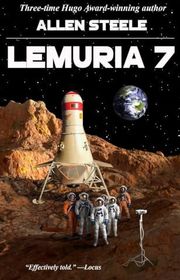
Lemuria 7
by Allen M Steele
2026
A billionaire’s privately funded lunar expedition vanishes with his family and crew aboard. Refusing to accept a simple accident, Merlin Feng launches a search that draws him toward deeper mysteries and fresh dangers on the Moon.
Where to start with Allen M Steele
If you want frontier colonization: Coyote → Coyote Rising → Coyote Frontier
If you want grounded near-future space drama: Orbital Decay → Lunar Descent → Labyrinth of Night
If you want time travel: Where Angels Fear to Tread → Time Loves a Hero
If you want alternate history and space-race what-ifs: V-S Day → The Tranquillity Alternative
If you want a big standalone idea: Arkwright
Allen M Steele sub-series and character series
Captain Future books in order
Explore this seriesCoyote (Allen M Steele) books in order
Explore this seriesCoyote (Allen M Steele) books in chronological order
David Brin's Out Of Time books in order
Explore this seriesDavid Brin's Out Of Time books in chronological order
Near-Space (Allen M Steele) books in order
Explore this seriesNear-Space (Allen M Steele) books in chronological order
Allen M Steele collections, short stories, and related book types
Near-Space Short Stories/Novellas
Coyote Short Stories/Novellas
Short Story Collections
Short Stories/Novellas
Non-Fiction
Standalone Allen M Steele books
Author bio
Allen M. Steele was born in Nashville, Tennessee, on January 19, 1958, and he grew up there with science fiction already in the mix. He found fandom early through local club meetings, old magazines, and the kind of stories that make space feel both huge and reachable. He later attended the Webb School in Bell Buckle, earned a bachelor's degree from New England College, and went on to the University of Missouri for a master's in journalism.
Before he became known for fiction, he worked as a journalist in Tennessee, Missouri, New Hampshire, and Massachusetts. That background matters. His novels and stories usually pay close attention to work, systems, and the way institutions actually grind against everyday people.
He began publishing science fiction in 1988, and his first novel, Orbital Decay, followed in 1989. It won the Locus Award for best first novel and announced a lot of what readers still come to him for now: hard science, plausible futures, and people in space who feel more like construction crews, miners, or tired cops than gleaming supermen.
Space is his home turf.
A lot of readers start with Coyote, which begins with dissidents stealing a starship from an authoritarian America and trying to build a freer life on a distant world. Others land first in the linked Near-Space books, especially Lunar Descent or Labyrinth of Night, where lunar mines, orbital colonies, and Martian expeditions become settings for stories about pressure, risk, and ordinary competence.
He has never stayed in just one corner of the genre. Arkwright is a large, multigenerational novel about the dream of sending humanity to another star. V-S Day turns the early space race into alternate history. Apollo's Outcasts takes his long-running interest in lunar settings and reshapes it into a fast younger-skewing adventure about a Moon-born boy finally getting the chance to return.
His short fiction is just as important to the picture. The Death of Captain Future and The Emperor of Mars both won Hugo Awards, and they show two sides of what he does well: affection for old science fiction dreams, and a very grounded interest in the people who have to live inside those dreams once the romance wears off.
He is, in other words, not pretending to be interested in space.
That lifelong fascination has taken him to multiple shuttle launches at Kennedy Space Center, and he has even flown NASA's shuttle cockpit simulator. He has served in advisory roles connected to science fiction and space advocacy, and in 2001 he testified before a House subcommittee about the future of space exploration. He now lives in western Massachusetts with his wife, Linda, and their dogs. He has also spoken about collecting vintage science fiction books, magazines, and spacecraft model kits, which feels exactly right for a writer whose work keeps asking what the human future in space might really look like once the machinery starts humming and people have to get on with the job.





Edited by
Software engineer whose passion for tracking book recommendations from podcasts inspired the creation of MRB.
Lead investor at 3one4 Capital whose startup expertise and love for books helped shape MRB and its growth.
Comments
Did we miss something? Have feedback?
Help us improve this page by sharing your thoughts