
Near-Space (Allen M Steele) Books in Order
Part ofAllen M Steele Books in OrderSee the Near-Space books by Allen M Steele in order, with concise summaries, series background, and tips on where to begin reading.
Last updated:
As an Amazon Associate, we earn from qualifying purchases (at no extra cost to you).
Near-Space (Allen M Steele) books in publication order
5 books
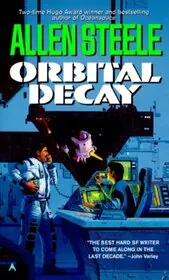
Orbital Decay
by Allen M Steele
1989
Construction crews in Earth orbit think they are building a solar power satellite, until the job starts to look far darker. Steele's debut brings blue-collar grit and political anger to a very plausible near future.
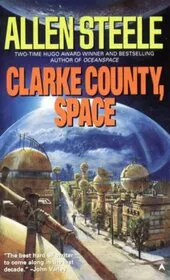
Clarke County, Space
by Allen M Steele
1990
On a huge orbital colony, Sheriff John Bigthorn has to juggle mob violence, local politics, and separatist tension. It is a lively Near-Space story that mixes frontier law, crime, and orbital realism.
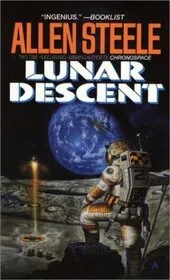
Lunar Descent
by Allen M Steele
1991
Life at a lunar mining station is already hard enough before trouble erupts far from help. Steele focuses on the workers, security staff, and fragile machinery that make a Moon settlement feel real.
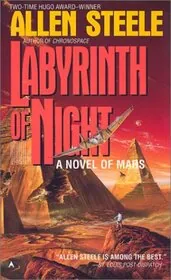
Labyrinth of Night
by Allen M Steele
1992
An expedition to the Face on Mars uncovers a far older mystery beneath the dust. Steele turns one of science fiction's favorite Martian myths into an adventure about ruins, obsession, and what humans hope to find.
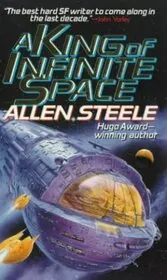
A King of Infinite Space
by Allen M Steele
1997
A man expecting death wakes more than a century later in a new body and a very different society. Steele uses that premise to ask who owns a life, and what freedom means when the future has already claimed you.
Near-Space (Allen M Steele) books in chronological order
Series background & context
The Near-Space books are where Allen M. Steele first made his name, and they still feel like a clear statement of what he does best. These stories are set in a believable near future where humanity has pushed into orbit, the Moon, and Mars, not through magic breakthroughs, but through corporations, contractors, pilots, miners, mechanics, and a lot of risky labor.
That working-world angle matters. The series is sometimes called the Rude Astronauts sequence, and that nickname fits. These are not spotless heroic myths about perfect astronauts. Steele is much more interested in beamjacks building giant structures in orbit, cops trying to keep order in space colonies, and crews doing dangerous jobs with equipment that can fail at exactly the wrong time.
Orbital Decay starts the sequence with construction workers assembling a huge solar power satellite in Earth orbit. From there, the books spread out. Clarke County, Space moves to a bustling orbital colony where crime, politics, and independence movements all rub against one another. Lunar Descent takes readers to a Moon mining station and makes its daily routines feel as important as the bigger dangers surrounding them.
The series keeps widening after that. Labyrinth of Night heads to Mars and turns a famous planetary mystery into a tense expedition story. A King of Infinite Space pushes the timeline forward and asks stranger questions about identity, memory, and what kind of future a person might wake up to. Alongside the novels, the short fiction collected in Sex and Violence in Zero-G fills in the edges of the same future history.
There is no single hero running through all of it.
What links the books is the setting, the attitude, and the kind of pressure Steele likes to write about. Space in this series is never abstract. It has bills, bosses, maintenance problems, political interests, and human consequences. Life support can fail. Governments can lie. Companies can cut corners. Even the grandest dream of expansion into the solar system still depends on tired people doing exact work in places where two seconds of carelessness can kill you.
That grounded feel is what makes Near-Space stand out. The books are full of scientific curiosity, but they are not chilly. Steele keeps bringing the story back to labor, risk, compromise, and the odd mix of wonder and irritation that would probably define real frontier life in space.
If you like hard science fiction that feels lived in, practical, and a little scuffed around the edges, this is one of Steele's best runs.






Edited by
Software engineer whose passion for tracking book recommendations from podcasts inspired the creation of MRB.
Lead investor at 3one4 Capital whose startup expertise and love for books helped shape MRB and its growth.
Comments
Did we miss something? Have feedback?
Help us improve this page by sharing your thoughts