
Age of Unreason Books in Order
Part ofGreg Keyes Books in OrderSee the Age of Unreason books in order by Greg Keyes, with short summaries, series background, and where to start with this alchemical alternate history.
Last updated:
As an Amazon Associate, we earn from qualifying purchases (at no extra cost to you).
Age of Unreason books in publication order
4 books
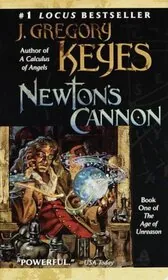
Newton's Cannon
by Greg Keyes
1998
In 1681, Isaac Newton discovers philosopher's mercury and turns magic into a usable science. Benjamin Franklin, Adrienne de Mornay, and an unnaturally enduring Louis XIV are swept into the struggle that follows.
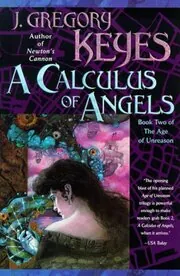
A Calculus of Angels
by Greg Keyes
1999
Newton's discovery has changed the world, and the second book widens the disaster. Franklin, Adrienne, and their allies face war, alchemy, and strange powers as a second dark age gathers strength.
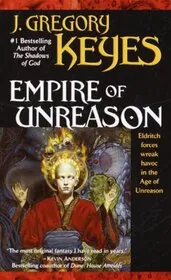
Empire of Unreason
by Greg Keyes
2000
Europe lies shattered and winter grips the world as Benjamin Franklin builds a desperate coalition in the colonies. Far away, Adrienne searches for her lost son while darker forces move toward humanity's end.
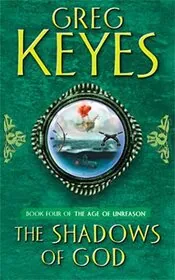
The Shadows of God
by Greg Keyes
2001
The final Age of Unreason novel pushes its alternate Earth toward apocalypse. Franklin and his allies face war, alchemy, and inhuman powers in a last attempt to keep humanity from total ruin.
Age of Unreason books in chronological order
Series background & context
Age of Unreason is an alternate history series built on one sharp change: Isaac Newton does not simply describe the laws of the universe, he discovers a substance that lets people manipulate its elements. From there, Greg Keyes imagines a world where alchemy becomes practical power, and where science, politics, religion, and empire all take a different path because of it.
That sounds abstract, but the books are not. They are full of movement. Benjamin Franklin becomes one of the key figures, not as a tidy historical monument but as a young, curious, often overmatched man trying to understand a world that has tilted off its familiar axis. Adrienne de Mornay is another crucial thread, and one of the pleasures of the series is watching how Keyes moves between public catastrophe and private calculation through characters like hers.
It is a historical fantasy with a real pulse.
The setting stretches across England, France, Russia, the American colonies, and beyond, and the historical names are part of the fun. Newton, Louis XIV, Peter the Great, and Franklin all matter here, but not as gimmicks. Keyes asks what kind of world they would create, damage, or fail to control once a working magical science entered the political bloodstream. The answer is messy, violent, and often eerie.
Across Newton's Cannon, A Calculus of Angels, Empire of Unreason, and The Shadows of God, the scale keeps climbing. What begins as discovery and intrigue grows into continental ruin, strange beings moving behind human wars, and a larger question about whether reason itself can survive the forces people have unleashed. The books are interested in philosophy and belief, but they never stop being adventure stories.
The tone sits in a lively middle ground. There is court intrigue, travel, espionage, battle, occult horror, and the pleasure of seeing real history bent into new shapes. Readers sometimes call it steampunk adjacent, but it is earlier, stranger, and more alchemical than that label suggests.
If you want fantasy that likes ideas but still knows how to move, this series is a strong fit. It gives you big historical figures, collapsing empires, and magical theory, then throws all of them into a race against the end of the world.





Edited by
Software engineer whose passion for tracking book recommendations from podcasts inspired the creation of MRB.
Lead investor at 3one4 Capital whose startup expertise and love for books helped shape MRB and its growth.
Comments
Did we miss something? Have feedback?
Help us improve this page by sharing your thoughts