
Adam Lebor Books in Order
Explore Adam LeBor books in order, with series lists, short summaries, background on the thrillers and nonfiction, and help choosing where to start.
Last updated:
As an Amazon Associate, we earn from qualifying purchases (at no extra cost to you).
Adam Lebor books in publication order
18 books
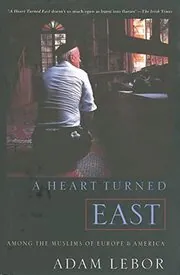
A Heart Turned East
by Adam Lebor
1997
LeBor travels through Muslim communities in Bosnia, Britain, France, Germany, Turkey, and the United States to ask how faith and identity change in the West. It is part reportage, part portrait of a world in transition.
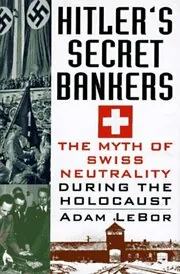
Hitler's Secret Bankers
by Adam Lebor
1997
Using newly opened archives and survivor testimony, LeBor investigates Switzerland's financial ties to Nazi Germany. He shows how banks handled looted assets, powered the war economy, and profited from a system built on mass murder.
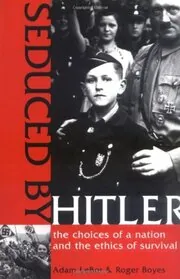
Seduced by Hitler
by Adam Lebor
2000
LeBor and Roger Boyes explore how ordinary people were drawn into, adapted to, or pushed back against Nazi rule. The book focuses less on top leaders than on the compromises and pressures of everyday life in the Third Reich.
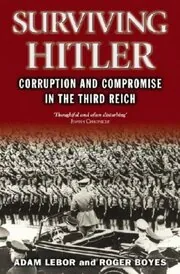
Surviving Hitler
by Adam Lebor
2000
Co-written with Roger Boyes, this book looks at daily life and moral choice inside the Third Reich. Rather than treating Germans as one block, it shows the compromises, resistance, fear, and self-interest that shaped survival.

Milosevic
by Adam Lebor
2002
This biography follows Slobodan Milosevic from his early life to the wars that tore apart Yugoslavia. LeBor combines political history, personal detail, and reporting on the criminal networks and diplomacy around his rule.
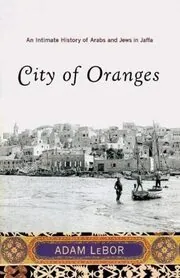
City of Oranges
by Adam Lebor
2006
Through the stories of Arab and Jewish families in Jaffa, LeBor tells a human-scale history of a city remade by the twentieth century. It is intimate, political, and full of everyday lives caught inside a larger conflict.

Complicity with Evil
by Adam Lebor
2006
LeBor examines how the United Nations failed to confront genocide in Bosnia, Rwanda, and Darfur. Drawing on interviews and internal records, he follows the gap between moral language and institutional action.

The Believers
by Adam Lebor
2009
This book traces how Bernard Madoff built trust, loyalty, and silence around the biggest investment fraud of its time. LeBor follows the social world around the scam and the devastating human cost when belief finally broke.

The Budapest Protocol
by Adam Lebor
2009
When a journalist in Budapest investigates his grandfather's killing, he stumbles onto a conspiracy rooted in Nazi wartime plans. Past and present collide in a thriller about power, corruption, and Europe's unfinished history.
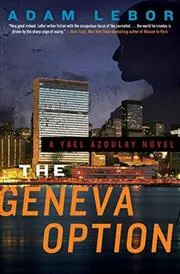
The Geneva Option
by Adam Lebor
2013
Sent to eastern Congo to bargain with a genocidal warlord, UN negotiator Yael Azoulay discovers that stability has a brutal price. As business interests close in, she must choose between the deal and her conscience.
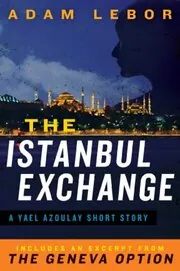
The Istanbul Exchange
by Adam Lebor
2013
On a mission to persuade an Afghan warlord to surrender, Yael Azoulay is pulled into a murky world of rendition, torture, and arms dealing. The job turns personal fast, and one wrong move could get her killed.
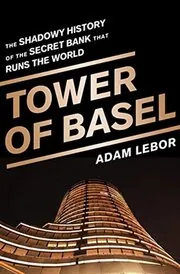
Tower of Basel
by Adam Lebor
2013
LeBor digs into the history of the Bank for International Settlements, the discreet institution at the center of global central banking. It's a story of money, secrecy, wartime compromise, and the quiet power of technocrats.
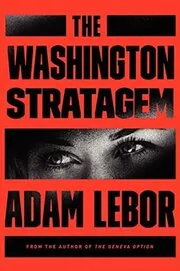
The Washington Stratagem
by Adam Lebor
2014
Back in New York after Geneva, Yael Azoulay is asked to look into a powerful lobbying and asset management firm with Pentagon ties. Her quiet inquiry uncovers a plan for a catastrophic, profitable Middle East war.
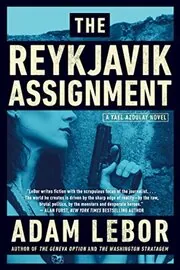
The Reykjavik Assignment
by Adam Lebor
2016
UN fixer Yael Azoulay heads to Reykjavik to broker a secret meeting between the US and Iranian presidents. But as unseen players profit from conflict, she finds that peace can be just as dangerous as war.
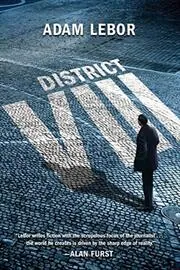
District VIII
by Adam Lebor
2017
A mysterious text sends Roma detective Balthazar Kovacs to Republic Square, where a photographed corpse has vanished. His search leads through Budapest's back alleys and power centers, forcing him to choose between the law and family loyalty.
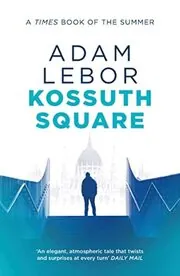
Kossuth Square
by Adam Lebor
2019
Called to a brothel owned by his brother, Kovacs finds a dead Arab financier and erased CCTV footage. What looks like a discreet scandal opens into a murder case tied to government power, organized crime, and his own family's past.
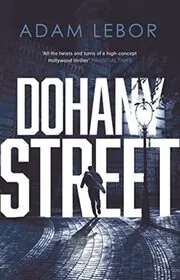
Dohany Street
by Adam Lebor
2021
In wintry Budapest, Detective Balthazar Kovacs investigates the disappearance of Israeli historian Elad Harrari, whose Holocaust-era research has rattled powerful interests. The search pulls him toward buried crimes, corporate muscle, and some of the city's darkest memories.

The Last Days of Budapest
by Adam Lebor
2025
Using diaries, archival records, and survivor testimony, LeBor reconstructs Budapest's wartime collapse from 1940 to 1945. He tells the story through people on every side, from rescuers and resisters to collaborators and ordinary civilians.
Where to start with Adam Lebor
If you want smart UN thrillers: The Geneva Option → The Istanbul Exchange → The Washington Stratagem → The Reykjavik Assignment
If you prefer Budapest crime fiction: District VIII → Kossuth Square → Dohany Street
If you want a darker European conspiracy thriller: The Budapest Protocol
If you want history about finance and hidden institutions: Hitler's Secret Bankers → Tower of Basel
If you want people-centered Middle East history: City of Oranges
Adam Lebor sub-series and character series
Detective Balthazar Kovacs Danube Blues books in order
Explore this seriesDetective Balthazar Kovacs Danube Blues books in chronological order
Adam Lebor collections, short stories, and related book types
Non-Fiction
Author bio
Adam LeBor was born in London and grew up there in the 1970s. He later studied Arabic, international history and politics at Leeds University, where he edited the student newspaper, and also studied Arabic at the Hebrew University of Jerusalem.
He has said that his early education was heavily shaped by Jewish schools and Jewish history. By the time he reached university, he knew a great deal about Hebrew and the Jewish past, but felt he was still catching up on parts of English literary culture. That mix of belonging and standing slightly outside has stayed useful to him ever since.
Journalism came first. After university he worked for several British newspapers, taking on everything from features to investigations before becoming a foreign correspondent in 1991. He moved to Budapest just as communism had collapsed, and from there reported across central and eastern Europe, including the wars in Croatia, Bosnia, and Serbia.
He has written about a career that included tracking down Nazi war criminals in Britain, being arrested abroad, and covering countries as they broke apart and remade themselves. Those are not decorative details. They help explain why his fiction feels close to the ground, and why his nonfiction keeps returning to the ways power works behind closed doors.
That reporting life became the raw material for almost everything that followed.
LeBor later spent a year in Paris writing the novel that became The Budapest Protocol, a political thriller that links present-day Europe with buried plans from the Second World War. He went on to create the Yael Azoulay books, beginning with The Geneva Option, where UN deal-making, war zones, business interests, and personal loyalties all collide. Readers who like smart geopolitical thrillers tend to come to these novels for the insider feel, but they stay for the pressure he puts on characters when every decent option has already been compromised.
He found another strong lane in crime fiction with the Budapest-set Balthazar Kovacs novels, including District VIII, Kossuth Square, and Dohany Street. These books use murder investigations to explore the city's streets, class lines, corruption, and long historical memory. Kovacs is a Roma detective caught between worlds, and that gives the series both its tension and its heart.
His nonfiction is just as wide-ranging. A Heart Turned East grew out of his reporting on Muslim communities in Europe and America, while Complicity with Evil examined the United Nations and its failures over genocide. Hitler's Secret Bankers looked at Swiss financial ties to Nazi Germany and was shortlisted for the Orwell Prize. City of Oranges used the lives of Arab and Jewish families in Jaffa to tell a more human story of Israel and Palestine, and Milosevic drew on his Balkan reporting to trace the rise and fall of the Serbian leader.
Power is one of his big subjects, but so is memory.
These days LeBor lives in London with his family. He reviews thrillers for the Financial Times, writes for publications including The Economist and The Times, and also works as an editorial trainer and writing coach. Budapest still feels central to his work, not just as a setting, but as a place where empire, ideology, money, and ordinary life keep colliding in plain sight.






Edited by
Software engineer whose passion for tracking book recommendations from podcasts inspired the creation of MRB.
Lead investor at 3one4 Capital whose startup expertise and love for books helped shape MRB and its growth.
Comments
Did we miss something? Have feedback?
Help us improve this page by sharing your thoughts