
Detective Balthazar Kovacs Danube Blues Books in Order
Part ofAdam Lebor Books in OrderSee the Detective Balthazar Kovacs Danube Blues books in order by Adam LeBor, with summaries, series background, and a clear guide to where to start.
Last updated:
As an Amazon Associate, we earn from qualifying purchases (at no extra cost to you).
Detective Balthazar Kovacs Danube Blues books in publication order
3 books
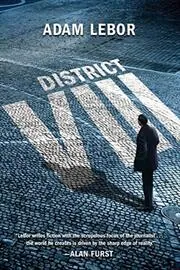
District VIII
by Adam Lebor
2017
A mysterious text sends Roma detective Balthazar Kovacs to Republic Square, where a photographed corpse has vanished. His search leads through Budapest's back alleys and power centers, forcing him to choose between the law and family loyalty.

Kossuth Square
by Adam Lebor
2019
Called to a brothel owned by his brother, Kovacs finds a dead Arab financier and erased CCTV footage. What looks like a discreet scandal opens into a murder case tied to government power, organized crime, and his own family's past.

Dohany Street
by Adam Lebor
2021
In wintry Budapest, Detective Balthazar Kovacs investigates the disappearance of Israeli historian Elad Harrari, whose Holocaust-era research has rattled powerful interests. The search pulls him toward buried crimes, corporate muscle, and some of the city's darkest memories.
Detective Balthazar Kovacs Danube Blues books in chronological order
Series background & context
The Detective Balthazar Kovacs Danube Blues books are crime novels, but they also read like a running portrait of modern Budapest. The trilogy begins with District VIII, continues in Kossuth Square, and ends with Dohany Street. Each book has its own case, yet a big part of the appeal is seeing the city open up, neighborhood by neighborhood, and watching the pressure on Balthazar grow.
Balthazar Kovacs is a detective in Budapest's murder squad and a Roma man in a country where that identity changes every room he enters. The police do not always trust him. Many Roma do not trust him either, because he chose the badge. He also carries difficult family ties that keep pulling him toward the same underworld he is supposed to police, which gives the series much of its tension.
He is never fully at home on either side.
Budapest matters here as much as any character. LeBor knows the city well, and the books move from the rougher streets of District VIII to brothels, government offices, Parliament's shadow in Kossuth Square, and the haunted ground around the Jewish Museum in Dohany Street. This is not postcard Budapest. It is a city marked by inequality, organized crime, old anti-Semitism, anti-Roma prejudice, and the long afterlife of both communism and fascism.
History in these books is never background decoration. It is something politicians exploit, families carry, and criminals learn to use.
That is why these novels feel bigger than straightforward police procedurals. Murder cases quickly connect to business interests, party politics, police power, and buried history. There is action here, but the suspense usually comes from pressure, leverage, and the slow realization that the wrong people are already inside the system. LeBor keeps the plots moving, while leaving room for moral ambiguity and for Balthazar's private loyalties to matter.
The tone is tense and atmospheric, with a political edge rather than a cozy feel. You also get a strong sense of how public life and private grief keep bleeding into each other. The books can be read on their own, but reading them in order pays off because Balthazar's family story and sense of self deepen across the trilogy. By the end, the series has built a full picture of a decent man trying to do honest work in a city that rarely makes that easy.














Edited by
Software engineer whose passion for tracking book recommendations from podcasts inspired the creation of MRB.
Lead investor at 3one4 Capital whose startup expertise and love for books helped shape MRB and its growth.
Comments
Did we miss something? Have feedback?
Help us improve this page by sharing your thoughts