
13 Best World War 1 Books
The best World War 1 books, ranked by how many expert sources recommend each one, with notes on histories, memoirs, novels, and where each reader can start.
Our take
The First World War can be approached through diplomatic decisions, military campaigns, or the lives of people caught in the fighting. These books offer each of those routes. Broad histories help make sense of the changing fronts, while focused studies explain why battles such as Verdun and Ypres became symbols of attrition. Memoirs and novels bring the experience closer, but they answer different questions from a history of strategy.
A World Undone and John Keegan's The First World War provide an overall framework. The Sleepwalkers concentrates on the road to 1914, while The Guns of August offers a vivid, older account of the opening crisis and campaigns. Testament of Youth adds a woman's wartime experience, and All Quiet on the Western Front approaches the trenches through fiction. Strachan's The First World War: To Arms is a demanding study of the opening war, rather than a brief survey of the whole conflict. Start with A World Undone, then choose a personal account or a particular battle.
13 books · 15 sources · Last updated
As an Amazon Associate, we earn from qualifying purchases (at no extra cost to you).
How to choose from this list
Skip to the full rankingIf you want an overall introduction: A World Undone → The First World War
If you want to understand the outbreak: The Guns of August → The Sleepwalkers
If you want personal accounts: Testament of Youth → Good-Bye to All That
If you want a battle in depth: A Storm in Flanders → The Price of Glory
If you prefer fiction: All Quiet on the Western Front → A Farewell to Arms
If you want cultural history: Rites of Spring
The 13 books, ranked
Ranked by how many expert sources name each book. Ties go to the book more people recommend.

The Guns of August
The Pulitzer Prize-Winning Classic About the Outbreak of World War I
For readers who want personalities and decisions brought into a vivid narrative, Tuchman makes the opening of the war compelling. Its storytelling remains a strength, though the interpretation predates much subsequent scholarship and needs that context.
What it's about
Barbara W. Tuchman recounts the opening month of World War I and the decisions that brought European powers into conflict. Beginning with Edward VII's funeral, she traces preparations, personalities, and events that shaped the war's course.
Also recommended by
1 person Doris Kearns Goodwin recommended this book
Doris Kearns Goodwin
"So beautifully written. But more importantly, for me, she was writing about battles and military stuff and things that you don’t imagine that sometimes a woman might be so adept at." - Doris Kearns Goodwin
Doris Kearns Goodwin's recommendation of this book
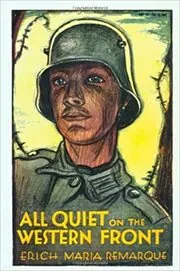
All Quiet on the Western Front
All Quiet on the Western Front/The Road Back, Book 1
For readers seeking the emotional experience of an ordinary German soldier, this offers a direct counterweight to campaign histories. Its close perspective makes the human damage vivid, though a novel cannot provide the wider strategic picture.
What it's about
Paul Bäumer and his classmates march into the First World War full of patriotic ideas and lose them almost at once. In the trenches, Remarque strips war of glory and shows its damage up close.
Also recommended by
3 people Donald Trump recommended this book
Donald Trump
"One of the greatest books of all time." - Donald Trump
Donald Trump's recommendation of this book  Christopher Hitchens recommended this book
Christopher Hitchens
"I became consumed with the subject [of World War I] and got hold of [this book]." - Christopher Hitchens
Christopher Hitchens's recommendation of this book  Dan Carlin recommended this book
Dan Carlin
"The author is helping you to see what they all learned from this terrible conflict. " - Dan Carlin
Dan Carlin's recommendation of this book

For readers asking how several governments reached war, Clark reconstructs interacting decisions rather than offering a simple culprit. The diplomatic detail encourages comparison between perspectives, though the many actors make it more demanding than a broad survey.
What it's about
Christopher Clark traces the decisions and misunderstandings that brought Europe into the First World War. Beginning with tensions in the Balkans and the assassination at Sarajevo, he examines how political leaders and competing powers moved toward catastrophe in 1914.

For readers ready to examine a single battle closely, Horne makes Verdun's leadership decisions and human costs central. The sustained focus gives attrition a concrete setting, though it assumes more interest in military detail than a general introduction.
What it's about
Alistair Horne examines the 1916 battle of Verdun through the men who fought it and the traditions that shaped their decisions. The narrative considers attrition, military leadership, and the battle's place in Franco-German rivalry.
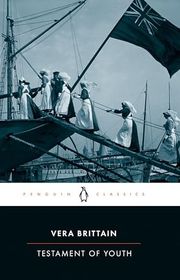
Testament of Youth
For readers seeking a woman's experience of the war, Brittain connects nursing, bereavement, and interrupted ambitions in a sustained personal account. Its perspective broadens a soldier dominated shelf, though its length and emotional intensity require patient reading.
What it's about
Vera Brittain recalls her youth, university ambitions, and service as a nurse during the First World War. Her memoir follows the losses that changed her life and the difficult effort to find purpose after the fighting ended.
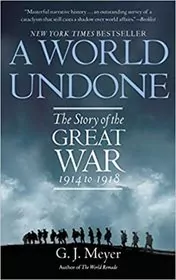
For newcomers who want a substantial narrative before tackling specialists, Meyer combines the course of the war with background explanations. That balance helps orient unfamiliar readers, though its length still demands more commitment than a short introductory history.
What it's about
G. J. Meyer follows World War I from the assassination at Sarajevo through four years of global conflict. Accounts of political decisions, military campaigns, and their human costs explain how the war shattered Europe's empires.
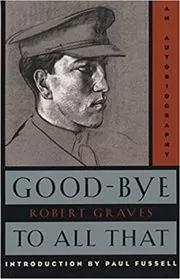
For readers interested in how a British officer remembered the trenches and the society that sent him there, Graves offers sharp, personal prose. Its literary force is considerable, though recollection and factual reconstruction do not always align.
What it's about
Robert Graves recounts his upbringing, military service, and disillusionment during the First World War. Experiences in the trenches and encounters with English institutions shape an autobiography written as he prepares to leave his country and former life.

For readers ready for scholarly depth, Strachan connects the opening war to finance, diplomacy, and events beyond Europe. Its breadth rewards sustained study, though this substantial first volume should not be mistaken for a complete war overview.
What it's about
Hew Strachan examines the First World War's origins, opening campaigns, and global dimensions. This volume connects military events with diplomacy, social attitudes, finance, industrial mobilization, and the conflict's extension into Africa and beyond Europe.

The First World War
For readers wanting the conflict's military course in one volume, Keegan connects campaigns and commanders across the war. Its strategic coverage provides a useful framework, though the dense operational passages can challenge readers unfamiliar with military history.
What it's about
John Keegan recounts the First World War and the military decisions that shaped its course. His history examines a conflict of unprecedented destruction, tracing how its campaigns and mechanized fighting brought the Victorian era's relative stability to an end.
A Farewell to Arms
For readers drawn to spare prose and personal relationships, Hemingway approaches the war through intimacy and disillusionment on the Italian front. The emotional focus distinguishes it from battlefield histories, though romance occupies much of the narrative.
What it's about
On the Italian front in World War I, ambulance driver Frederic Henry falls in love with nurse Catherine Barkley. Their attempt to make a private life away from war becomes a moving story of love, fear, and loss.
Also recommended by
1 person Jordan Peterson recommended this book
Jordan Peterson
Recommended on Jordan Peterson's website.
Jordan Peterson's recommendation of this book

For readers asking how the war changed culture, Eksteins links military catastrophe with modern art and social attitudes. The interpretive ambition distinguishes it from campaign narratives, though its broad argument needs reading alongside more conventional histories.
What it's about
Modris Eksteins examines the First World War as a turning point in modern culture. Linking art, literature, ordinary lives, and major historical events, he traces connections between wartime experience and the development of modernism.

For newcomers wanting to understand one notorious battlefield, Groom offers a more approachable entry into the Ypres fighting than a comprehensive campaign history. Its concentrated geography helps orientation, though it does not attempt a new scholarly interpretation.
What it's about
This World War I history chronicles the years long fight for the Ypres Salient in Belgian Flanders, showing how repeated offensives, new weapons, and exhausted troops turned a small patch of ground into one of the war's most feared battlefields.
The First World War: A Very Short Introduction
For beginners who need a manageable overview, Howard provides the clearest short route into the larger historical picture here. Its brevity means individual campaigns receive limited attention, making it a foundation for more specialized reading.
What it's about
Michael Howard surveys the causes, course, and consequences of the First World War in a short history. He connects military developments with political choices and the peace settlement, giving readers a framework for understanding the conflict.
Sources
- 1
The Best World War I Books
penguinrandomhouse.com
- 2
World War I Books
goodreads.com
- 3
15 Best World War I Books: The War That Made the Century
militarymachine.com
- 4
Best books on world war 1
reddit.com
- 5
WWI book recs?
reddit.com
- 6
The greatest books ever written about the First World War
penguin.co.uk
- 7
World War I Books recommended by historians and novelists
doughboy.org
- 8
100 Best World War I Books of All Time (Updated for 2026)
shortform.com
- 9
Best World War 1 Books
goodreads.com
- 10
Book Recommendations for Learning about the Great War
reddit.com
- 11
Which book is best for someone who knows nothing and wants to gain basic knowledge of WWI?
reddit.com
- 12
18 Fascinating Books About the “War to End All Wars”
explorethearchive.com
- 13
13 Great Books to Read While Studying World War 1
compassclassroom.com
- 14
The best books on World War I
fivebooks.com
- 15
The best books about the First World War
panmacmillan.com







Edited by
Software engineer whose passion for tracking book recommendations from podcasts inspired the creation of MRB.
Lead investor at 3one4 Capital whose startup expertise and love for books helped shape MRB and its growth.
Comments
Spotted a missing book, a wrong order or a mistake? Tell us and we'll fix this page.
We're a reading guide, not the author or publisher, so we can't send books or pass on messages.