
6 Best Weather Books
The best weather books, ranked by how many expert sources recommend each one, with notes for sky watchers, curious beginners, and readers of weather history.
Our take
Weather books can help you recognize a cloud, understand an approaching front, or discover how a forecast reaches your phone. Some are field references for looking up what you see. Others explain atmospheric processes, follow the people and technology behind prediction, or reconstruct an extreme event. Choose according to whether you want to observe, understand, or read a history.
An Observer’s Guide to Clouds and Weather connects visible signs with basic prediction, while the National Audubon Society Field Guide to Weather provides an illustrated North American reference. The AMS Weather Book takes a broader explanatory approach. For a more discursive introduction to the sky, The Cloudspotter’s Guide combines science with cultural history. The Weather Machine turns toward forecasting infrastructure, and Isaac’s Storm examines a historical hurricane through a narrative account. Start with an illustrated guide for observation, or a narrative book if the people behind weather knowledge interest you most.
6 books · 5 sources · Last updated
As an Amazon Associate, we earn from qualifying purchases (at no extra cost to you).
How to choose from this list
Skip to the full rankingIf you want to read the sky: An Observer’s Guide to Clouds and Weather
If you want a North American field reference: National Audubon Society Field Guide to Weather
If you want a broad science introduction: The AMS Weather Book
If clouds are your main interest: The Cloudspotter’s Guide
If you want to understand forecasting: The Weather Machine
If you prefer narrative history: Isaac’s Storm
The 6 books, ranked
Ranked by how many expert sources name each book. Ties go to the book more people recommend.

The Cloudspotter's Guide
For curious readers who want cloud science mixed with history, art, and humor. Its enthusiasm makes looking at the sky rewarding, though the cultural digressions and cloud focus leave less space for weather forecasting as a whole.
What it's about
Gavin Pretor-Pinney explores clouds through science, history, art, and popular culture. Photographs and drawings accompany explanations of different cloud types, combining practical observation with a humorous account of their place in the imagination.
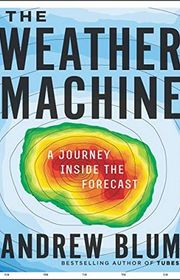
The Weather Machine: A Journey Inside the Forecast
For readers curious about how observations become a usable forecast. Its reporting connects instruments, computers, institutions, and people, though it explains the forecasting system rather than teaching you to interpret charts or make your own predictions.
What it's about
Andrew Blum investigates the global infrastructure behind weather forecasts. Visits to observing stations, forecasting centers, and other parts of the network reveal how measurements, computer models, scientific cooperation, and human judgment combine to predict changing conditions.
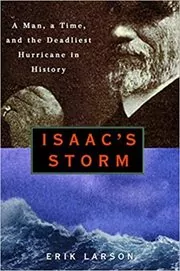
For readers who prefer weather history told through people and decisions. Its reconstruction of the Galveston hurricane connects scientific confidence with human consequences, though the narrative concentrates on one disaster rather than explaining meteorology systematically.
What it's about
Centered on meteorologist Isaac Cline, this book rebuilds the 1900 Galveston hurricane and the failures that made it worse. Larson captures both the science and the terrifying speed of the storm's destruction.

For beginners who want to connect the sky they can see with the weather that follows. Its observation-led approach makes basic mechanisms concrete, though the northeastern US emphasis limits how directly some examples travel elsewhere.
What it's about
Toby Carlson, Paul Knight, and Celia Wyckoff connect observations of clouds and sky formations with basic weather prediction. Their nontechnical guide explains the atmospheric processes behind changing conditions, helping enthusiasts and beginning students develop their powers of observation.

For North American readers who want an illustrated reference beside their own observations. Its photographs help distinguish phenomena across a broad range of weather, though it is better for identification than for learning forecasting mathematics.
What it's about
David Ludlum presents an illustrated field reference to North American weather systems and atmospheric phenomena. Photographs help identify clouds, precipitation, storms, and optical effects, while essays, maps, and diagrams explain the atmosphere and the formation of different weather events.

For general readers who want weather science explained with illustrations and American examples. Its breadth provides more context than a cloud guide, though the regional emphasis and publication date limit its coverage of developments in forecasting technology.
What it's about
Jack Williams explains the science behind American weather through accessible text and color illustrations. The guide covers everyday atmospheric processes, severe storms, pollution, and climate, alongside accounts of people affected by extreme weather and researchers who study it.
Sources











Edited by
Software engineer whose passion for tracking book recommendations from podcasts inspired the creation of MRB.
Lead investor at 3one4 Capital whose startup expertise and love for books helped shape MRB and its growth.
Comments
Did we miss something? Have feedback?
Help us improve this page by sharing your thoughts