
18 Best Technical Writing Books
The best technical writing books, ranked by expert source recommendation counts, with guidance for beginners, clearer documents, software docs, and team leads.
Our take
Technical writing helps people understand a system, complete a task, or make a decision without having to reconstruct the author’s expertise. That work includes more than clear sentences. Writers also need to research users, choose a structure, test explanations, and maintain information as a product or process changes. The books here address different parts of that responsibility.
Technical Writing Process and Technical Writing 101 offer a structured introduction to producing documents. Developing Quality Technical Information provides a framework for reviewing their usefulness, while The Handbook of Technical Writing supports targeted reference. For software teams, Docs for Developers connects documentation with product work, and Docs Like Code examines collaborative development workflows. Every Page Is Page One focuses on online topic structure, while Letting Go of the Words keeps readers’ questions central to web content.
Start with the part of the work you are responsible for now, then add a reference or specialist guide as your documents and collaboration become more demanding.
18 books · 7 sources · Last updated
As an Amazon Associate, we earn from qualifying purchases (at no extra cost to you).
How to choose from this list
Skip to the full rankingIf you're beginning: Technical Writing Process → Technical Writing 101
If you want to review document quality: Developing Quality Technical Information
If you're a software developer writing docs: Docs for Developers → Docs Like Code
If you organize online content: Every Page Is Page One → Letting Go of the Words
If you manage a documentation team: Managing Your Documentation Projects → Managing Writers
If you communicate across formats: Trees, Maps, and Theorems
The 18 books, ranked
Ranked by how many expert sources name each book. Ties go to the book more people recommend.
For documentation managers balancing people, projects, and publishing technology. Its practical management perspective complements advice about writing itself, though the organizational examples and older tooling need adjustment to the team and development process involved.
What it's about
Richard Hamilton examines the people, projects, and technology involved in managing technical documentation. Drawing on workplace experience, he discusses hiring, motivation, scheduling, collaboration, and documentation systems, including XML and content management, with attention to smaller teams.
For teams that need a shared vocabulary for reviewing the usability of technical information. Its examples and quality characteristics make feedback more concrete, though applying the framework still requires research and testing with the actual product’s users.
What it's about
IBM's technical communication specialists present guidelines for creating usable product information. Checklists and before-and-after examples address nine quality characteristics, including accuracy, clarity, organization, and task orientation, with coverage of embedded assistance, mobile content, search, and multimedia.
Every Page Is Page One: Topic-Based Writing for Technical Communication and the Web
For writers moving from book shaped manuals toward independently useful online topics. Its focus on readers entering from many directions clarifies structural decisions, though the conceptual argument needs translation into a specific content model and publishing system.
What it's about
Mark Baker examines how people find and use technical information online without following a book from beginning to end. He develops principles for topics that provide useful context and connections, linking writing structure with search, navigation, and reader needs.
Managing Your Documentation Projects
For documentation leads who need to plan resources, schedules, and reviews rather than improve individual sentences. Its project framework makes coordination explicit, though the older publishing context requires adaptation to current software development and delivery practices.
What it's about
JoAnn Hackos explains the management of technical publication projects from planning and development through production, distribution, and evaluation. Templates, checklists, forms, and case studies address schedules, resources, and the work of producing usable documentation.
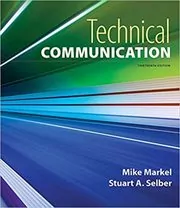
Technical Communication
For students who want a broad course in workplace communication with examples and practice. Its range connects writing process with document forms, though the textbook scale and classroom orientation may feel excessive for one immediate documentation task.
What it's about
Mike Markel and Stuart Selber introduce writing for varied workplace settings, connecting communication processes with the documents professionals produce. This thirteenth edition uses practical guidance and examples to help students move from college assignments to workplace communication.
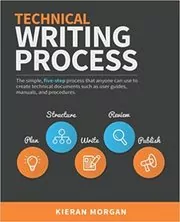
Technical Writing Process
For beginners or document authors who need a process they can follow from planning to delivery. Its five step structure makes the work manageable, though it provides a broad framework rather than deep instruction in every document type or tool.
What it's about
Kieran Morgan presents a five-step framework for creating user guides, manuals, procedures, and other technical documents. The book addresses aspiring writers, people assigned documentation tasks, experienced communicators seeking structure, and managers responsible for documentation projects.
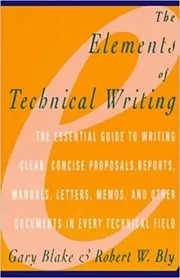
The Elements of Technical Writing
For writers who want a compact reference on clarity, terminology, and common technical document conventions. Its focused advice supports revision and quick consultation, though the older examples provide less help with contemporary documentation workflows or interactive formats.
What it's about
Gary Blake and Robert Bly explain how to write clear reports, proposals, manuals, and other technical documents. Their reference addresses grammar, style, terminology, numbers, and units while connecting document format and tone with its intended audience.
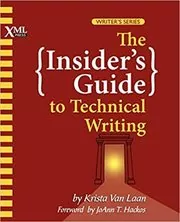
The Insider's Guide to Technical Writing
For readers considering the profession who want to understand its tasks and workplace expectations. Its breadth connects writing with tools, collaboration, and career decisions, though rapidly changing technologies need supplementing with current examples and hands-on experience.
What it's about
Krista Van Laan explains the skills, tools, planning, and workplace practices involved in technical communication. The guide covers entering the profession, developing documentation, managing schedules, and handling style guides, indexes, templates, localization, and other supporting tasks.
Docs for Developers: An Engineer’s Field Guide to Technical Writing
For software engineers who need to treat documentation as part of building a usable product. Its development oriented approach makes collaboration and iteration familiar, though it provides less attention to nonsoftware documents than general technical communication textbooks.
What it's about
The authors explain how software teams can plan, write, publish, and maintain documentation around their users’ needs. Practical guidance connects examples, feedback, collaboration, and development workflows, presenting documentation as an ongoing part of creating and supporting a product.
For writers who want an introduction spanning planning, drafting, editing, and production. Its attention to the full documentation process gives more context than a sentence guide, though tool and structured authoring discussions reflect the edition’s technological setting.
What it's about
Alan Pringle and Sarah O'Keefe cover technical content development from planning through writing, visual design, editing, indexing, and production. This third edition also addresses translation, XML-based structured authoring, and DITA alongside printed and online documentation.
Technical Writing For Dummies
For beginners who want an approachable explanation of research, organization, and revision. Its emphasis on turning technical information into a planned document lowers the entry barrier, though older examples and limited tooling coverage need a current practical companion.
What it's about
Sheryl Lindsell-Roberts introduces the research, organization, planning, and editing involved in technical writing. The guide explains how to develop a technical brief and turn information into polished documents for readers who need to understand technical subjects.
Docs Like Code
For documentation teams considering version control and collaborative software development workflows. Its practical perspective connects publishing with review and automation, though the approach assumes technical support and does not remove the need for content design and editing.
What it's about
Anne Gentle describes ways to develop and maintain documentation using practices associated with software code. Version control, review, collaboration, and automated publishing become part of a workflow that connects technical writers with developers and the changing products they document.
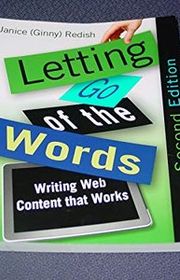
Letting Go of the Words: Writing Web Content that Works
For writers whose users need to find an answer or complete a task on the web. Its attention to readers’ questions makes content decisions concrete, though its broader web focus offers less detail on specialized technical documentation systems.
What it's about
Janice Redish explains how to plan and write web content around the questions and tasks people bring to a page. Examples connect clear language, organization, headings, and visual presentation with the practical work of making information easier to use.
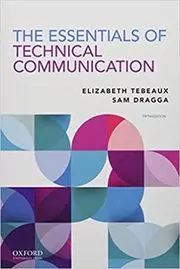
The Essentials of Technical Communication
For students or professionals who want a concise introduction to common workplace document types. Its checklists connect principles with usable forms, though the introductory range provides less depth on specialized software documentation or information architecture.
What it's about
Elizabeth Tebeaux and Sam Dragga explain how to plan, draft, and revise concise workplace documents. This fifth edition combines communication principles with applications to different document types, using checklists to guide the preparation of technical information.
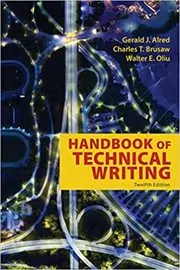
The Handbook of Technical Writing
For students and working writers who need to look up conventions or inspect a model document. Its alphabetical organization makes targeted consultation efficient, though it is a reference to use alongside practice rather than a continuous course in documentation strategy.
What it's about
Gerald Alred, Walter Oliu, and Charles Brusaw present an alphabetical reference for technical communication, supported by sample documents, models, and checklists. Entries cover grammar, style, audience awareness, documentation, and workplace formats from abstracts and manuals to online profiles.
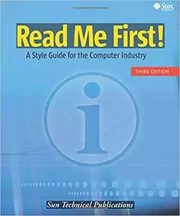
For software documentation teams seeking a consistent approach to style, terminology, and presentation. Its detailed guidance supports shared editorial decisions, though the Sun Microsystems context and older delivery formats require separating enduring principles from dated conventions.
What it's about
Sun Microsystems writers and editors present guidance for clear, consistent computer-industry documentation. This third edition covers grammar, style, typography, legal considerations, and documentation management, alongside instructions for newer formats such as screencasts and wikis.
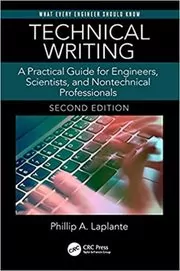
Technical Writing
A Practical Guide for Engineers, Scientists, and Nontechnical Professionals
For engineers, scientists, and other professionals who write technical material as part of another role. Its range connects reports and publications with practical writing decisions, though it is broader than a specialized guide to maintaining product documentation.
What it's about
Phillip Laplante explains the writing, editing, and publication of technical books, articles, reports, and electronic material. This second edition also addresses nontechnical professionals working with technology and writers who use English as an additional language.
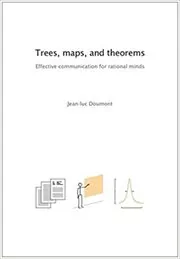
For engineers and scientists who need to communicate across documents, presentations, and graphics. Its unified framework connects choices that other guides treat separately, though the conceptual approach requires deliberate application rather than offering software documentation templates.
What it's about
Jean-Luc Doumont presents a framework for effective communication across written documents, oral presentations, and graphical displays. The book combines fundamental principles with applications to these formats, addressing how rational minds can organize and convey information.
Sources
- 1
Top 5 Books for Technical Writers
clickhelp.com
- 2
40 Foundational Books for Technical Writing | I'd Rather Be Writing Blog and API doc course
idratherbewriting.com
- 3
Reading list — Write the Docs
writethedocs.org
- 4
14 Books on Technical Writing Technical Writers Should Read
archbee.com
- 5
Technical Writing Books
goodreads.com
- 6
Technical writing books (and processes) : r/technicalwriting
reddit.com
- 7
Books on Business & Technical Writing | Writing
writing.utoronto.ca

Edited by
Software engineer whose passion for tracking book recommendations from podcasts inspired the creation of MRB.
Lead investor at 3one4 Capital whose startup expertise and love for books helped shape MRB and its growth.
Comments
Spotted a missing book, a wrong order or a mistake? Tell us and we'll fix this page.
We're a reading guide, not the author or publisher, so we can't send books or pass on messages.