
9 Best Spanish Grammar Books
The best Spanish grammar books, ranked by how many expert sources recommend each one, with notes on learner levels, practice, and where to start.
Our take
A Spanish grammar book should match both your level and the way you plan to use it. Beginners usually need a sequence that introduces sentence structure and verb forms a little at a time. Learners with some Spanish may benefit more from exercises on particular weaknesses. A detailed reference serves a different purpose: answering questions that come up while reading, writing, or speaking.
Easy Spanish Step-By-Step and Getting Started with Spanish provide guided routes into the basics. Practice Makes Perfect: Complete Spanish Grammar and No Nonsense Spanish Workbook put more emphasis on written practice. If the explanations themselves are confusing, English Grammar for Students of Spanish clarifies the terminology through comparisons with English. More experienced learners can move toward Advanced Spanish Step-by-Step or consult A New Reference Grammar of Modern Spanish. Start with one main book and use its exercises regularly. Add conversation, listening, and reading so the structures become useful beyond the page.
9 books · 8 sources · Last updated
As an Amazon Associate, we earn from qualifying purchases (at no extra cost to you).
How to choose from this list
Skip to the full rankingIf you’re an absolute beginner: Getting Started with Spanish → Easy Spanish Step-By-Step
If you need written practice: Practice Makes Perfect → No Nonsense Spanish Workbook
If grammar terminology confuses you: English Grammar for Students of Spanish
If you’re ready to move beyond basics: Advanced Spanish Step-by-Step
If you need detailed usage answers: A New Reference Grammar of Modern Spanish
The 9 books, ranked
Ranked by how many expert sources name each book. Ties go to the book more people recommend.

For learners who want broad grammar coverage with plenty of written practice. The topic-by-topic format makes weak areas easy to revisit, though it is best paired with listening and conversation rather than used as a complete course.
What it's about
Gilda Nissenberg explains Spanish grammar through examples, comparisons with English, and exercises for classroom or independent study. Units develop reading and writing skills, while accompanying audio material provides practice with example sentences, vocabulary, and exercise answers.
English Grammar for Students of Spanish
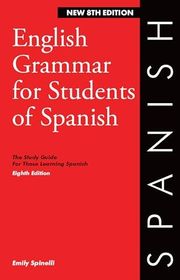
For learners confused by terms such as object, tense, or pronoun in grammar explanations. The comparison with English clarifies the terminology, though it is a support book rather than a full Spanish course.
What it's about
Emily Spinelli explains grammatical concepts in English and shows how they operate in Spanish. Parallel examples help learners connect familiar sentence patterns with new structures and understand the terminology used in textbooks and lessons.
A New Reference Grammar of Modern Spanish
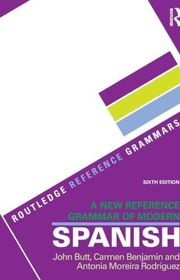
For intermediate and advanced learners who need detailed answers about usage and variation. Its depth makes it a stronger lookup tool than a beginner workbook, though the technical detail is unsuitable for a first course.
What it's about
This reference explains Spanish forms and sentence structures with examples from usage in Spain and Latin America. It examines grammatical choices, exceptions, and variation, giving learners and teachers a resource for questions beyond introductory lessons.

Easy Spanish Step-By-Step
For beginners who want grammar lessons in a clear progression rather than a lookup reference. Each stage builds on earlier structures, though completing written exercises alone won’t provide enough listening or spontaneous speaking practice.
What it's about
Barbara Bregstein teaches Spanish through a sequence of grammar lessons that build on one another. Explanations introduce sentence structure and verbs, while vocabulary, reading passages, and exercises give learners opportunities to apply each concept as they progress.

For English speakers who gain confidence by spotting familiar patterns and cognates. The accessible approach helps sentence building feel less intimidating, though dated examples and limited listening support call for newer material alongside it.
What it's about
Margarita Madrigal uses similarities between English and Spanish to introduce vocabulary and sentence formation. Lessons build reading, writing, and speaking skills, supported by a pronunciation key and Andy Warhol's illustrations, with an emphasis on recognizing patterns rather than memorizing lists.
Advanced Spanish Step-by-Step
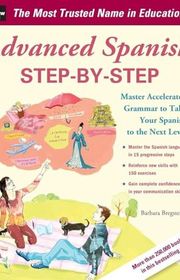
For learners who have basic grammar in place and want a sequenced next stage. The progressive lessons provide more direction than a reference book, though it revisits structures rather than teaching all beginner foundations from scratch.
What it's about
Barbara Bregstein develops intermediate and advanced Spanish grammar through explanations, vocabulary, reading material, and exercises. The lessons build on foundational knowledge to help learners handle more complex verb forms and sentence structures with greater confidence.

For beginners who want grammar connected with dialogues and listening. The integrated course gives structures a spoken context, though the older CD-based package is less convenient than a workbook for quick reference.
What it's about
A Spanish course combines three books with nine audio CDs, progressing through forty six lessons. Dialogues, vocabulary, grammar explanations, exercises, reviews, and glossaries connect reading and written practice with listening to spoken Spanish.

Getting Started with Spanish
Beginning Spanish for Homeschoolers and Self-Taught Students of Any Age
For absolute beginners or homeschoolers who benefit from very small steps. Short lessons and an answer key make independent progress manageable, though the gradual pace and translation emphasis may feel limiting to faster learners.
What it's about
William Linney and Antonio Orta introduce Spanish through short lessons designed for independent learners and homeschoolers. New grammar and vocabulary are followed by translation exercises, with an answer key and accompanying recordings supporting practice and pronunciation.

No Nonsense Spanish Workbook
Jam-Packed with Grammar Teaching and Activities from Beginner to Advanced Intermediate Levels
For learners who want substantial written practice with explanations and an answer key. The mix of drills and writing tasks encourages active use, though it offers less support for pronunciation and listening than an audio course.
What it's about
Caitlin Cuneo combines Spanish grammar explanations with activities developed from tutoring students. Vocabulary exercises, verb charts, quizzes, and creative writing assignments support learners from beginner to intermediate levels, with an answer key for checking work independently.
Sources
- 1
Learning Spanish? Here Are 5 Books I Highly Recommend You Own
mezzoguild.com
- 2
10 Best Books to Learn Spanish on Your Own in 2022
spanish.academy
- 3
17 Best Books to Learn Spanish in 2025 | FluentU
fluentu.com
- 4
The Best Spanish Grammar Books and Workbooks (2026)
animatedspanishbook.com
- 5
Spanish Grammar Books
goodreads.com
- 6
Dry, technical grammar refresher recommendations?
reddit.com
- 7
Resources for basic grammar
reddit.com
- 8
Best Spanish Grammar Books for Adults (2026): Ranked
mylatinlife.com










Edited by
Software engineer whose passion for tracking book recommendations from podcasts inspired the creation of MRB.
Lead investor at 3one4 Capital whose startup expertise and love for books helped shape MRB and its growth.
Comments
Spotted a missing book, a wrong order or a mistake? Tell us and we'll fix this page.
We're a reading guide, not the author or publisher, so we can't send books or pass on messages.