
24 Best Leo Tolstoy Books
The best Leo Tolstoy books, ranked by how many expert sources recommend each one, with notes to help readers choose novels, shorter fiction, plays, and essays.
Our take
Leo Tolstoy writes about family, desire, warfare, social power, and the search for a meaningful life. His long novels give these concerns room to unfold across many characters. The shorter fiction concentrates them into a marriage, a journey, an encounter, or a difficult decision. His later nonfiction takes a more direct approach, challenging accepted ideas about religion, violence, and artistic value.
For a short introduction to his psychological attention, start with The Death of Ivan Ilych. Family Happiness and The Cossacks offer longer but still manageable narratives. Anna Karenina suits readers drawn to relationships and society, while War And Peace adds military history and arguments about how events happen. A Confession opens a route into his spiritual questioning, followed by What I Believe or The Kingdom of God is Within You. Translations differ in language and presentation, and some familiar titles appear in collections. Start with one short work or choose a long novel when you want sustained immersion.
24 books · 8 sources · Last updated
As an Amazon Associate, we earn from qualifying purchases (at no extra cost to you).
Reading Leo Tolstoy in order? See all Leo Tolstoy books in order
How to choose from this list
Skip to the full rankingIf you're new to Tolstoy: The Death of Ivan Ilych → Family Happiness
If you want a long novel about relationships: Anna Karenina
If you want war and society on a large scale: War And Peace
If you want shorter fiction about power and belonging: The Cossacks → Hadji Murad
If you want his religious arguments: A Confession → What I Believe → The Kingdom of God is Within You
If you want his ideas about art: What Is Art?
The 24 books, ranked
Ranked by how many expert sources name each book. Ties go to the book more people recommend.
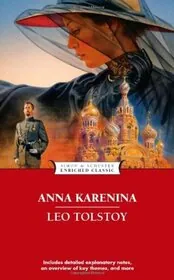
Anna Karenina
For readers who want Tolstoy’s close observation of relationships within a wide social world. The parallel lives give love, work, and family competing meanings, but the large cast and shifts between households require sustained attention.
What it's about
Anna Karenina intertwines the doomed affair between Anna and Count Vronsky with the quieter courtship and marriage of Levin and Kitty. Tolstoy sets passion, family duty, and social judgment against vivid scenes of Moscow, St. Petersburg, and the Russian countryside.
Also recommended by
11 people Oprah Winfrey recommended this book
Oprah Winfrey
"[The author] weaves an extravagant web." - Oprah Winfrey
Oprah Winfrey's recommendation of this book  Jordan Peterson recommended this book
Jordan Peterson
Recommended on Jordan Peterson's website.
Jordan Peterson's recommendation of this book  Chelsea Handler recommended this book
Chelsea Handler
"I don't know if I have to expound on why I love this book, but everyone should read [this author], and this was the first one of his works I read. So, it's like a first boyfriend. Or my first Cabbage Patch Kid." - Chelsea Handler
Chelsea Handler's recommendation of this book  Jennifer Lawrence recommended this book
Jennifer Lawrence
"I thought I wouldn't want to finish an 800-page book, but then I started slowing down and reading the same chapters over and over." - Jennifer Lawrence
Jennifer Lawrence's recommendation of this book  Sam Altman recommended this book
Sam Altman
This book was on Sam Altman's bookshelf.
Sam Altman's recommendation of this book  Laura R Walker recommended this book
Laura R Walker
"A great novel that I have read three times." - Laura R Walker
Laura R Walker's recommendation of this book +5
More recommendations
- Austen Allred
Austen Allred recommended this book on Twitter.
- Jen Wilkin
"Such good writing, so many pages." - Jen Wilkin
- Ernest Hemingway
Ernest Hemingway recommended this book in the "Ernest Hemingway on Writing" book.
- Bret Easton Ellis
"If you've never read a novel pick up [this book] and you will have the most intensely jolting and cinematic experience ever." - Bret Easton Ellis
- Peter Thiel
"All happy families are alike, and all unhappy families are unhappy in their own special way." - Peter Thiel
- Austen Allred
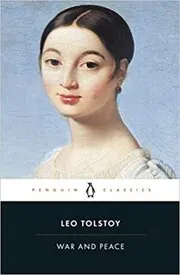
War And Peace
For readers ready for a long immersion in families, warfare, and historical argument. Its scale connects private choices with public events, but philosophical digressions and many characters make it a substantial commitment rather than a quick introduction.
What it's about
This epic novel follows several Russian families, especially Pierre Bezukhov, Andrei Bolkonsky, and Natasha Rostova, through love, war, and spiritual searching during the Napoleonic invasions. Battlefields, salons, and farms all feed a sweeping meditation on history and free will.
Also recommended by
6 people- Jordan Peterson recommended this book
Jordan Peterson
Recommended on Jordan Peterson's website.
Jordan Peterson's recommendation of this book  Larry King recommended this book
Larry King
Larry King mentioned this book on "The Tim Ferriss Show" podcast.
Larry King's recommendation of this book 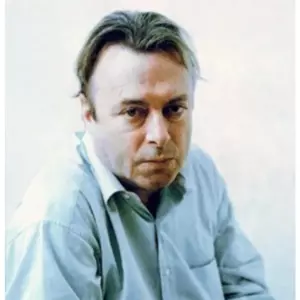 Christopher Hitchens recommended this book
Christopher Hitchens
"At the age of twelve I had summoned the nerve to borrow from the headmaster, and to read [this book]." - Christopher Hitchens
Christopher Hitchens's recommendation of this book 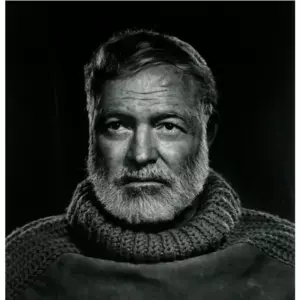 Ernest Hemingway recommended this book
Ernest Hemingway
Ernest Hemingway recommended this book in the "Ernest Hemingway on Writing" book.
Ernest Hemingway's recommendation of this book  Nelson Mandela recommended this book
Nelson Mandela
"One book that I returned to many times." - Nelson Mandela
Nelson Mandela's recommendation of this book  Mark Manson recommended this book
Mark Manson
Mark Manson recommended this book on his website.
Mark Manson's recommendation of this book
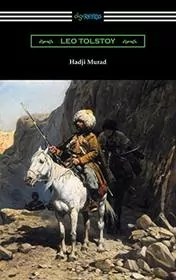
Hadji Murad
For readers who want a shorter narrative with political complexity and sharp observation of power. Its movement between opposing camps resists simple loyalties, but historical context and the violence of imperial conflict make attentive reading worthwhile.
What it's about
Avar chieftain Hadji Murad breaks with Shamil and seeks refuge among the Russians during the Caucasian conflict. With his family still imprisoned by his former leader, he faces competing loyalties and a dangerous struggle to secure their freedom.
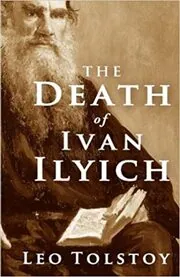
The Death of Ivan Ilych
For readers who want a concentrated introduction to Tolstoy’s moral and psychological attention. Its short length keeps the central questions close, but illness, mortality, and self-examination make it emotionally demanding despite the modest page count.
What it's about
A successful judge falls ill and realizes that the life he built around status and comfort may have been meaningless. As death approaches, he struggles through terror, denial, and finally a hard won glimpse of compassion and truth.
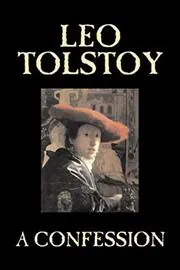
A Confession
For readers interested in the spiritual crisis behind Tolstoy’s later writing. The direct self-questioning makes it an accessible nonfiction entry, but its examination of despair and meaning can be emotionally heavy rather than reassuring.
What it's about
Tolstoy recounts the spiritual crisis that struck him in midlife, when fame and comfort could not answer his fear of death. Through brutally honest self examination, he describes losing faith, searching philosophy, and slowly rediscovering meaning in simple belief.
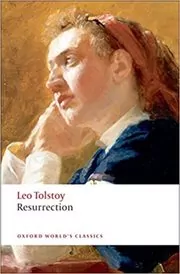
Resurrection
For readers interested in Tolstoy’s criticism of privilege and institutions through an extended narrative. The social reach distinguishes it from the shorter moral tales, but explicit ethical argument can feel more insistent than in his earlier novels.
What it's about
Serving on a jury, Nekhlyudov recognizes the accused woman as Maslova, whom he once seduced and abandoned. His attempt to make amends exposes him to the cruelty of Russia’s justice system and challenges the privileges of his own life.
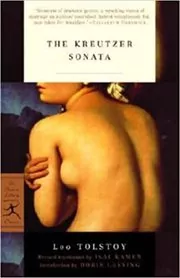
The Kreutzer Sonata
For readers willing to examine jealousy and sexual morality through a deeply troubling narrator. The framed monologue creates intense psychological pressure, but misogyny and domestic violence require a critical reading rather than accepting the speaker’s account unexamined.
What it's about
Framed as a husband's confession during a train ride, this novella describes a marriage destroyed by jealousy and bitterness. Tolstoy links sexual desire, social hypocrisy, and violence, and raises disturbing questions about love, purity, and freedom.
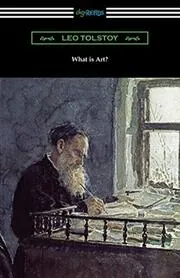
What is Art?
For readers who want to confront Tolstoy’s standards for artistic value. His argument links art with communication and moral responsibility, but its sweeping judgments and religious commitments can frustrate readers looking for an open-ended introduction to aesthetics.
What it's about
In this influential treatise, Tolstoy asks what art is for and whose feelings it should express. He argues that real art communicates sincere emotion and unites people, and he criticizes works that serve only luxury or empty entertainment.
The Kingdom of God is Within You
For readers who want Tolstoy’s religious case for nonviolence and opposition to coercion. The sustained argument makes his later commitments explicit, but its Christian premises and uncompromising conclusions differ sharply from the openness of his fiction.
What it's about
One of Tolstoy's major religious works, this book argues that Jesus's teaching forbids all violence, including war and state coercion. He outlines a radical, practical nonresistance that later influenced figures such as Gandhi and other advocates of civil disobedience.
Also recommended by
1 person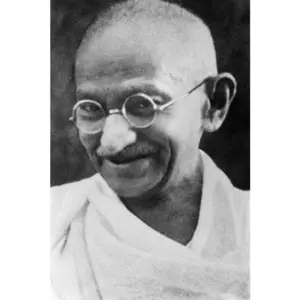 Mahatma Gandhi recommended this book
Mahatma Gandhi
"Reading [this book] cured me of my scepticism and made me a firm believer in Ahimsa." - Mahatma Gandhi
Mahatma Gandhi's recommendation of this book

Father Sergius
For readers interested in the tension between spiritual ambition and vanity. The concentrated narrative examines motives beneath an admired religious life, but its treatment of temptation and self-denial can feel severe rather than contemplatively reassuring.
What it's about
After a promising army career, a proud aristocrat becomes a monk hoping for holiness and admiration. Temptations, notoriety, and strange pilgrims follow, forcing him to confront whether he seeks God or simply another form of worldly glory.

Master and Man
For readers who want a brief, tightly focused moral story. The relationship between employer and worker gives abstract questions of value a concrete setting, but the stark contrast and intense physical danger leave little room for a light reading.
What it's about
On a winter journey to close a land deal, a wealthy merchant and his peasant driver are caught in a snowstorm. Lost in the dark, the master faces choices that reveal the hollowness of greed and the possibility of self sacrificing love.
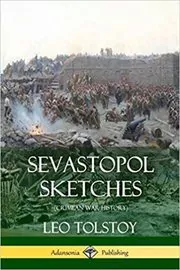
Sevastopol Sketches
For readers interested in Tolstoy’s early treatment of war beyond patriotic spectacle. The linked sketches bring fear and vanity into close view, but their fragmentary structure and changing perspectives differ from the sustained family narrative of War And Peace.
What it's about
Three sketches portray the siege of Sevastopol in December, May and August, drawing on Tolstoy’s military experience. Soldiers, officers and wounded men reveal the fear, vanity and courage beneath patriotic accounts of the Crimean War.

The Cossacks
For readers who want a shorter route into Tolstoy’s treatment of class and belonging. The outsider’s fascination with another culture creates tension, but his idealizing perspective needs scrutiny rather than being accepted as a transparent portrait.
What it's about
The Cossacks follows a restless young nobleman who joins a Cossack village in the Caucasus hoping for freedom and authenticity. Living among hunters and horsemen, he confronts his own romantic illusions and the hard realities of frontier life.

The Forged Coupon
For readers who like moral questions explored through connected consequences. The shifting network of lives gives a small act wider significance, but the episodic structure and overt ethical design can feel schematic beside Tolstoy’s more expansive characters.
What it's about
A boy's small act of forging a banknote sets off a chain of thefts, betrayals, and crimes that spread through many lives. Tolstoy shows how hidden wrongs ripple outward, and how unexpected acts of goodness can also begin with one person.
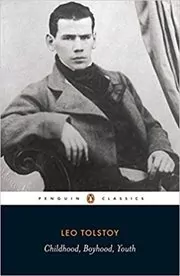
Childhood, Boyhood, Youth
For readers who want Tolstoy’s early attention to memory, shame, and growing self-awareness. Following one life across three stages provides continuity, but the episodic introspection offers less dramatic momentum than the later novels.
What it's about
This autobiographical trilogy follows Nikolai from life on his family’s estate toward adolescence and university. Family relationships, loss, ambition and self-consciousness shape a young man’s growing understanding of society and his own place within it.

Family Happiness
For readers who want an intimate study of marriage without a large cast. The young woman’s perspective keeps emotional changes close, but the age imbalance and assumptions about domestic fulfillment belong to a particular historical setting.
What it's about
A young woman marries an older landowner she once loved passionately, only to find domestic routine and social life dull that early fire. This intimate novella traces the rise and cooling of feeling and asks what lasting happiness in marriage might require.
What I Believe
For readers who want the scriptural reasoning behind Tolstoy’s later religious commitments. Its direct engagement with Christian teaching complements A Confession, but the argument is selective and polemical rather than a neutral introduction to Christian theology.
What it's about
In this intense manifesto, Tolstoy explains his understanding of authentic Christianity as strict nonviolence, honesty, and love for all people. He rejects state power and church hierarchy, arguing that following Jesus's commands must reshape every part of life.
How Much Land Does a Man Need?
For readers who want a short moral tale about appetite and ambition. Its simple structure makes the central question easy to follow, but the fable-like design offers less psychological complexity than the novels and longer novellas.
What it's about
Pahom, a peasant who believes more land will bring security, encounters repeated opportunities to enlarge his holdings. His search for sufficiency becomes a story about desire, competition, and the difficulty of deciding when material ambition has gone far enough.

The Devil
For readers who want a concentrated psychological study of desire and self-justification. The narrow focus exposes conflicting impulses sharply, but sexual double standards and the severe moral atmosphere make the novella uncomfortable rather than romantically expansive.
What it's about
A landowner's seemingly harmless affair with a peasant woman turns into an obsession that haunts him even after he marries. Tolstoy traces how secret desire and self deception can grow into a force that destroys peace of mind.

The Fruits of Enlightenment
For readers curious about Tolstoy’s comic treatment of class and fashionable belief. The household setting gives social criticism a theatrical shape, but the farcical devices and historical references may work better with some knowledge of the period.
What it's about
A comic play set in an aristocratic household fascinated by spiritualist seances and fashionable theories. As servants and masters mingle around a supposed miracle, Tolstoy pokes fun at superstition, credulity, and upper class boredom.

The Living Corpse
For readers who want to encounter Tolstoy through dialogue and stage conflict. The play concentrates social and moral pressure into personal relationships, but its dramatic form gives less direct access to inward reflection than the fiction.
What it's about
A man fakes his own death in an attempt to free his wife to remarry, only to discover that society's laws and judgments will not let him disappear cleanly. The drama unfolds as a critique of marriage, divorce, and legal hypocrisy.
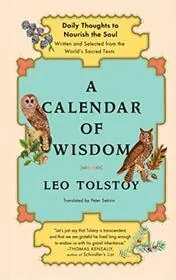
A Calendar of Wisdom
For readers who prefer brief daily reflections to a continuous argument. Tolstoy’s selections place his own thoughts beside other voices, but the anthology format means it is neither wholly original writing nor a systematic account of his philosophy.
What it's about
Arranged as daily readings for the year, A Calendar of Wisdom gathers quotations and brief reflections on faith, humility, justice, and love. Tolstoy draws from many traditions while quietly adding his own comments on how to live well.
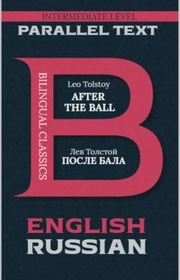
After the Ball
For readers who want a very short encounter with Tolstoy’s criticism of respectable appearances. The sharply contrasted scenes create moral pressure quickly, but the verified edition is bilingual, and the concentrated structure offers little extended character development.
What it's about
A narrator recalls a youthful experience that changed his understanding of authority and respectability. Memories of an elegant social occasion meet a harsher public world, linking personal feeling with a disturbing question about conduct and moral judgment.

God Sees the Truth, but Waits
For readers who want a brief religious moral tale rather than a psychological epic. Its direct structure brings justice and forgiveness into focus, but the overt spiritual purpose and compressed characterization leave less room for ambiguity.
What it's about
In this brief, powerful story, an innocent merchant is wrongly imprisoned for years while the real thief hides his guilt. When the truth finally emerges, Tolstoy turns the tale toward forgiveness and the quiet strength of faith.
Sources
- 1
Books Written by Leo Tolstoy
lisanneswart.com
- 2
The Best of Tolstoy (31 books)
goodreads.com
- 3
10 must-read books by Leo Tolstoy
gw2ru.com
- 4
Books by Leo Tolstoy
fivebooks.com
- 5
Leo Tolstoy
fantasticfiction.com
- 6
My 2023 New Year's Resolution is complete (A month+ late): I have both read and listened to 33 different novels, novellas and short stories by Leo Tolstoy
reddit.com
- 7
What's your favorite Tolstoy book apart from War and Peace and Anna Karenina
reddit.com
- 8
Tolstoy Books in Order: A Reading Path Through the Great Works
yalom.com





Edited by
Software engineer whose passion for tracking book recommendations from podcasts inspired the creation of MRB.
Lead investor at 3one4 Capital whose startup expertise and love for books helped shape MRB and its growth.
Comments
Spotted a missing book, a wrong order or a mistake? Tell us and we'll fix this page.
We're a reading guide, not the author or publisher, so we can't send books or pass on messages.