
12 Best Junji Ito Books
The best Junji Ito books, ranked by how many expert sources recommend each one, with notes on who they suit and where to start with his horror manga.
Our take
Junji Ito’s horror manga turns ordinary shapes, habits, and anxieties into images that become hard to look away from. Some books build an expanding disaster around one visual idea; others deliver an unsettling premise and a sudden revelation in a few pages. Readers interested in drawing, surreal imagination, and physical horror will find different routes through his work, although graphic imagery and cruelty recur throughout.
Shiver offers a varied introduction through short stories. Tomie returns to obsession and a recurring central figure, while Uzumaki, Volume 1 begins a longer story about a town overtaken by spirals. Remember that this edition and Gyo, Vol. 1 contain only the opening part of their narratives. Remina expands the threat to a cosmic scale, and No Longer Human adapts a literary novel into a much bleaker psychological experience. Start with Shiver for variety or Uzumaki, Volume 1 if you want to follow an unfolding mystery.
12 books · 8 sources · Last updated
As an Amazon Associate, we earn from qualifying purchases (at no extra cost to you).
Reading Junji Ito in order? See all Junji Ito books in order
How to choose from this list
Skip to the full rankingIf you’re new to Ito: Shiver → Fragments of Horror
If you want a longer unfolding story: Uzumaki, Volume 1
If you want extreme physical horror: Gyo, Vol. 1
If you want cosmic horror: Remina → Sensor
If you want more short stories: Venus in the Blind Spot → Smashed
If you want a bleak literary adaptation: No Longer Human
The 12 books, ranked
Ranked by how many expert sources name each book. Ties go to the book more people recommend.

Fragments of Horror
For readers who want a shorter collection with shifts between unsettling humor, grief, and physical horror. Its compact range makes it easy to sample, though the brief format means individual premises receive little room to develop.
What it's about
This collection marked Ito's return to horror manga after a hiatus. It includes stories about a woman who holds onto a house for too long, a dissection class gone wrong, and a man obsessed with a bird woman. Short, punchy, and weird.

For newcomers who want several short examples of Ito’s visual imagination before choosing a longer story. His own selection and commentary give useful context, though the rapid changes of premise leave little extended character development.
What it's about
A "best of" collection featuring some of Ito’s most famous short stories. Includes "The Enigma of Amigara Fault," about human-shaped holes in a mountain, and "Hanging Balloons," where giant heads hunt their lookalikes. An essential starting point.

For readers curious about Ito’s interpretation of a familiar Gothic novel. The adaptation emphasizes the creature’s physical horror, while additional stories widen the collection, though the shifts make it less unified than a single narrative.
What it's about
Junji Ito adapts Mary Shelley’s classic novel with his own grotesque flair. The monster is depicted in horrifying detail as he torments his creator. The collection also includes stories about Oshikiri, a boy who lives in a house connected to other dimensions.

No Longer Human
For readers prepared for a long, psychologically bleak adaptation rather than a quick supernatural scare. Its visual distortions externalize alienation, though sexual trauma and self-destructive behavior make it one of the more difficult choices here.
What it's about
Ito adapts Osamu Dazai’s classic novel of alienation into a graphic nightmare. It follows the life of Oba Yozo, a man who fears human beings and hides behind a clownish mask. A psychological descent into madness and self-destruction.

For readers who have enjoyed a short-story collection and want more strange premises and sudden reversals. Its range rewards reading in small sessions, though the uneven intensity makes some stories linger longer than others.
What it's about
A stellar collection of short stories, including the titular tale of a nectar that makes people simply... smash. Other standouts include a haunted library and a village of mirrors. It features some of Ito's most creative and disturbing concepts.

For readers who enjoy recurring monsters and variations on obsession rather than one continuous plot. The collected format shows Ito developing a central idea, though repeated patterns and graphic violence can become exhausting across its length.
What it's about
Tomie Kawakami is a beautiful young woman who drives men to jealous, murderous madness. No matter how many times she is killed and dismembered, she regenerates to continue her cycle of terror. This complete collection gathers every story from Junji Ito’s debut series.

Remina
For readers who want cosmic scale and panic spreading through a crowd. Its apocalyptic imagery delivers a different kind of helplessness from the intimate stories, though thin characterization and extreme escalation can strain emotional involvement.
What it's about
A scientist discovers a new planet and names it after his daughter, Remina. But the planet is a living, planet-eating organism that turns its gaze toward Earth. As the world faces destruction, the human population turns on the girl in a frenzy of fear.

Venus in the Blind Spot
For readers who want a varied sample of short horror, including adaptations and familiar standalone stories. Its compact format suits browsing, though the changing styles and selections offer less continuity than a sustained narrative.
What it's about
A deluxe collection of short stories, including the popular "The Enigma of Amigara Fault." It also features an adaptation of Edogawa Ranpo’s "The Human Chair." Many pages are presented in color, highlighting the grotesque details.

Dissolving Classroom
For readers who enjoy absurd comedy mixed with grotesque punishment. Its linked episodes make the central conceit easy to follow, though the repeated gag and exaggerated cruelty offer less variety than Ito’s broader collections.
What it's about
Yuuma is a young man obsessed with apologizing, but his contrition melts people’s brains. Along with his terrifying little sister Chizumi, he brings a bizarre plague to a new town. A dark comedy about guilt and demonic worship.

Sensor
For readers interested in mystical imagery and horror built around elusive connections. Its golden-hair motif gives the artwork a distinctive atmosphere, though the shifting ideas and loose narrative make it a less straightforward introduction.
What it's about
Kyoko Byakuya wanders into a village covered in golden volcanic hair that grants telepathic powers. She becomes caught in a cosmic struggle involving ancient missionaries and space-faring horrors. A journey into the mystic and the terrifying.
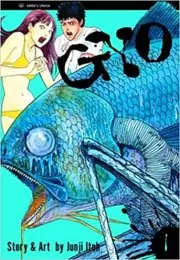
For readers who prefer grotesque physical horror and escalating disaster to quiet suspense. Its creature designs make the premise visually immediate, though this is only the first volume and the revulsion outweighs subtle characterization.
What it's about
A foul "death stench" ruins a couple's vacation in Okinawa, followed by fish that walk on mechanical legs. Tadashi and Kaori find themselves trapped as the sea life invades the land, bringing a biological horror that threatens all of humanity.

For readers who want ordinary surroundings gradually transformed by a single visual obsession. Its connected episodes provide an accessible beginning to Ito’s longer horror, though this first volume leaves the larger story unfinished.
What it's about
Kirie Goshima notices that her town is becoming obsessed with spirals. It starts with small things, like a fascination with snail shells, but soon people’s bodies begin to twist and warp. The curse of the spiral has arrived in Kurouzu-cho.
Sources
- 1
10 Best Junji Ito Books (2025) - Are They Worth Reading?
ereads.com
- 2
Best of Junji Ito
goodreads.com
- 3
All Junji Ito Books Ranked from Weakest to Strongest
rehnwriter.com
- 4
Books by Junji Ito and Complete Book Reviews
publishersweekly.com
- 5
What is your favourite book from the Junji Ito Story Collection series?
reddit.com
- 6
Junji Ito Manga Ranked: All 15 Books from Best to Skip
horrormangaguide.com
- 7
VIZ | The Official Website for Junji Ito
viz.com
- 8
What is Junji Ito's best work in yall's opinion?
reddit.com




Edited by
Software engineer whose passion for tracking book recommendations from podcasts inspired the creation of MRB.
Lead investor at 3one4 Capital whose startup expertise and love for books helped shape MRB and its growth.
Comments
Spotted a missing book, a wrong order or a mistake? Tell us and we'll fix this page.
We're a reading guide, not the author or publisher, so we can't send books or pass on messages.