
15 Best Human Rights Books
Explore the best human rights books, ranked by expert sources and readers, from introductory guides and histories to memoirs, investigations, and fiction.
Our take
Human rights books can explain a set of principles, trace a political movement, or make the consequences of abuse visible through one person’s life. These approaches complement one another. A memoir can reveal the cost of repression, while a historical or introductory work helps place that experience within a wider argument about dignity and power.
Begin with Human Rights: A Very Short Introduction if you want an overview. Inventing Human Rights and The Last Utopia offer different accounts of how rights acquired their modern importance. For the gap between principle and governmental action, A Problem from Hell examines responses to genocide, and Disposable People investigates contemporary slavery.
Choose personal testimony for a closer encounter with advocacy. Unbowed, Fearless Fighter, and Taking a Stand connect public struggles with lived experience. The listed I Am Malala is adapted for younger readers. Fiction such as 1984 and To Kill a Mockingbird opens another route into discussion, but it serves a different purpose from historical evidence. Start with an overview or a life story, then read across forms.
15 books · 9 sources · Last updated
As an Amazon Associate, we earn from qualifying purchases (at no extra cost to you).
How to choose from this list
Skip to the full rankingIf you want an introduction: Human Rights → Inventing Human Rights
If you want competing historical interpretations: Inventing Human Rights → The Last Utopia
If you want investigations of serious abuses: Disposable People → A Problem from Hell
If you want accounts of advocacy: Fearless Fighter → Taking a Stand → Unbowed
If you are choosing for a younger reader: I Am Malala
If you want fiction for discussion: 1984 → To Kill a Mockingbird
The 15 books, ranked
Ranked by how many expert sources name each book. Ties go to the book more people recommend.
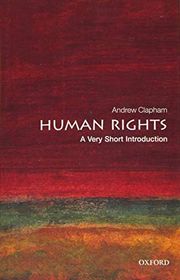
Human Rights: A Very Short Introduction
For newcomers who want a compact orientation to human rights ideas and institutions. Clapham connects principles with difficult practical questions, though the short format cannot supply the detail needed for specialized legal study or current case analysis.
What it's about
Andrew Clapham introduces the meaning, development, and application of human rights. The book considers how rights are protected, why they are contested, and how international principles relate to governments, institutions, and difficult questions about dignity, security, and responsibility.

1984
For readers exploring how authoritarian power can attack privacy, language, and independent thought. Orwell gives those threats a vivid fictional form, though the bleak dystopia offers neither a history of rights nor practical advocacy guidance.
What it's about
In a future dictatorship where Big Brother watches everyone, Winston Smith rewrites history for the Party but quietly begins to doubt the system. His search for truth and love becomes a struggle against torture, surveillance, and the erasure of reality.
Also recommended by
14 people Tristan Harris recommended this book
Tristan Harris
"[The author]'s dark vision." - Tristan Harris
Tristan Harris's recommendation of this book  Jordan Peterson recommended this book
Jordan Peterson
Recommended on Jordan Peterson's website.
Jordan Peterson's recommendation of this book  J. Cole recommended this book
J. Cole
J. Cole mentioned reading this book on The Fayetteville Observer.
J. Cole's recommendation of this book  Emma Watson recommended this book
Emma Watson
On the "books read" section of Emma Watson's GoodReads profile.
Emma Watson's recommendation of this book  Noam Chomsky recommended this book
Noam Chomsky
On the "Top 100 Books Referenced by Noam Chomsky" list.
Noam Chomsky's recommendation of this book  Richard Branson recommended this book
Richard Branson
Richard Branson recommended this book on his "70 must-read books" blog post.
Richard Branson's recommendation of this book +8
More recommendations
- Matt Mullenweg
Matt Mullenweg mentioned this book on "The Tim Ferriss Show" podcast.
- Christopher Hitchens
"We were all expected to read Animal Farm and [this book], which had been placed on the syllabus as part of the curriculum of the Cold War." - Christopher Hitchens
- Sahil Lavingia
Sahil Lavingia recommended this book on Notion.
- Jenn Im
"Highly recommend." - Jenn Im
- Winston Churchill
One of Winston Churchill's favorite books.
- Diane Rehm
"Examines the consequences of totalitarianism, mass surveillance and government repression." - Diane Rehm
- Anna Akana
Anna Akana recommended this book on Twitter.
- Brad Delong
Brad Delong recommended this book in his website.
- Matt Mullenweg

For readers who want fiction that makes racial injustice and legal inequality emotionally immediate. Scout’s perspective creates a memorable moral education, though the novel centers a white family’s viewpoint within the segregated American South.
What it's about
A young girl grows up in a Southern town shaped by racial prejudice while her lawyer father defends a Black man accused of a serious crime. His case brings questions of justice, courage and compassion into her childhood.
Also recommended by
5 people- Jordan Peterson recommended this book
Jordan Peterson
Recommended on Jordan Peterson's website.
Jordan Peterson's recommendation of this book  Taylor Swift recommended this book
Taylor Swift
"[The storytelling] makes your mind wander." - Taylor Swift
Taylor Swift's recommendation of this book  Oprah Winfrey recommended this book
Oprah Winfrey
"I remember starting it and just devouring it, not being able to get enough of it, because I fell in love with Scout." - Oprah Winfrey
Oprah Winfrey's recommendation of this book  Kathie Lee Gifford recommended this book
Kathie Lee Gifford
"This story of tragic injustice resonated in my young mind and still does. It should be required reading for everyone." - Kathie Lee Gifford
Kathie Lee Gifford's recommendation of this book  James Clear recommended this book
James Clear
"[One of] the 10 best fiction books." - James Clear
James Clear's recommendation of this book

For younger readers who want a personal introduction to girls’ education and advocacy. This adapted account makes Malala’s experience approachable, though adults seeking the fuller political context should choose her memoir written for a general audience.
What it's about
In this adaptation for younger readers, Malala Yousafzai recounts her childhood in Pakistan and her campaign for girls' education. Written with Patricia McCormick, it follows her resistance to Taliban restrictions, the attack she survived, and continued advocacy.
Also recommended by
1 person Jon Stewart recommended this book
Jon Stewart
"Please, get the book." - Jon Stewart
Jon Stewart's recommendation of this book
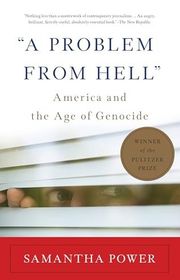
A Problem from Hell
For readers examining why governments fail to respond to genocide despite available knowledge. Power combines historical cases with policy scrutiny, though its focus on American responses offers a particular perspective on a broader international problem.
What it's about
Samantha Power investigates American responses to twentieth-century genocides, tracing the choices of officials, activists, and witnesses. Historical cases reveal how knowledge, political interests, bureaucratic habits, and public pressure shaped decisions about whether to confront mass atrocities.

For readers who want to understand contemporary slavery through concrete cases and economic structures. Bales connects exploitation across several countries, though changing conditions mean the examples need complementing with more recent reporting.
What it's about
Kevin Bales investigates slavery in Mauritania, Brazil, Thailand, Pakistan, and India, connecting exploitation with the global economy. Accounts of workers' lives support his argument that economic changes have encouraged forms of slavery in which people are treated as cheap and disposable.
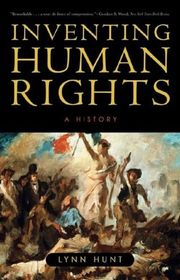
Inventing Human Rights
For readers who want a cultural history of how universal rights became imaginable. Hunt connects changing feelings and social practices with political declarations, though the emphasis on the Enlightenment offers one interpretation rather than a complete global history.
What it's about
Lynn Hunt traces the emergence of modern human rights through eighteenth-century ideas, literature, political declarations, and changing attitudes toward torture. She examines the relationship between empathy, individual autonomy, and the expanding but contested claim that rights belong to everyone.

For readers interested in how personal experience can inform international rights advocacy. Méndez connects survival and professional practice with questions of accountability, though the memoir-based argument is less systematic than an introductory textbook.
What it's about
Juan Méndez draws on his imprisonment in Argentina and decades of advocacy to examine human rights abuses. Written with Marjory Wentworth, the book explores torture, detention, exile, conflict, and genocide, proposing ways to strengthen cooperation and hold governments accountable.

The Help
For readers seeking accessible fiction about domestic work, segregation, and the risks of speaking out. The alternating voices create narrative momentum, though its framing of Black women’s experiences through a white author merits critical discussion.
What it's about
In Jackson, Mississippi, in 1962, Black maids Aibileen and Minny join aspiring writer Skeeter in a risky project. Their book about working in white households challenges the town's racial rules and threatens to transform the lives of everyone involved.
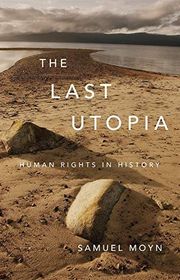
The Last Utopia
For readers ready to question familiar stories about the rise of human rights. Moyn emphasizes the movement’s relatively recent political prominence, though his revisionist historical argument is more demanding than a broad introductory survey.
What it's about
Samuel Moyn examines the emergence of human rights as a prominent international political language. Challenging accounts of continuous progress from earlier ideals, he situates the modern movement among competing visions of justice and the political changes of the twentieth century.

For readers interested in the personal costs of defending rights under repression. Chirwa’s legal and political experiences anchor the account in Malawi, though the autobiography offers one life’s perspective rather than a comparative history of activism.
What it's about
Vera Chirwa recounts her life as a lawyer, campaigner, wife, and mother amid Malawi's political struggles. Her autobiography follows education, activism, exile, and imprisonment, connecting personal experience with resistance to colonialism and corruption and the risks faced by human rights defenders.

I Am Troy Davis
For readers examining the death penalty through a family’s sustained campaign for justice. Marlowe foregrounds relationships and contested evidence, though the committed advocacy perspective differs from a detached survey of capital punishment.
What it's about
Jen Marlowe and Martina Davis-Correia recount Troy Davis's life, conviction, and long struggle to establish his innocence. The account centers his family's campaign against his execution, connecting personal relationships with questions about racial injustice, evidence, and the death penalty.

Mosquito
For readers who want to encounter civil conflict through a literary story of grief, art, and attachment. Tearne connects private hopes with public violence, though the novel offers emotional insight rather than documentary evidence.
What it's about
After his wife's death, writer Theo Samarajeeva returns to Sri Lanka, where a friendship with the young artist Nulani develops into love. Their relationship unfolds against growing civil conflict, bringing private grief and hope into contact with a country's deepening violence.

For readers drawn to historical fiction about women’s vulnerability and the struggle for self-determination. Holeman gives the themes a sustained personal narrative, though the dramatic journey should not be treated as a general account of Afghan life.
What it's about
In nineteenth-century Afghanistan, Daryâ becomes an outcast and enters a marriage that exposes her to further violence. After fleeing, she meets the English traveler David Ingram and joins his journey to Bombay, opening an uncertain path beyond the life she has known.

For readers interested in the links between environmental work, women’s organizing, and democratic resistance. Maathai’s life gives those connections practical substance, though the memoir remains centered on her experience and Kenya’s particular history.
What it's about
Wangari Maathai recounts her life from childhood in rural Kenya to environmental and political activism. Her memoir traces the creation of the Green Belt Movement, connecting efforts to plant trees with women's empowerment and struggles for democracy in her country.
Sources
- 1
Human Rights Books
goodreads.com
- 2
Explore General Resources for Introduction to Human Rights
course.oeru.org
- 3
Looking for recreational, non-textbook style, books on international law
reddit.com
- 4
Ten great books on human rights
amnesty.org.uk
- 5
Human rights: which book is a must-read?
unric.org
- 6
The best books on Human Rights, recommended by Steve Crawshaw
fivebooks.com
- 7
5 Human Rights Books Everybody Should Read
humanrightscareers.com
- 8
Suggested Reading: Human Rights and Humanitarianism
macalester.edu
- 9
The best books on Human Rights, recommended by John Tasioulas
fivebooks.com





Edited by
Software engineer whose passion for tracking book recommendations from podcasts inspired the creation of MRB.
Lead investor at 3one4 Capital whose startup expertise and love for books helped shape MRB and its growth.
Comments
Spotted a missing book, a wrong order or a mistake? Tell us and we'll fix this page.
We're a reading guide, not the author or publisher, so we can't send books or pass on messages.