
16 Best Electrician Books
The best electrician books, ranked by how many expert sources recommend each one, with notes for apprentices, exam candidates, and working professionals.
Our take
Electrician books serve different purposes: teaching electrical theory, explaining installation work, supporting code study, and providing quick reference on the job. A pocket handbook is useful once you know what you need to look up, while a course textbook supplies the background for understanding the answer. Exam practice adds another task: applying that knowledge efficiently to unfamiliar questions.
Delmar’s Standard Textbook of Electricity offers a substantial foundation, and Audel Electrical Course for Apprentices and Journeymen connects theory with trade applications. Electrical Wiring Residential narrows the focus to homes and construction plans. Ugly’s Electrical References supports quick lookups, while American Electricians’ Handbook provides a larger reference. For industrial work, Industrial Motor Control and Transformer Principles and Applications develop specialist topics. Choose code books, handbooks, and exam guides in the edition required by your jurisdiction or training program; the newest publication is not automatically the relevant one. Start with one theory text and use it alongside supervised practical training.
16 books · 9 sources · Last updated
As an Amazon Associate, we earn from qualifying purchases (at no extra cost to you).
How to choose from this list
Skip to the full rankingIf you are beginning trade study: Electrical Level 1 Trainee Guide → Delmar's Standard Textbook of Electricity
If you want a lighter theory course: Electrical Studies for Trades → Audel Electrical Course for Apprentices and Journeymen
If you want residential coursework: Electrical Wiring Residential → Wiring a House
If you need technical references: Ugly’s Electrical References → American Electricians' Handbook
If you want illustrated code study: Understanding the National Electrical Code, Volume 1
If you are moving into industry: Fundamentals of Motor Control → Industrial Motor Control → Transformer Principles and Applications
The 16 books, ranked
Ranked by how many expert sources name each book. Ties go to the book more people recommend.

Delmar's Standard Textbook of Electricity
For students who want a substantial course in electrical theory and practical applications. Its illustrated units support sustained learning, though the code references in this edition require updating rather than being treated as current requirements.
What it's about
Stephen L. Herman's sixth edition combines electrical theory with illustrated applications and practical examples. Updated to the 2014 National Electrical Code, its short units use schematics to explain concepts, common electrical tasks, and additional topics in motors.

Ugly’s Electrical References
For apprentices and working electricians who need formulas, tables, and diagrams close at hand. Its compact format makes lookup easier than a large textbook, though code related material must match the edition relevant to your work.
What it's about
Charles R. Miller's 2020 reference gathers electrical formulas, wiring diagrams, conversion tables, and National Electrical Code information in a compact format. Coverage includes conduit bending and fill, ampacity, transformer circuits, junction box calculations, and electrical measuring instruments.

American Electricians' Handbook
For experienced electricians who want a broad technical reference beyond pocket tables. Its coverage connects equipment, calculations, and installation questions, though the size makes it less convenient for quick field use or introductory study.
What it's about
Frederic P. Hartwell's seventeenth edition covers the design, installation, operation, and maintenance of electrical systems, incorporating the 2020 electrical codes. Diagrams, tables, and calculations accompany material on conductors, transformers, motors, lighting, and energy efficient technologies.
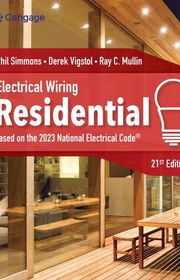
Electrical Wiring Residential
For apprentices who want a course centered on residential installations and construction plans. Its textbook structure provides more sustained study than homeowner guides, though the required edition should be selected to match your training program.
What it's about
Ray Mullin and his coauthors explain residential electrical installations through code discussions, diagrams, examples, and house plans. The textbook connects wiring concepts with the layout and documentation of a home, with exercises supporting trade instruction.

Industrial Motor Control
For students and technicians moving into industrial systems. Its focus on relays, programmable controllers, and drives goes beyond residential wiring, though readers need a sound grasp of circuits and schematics before tackling the material.
What it's about
Stephen L. Herman's seventh edition explains industrial motor control through relay systems, programmable logic controllers, and solid state devices. Instructions connect maintenance with instrumentation, covering variable frequency drives and electronic applications used to control industrial equipment.

Audel Electrical Course for Apprentices and Journeymen
For apprentices who want electrical theory explained through trade applications. Its self study structure gives concepts a clearer sequence than a reference handbook, though older examples need checking against current equipment and installation requirements.
What it's about
Paul Rosenberg presents a self study course connecting electrical theory with trade applications. Illustrated chapters and review questions cover alternating and direct current, magnetic circuits, calculations, measuring instruments, grounding, insulation testing, and correction of power factor.

Wiring a House
For apprentices and knowledgeable homeowners who want residential wiring explained as a connected system. Its practical reasoning complements more compressed references, though edition specific methods and code discussions must be checked against local requirements.
What it's about
Rex Cauldwell explains residential wiring for homeowners, apprentices, and electricians through practical instruction and illustrations. The guide follows the home's electrical system from incoming service to individual connections, covering tools, installation work, and the reasoning behind wiring choices.

Electrical Level 1 Trainee Guide
For new apprentices following a structured training program. Its modules introduce tools, safety, circuits, and construction documents in one course, though it works best with supervised practical instruction rather than as a standalone qualification.
What it's about
NCCER introduces apprentices to electrical safety, circuits, theory, and the National Electrical Code. Illustrated training modules also cover conduit bending, raceways, conductors, construction drawings, residential services, and testing equipment, with review questions supporting foundational trade instruction.

Electrical Studies for Trades
For service and maintenance students who need useful electrical foundations without a full engineering treatment. Its practical orientation suits related trades, though electricians seeking detailed licensing preparation will need additional code and calculation resources.
What it's about
Stephen L. Herman introduces electricity for service technicians in refrigeration, construction, and facilities management. This fifth edition moves from basic concepts to wire sizing, switch connections, power panels, transformers, and motors, using illustrated examples rather than complex mathematical introductions.

Electrician's Troubleshooting and Testing Pocket Guide
For service electricians who want a portable reference focused on diagnosis and measuring instruments. Its fault finding emphasis complements installation texts, though a pocket format cannot supply the depth of supervised testing experience.
What it's about
Brooke Stauffer and John E. Traister explain how electricians use portable meters to test, maintain, and troubleshoot electrical equipment. Designed for quick reference at work sites, this third edition concentrates on diagnosing problems across electrical systems.

Transformer Principles and Applications
For apprentices and technicians who need a dedicated explanation of transformers. Its combination of principles and applications offers more depth than general references, though the narrow scope makes it a supplement to broader electrical training.
What it's about
Otto Taylor, Jim Overmyer, and Ron Michaelis explain transformer operation through fundamental electrical and magnetic concepts. The textbook connects these foundations with wiring arrangements, installation, maintenance, and troubleshooting, addressing both beginning apprentices and more advanced applications.

For readers who want a visual introduction to residential wiring concepts and common projects. Its photographs make components easier to recognize, though its homeowner focus offers less depth than a full apprenticeship text.
What it's about
Creative Homeowner's eighth edition of its wiring guide introduces residential electrical systems through illustrated explanations and step by step photographs. Projects cover home electrical installations and repairs, including switches and lighting, alongside material on planning and understanding wiring.
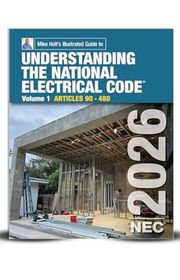
For electricians who understand basic theory but find code language difficult to interpret. Its illustrated explanations provide a bridge between textbook learning and code lookup, though Volume 1 covers only part of the full code.
What it's about
Mike Holt explains the National Electrical Code through illustrations, worked examples, and commentary. Volume 1 covers Articles 90 through 480 in the referenced editions, connecting code language with the electrical installation situations those provisions address.

For apprentices who want a focused introduction to motor control after basic electrical theory. Its narrower subject helps organize further study, though readers needing a wider industrial reference may prefer Industrial Motor Control.

For journeyman candidates who need repeated practice under exam conditions. Its question sets make preparation more active than reading a reference, though the code edition and question coverage must match the examination you will take.
What it's about
Ray Holder's 2020 study guide combines practice examinations with review material for journeyman electrician candidates. Questions address conductor sizing, protection, motors, transformers, and load calculations, while formulas and testing tips support preparation for electrical competency examinations.

For electrical professionals who want explanatory commentary alongside the code itself. Its illustrations provide context that a plain codebook lacks, though this edition’s requirements must be checked against the version adopted for your project.
What it's about
The 2020 National Electrical Code Handbook combines the full code text with expert commentary and explanatory illustrations. Prepared for electrical professionals, it supplements requirements with interpretive material intended to clarify how the code applies to installations.
Sources
- 1
Must-Read Books for Electricians Recommended by Master Electricians
knoweasytool.com
- 2
The Best Books for Electricians (2026 Guide)
electricianauthority.com
- 3
10 of The Best Electrician Books to Read
servicetitan.com
- 4
Electrical Books
goodreads.com
- 5
Want to learn electrical work.. what are the best books out there to teach myself?
reddit.com
- 6
Website Published Book List: Electrical Technician
houstoncareerinstitute.com
- 7
Best Books for Electricians
electricianapprenticehq.com
- 8
The 20+ best electrician books for apprentices, exam prep, business owners & more
housecallpro.com
- 9
2024-2025 Electrical Year 4 Book (Material) List
cetrain.isu.edu









Edited by
Software engineer whose passion for tracking book recommendations from podcasts inspired the creation of MRB.
Lead investor at 3one4 Capital whose startup expertise and love for books helped shape MRB and its growth.
Comments
Spotted a missing book, a wrong order or a mistake? Tell us and we'll fix this page.
We're a reading guide, not the author or publisher, so we can't send books or pass on messages.