
4 Best Anarchist Books
The best anarchist books, ranked by expert source recommendation counts, with notes to help readers choose works on cooperation, economics, and ecology.
Our take
Peter Kropotkin’s anarchist writing approaches social organization from several directions. He asks how people might meet material needs, how cooperation contributes to collective life, and how work could be organized differently. These books offer connected arguments rather than a single introductory survey of every anarchist tradition. Their historical setting matters when considering the examples and assumptions behind them.
The Conquest of Bread presents an anarchist communist vision through questions of production and distribution. Mutual Aid develops the importance Kropotkin gives cooperation, drawing examples from animal life and human communities. Fields, Factories and Workshops turns toward the relationship between agriculture, industry, and education, giving more detail to his economic thinking.
Murray Bookchin’s The Ecology of Freedom adds a later perspective, connecting ecological concerns with the history of hierarchy and domination. Start with The Conquest of Bread for Kropotkin’s political program, then choose Mutual Aid for cooperation or Fields, Factories and Workshops for the organization of work. Save Bookchin’s denser theoretical treatment for a more sustained reading.
4 books · 9 sources · Last updated
As an Amazon Associate, we earn from qualifying purchases (at no extra cost to you).
How to choose from this list
Skip to the full rankingIf you want Kropotkin's political vision: The Conquest of Bread
If you want to explore cooperation: Mutual Aid
If you want to examine economic organization: Fields, Factories and Workshops
If you want ecology connected with hierarchy: The Ecology of Freedom
The 4 books, ranked
Ranked by how many expert sources name each book. Ties go to the book more people recommend.

For readers interested in the role cooperation plays in Kropotkin’s social thought. Its movement between animal life and human communities gives the argument breadth, though the historical biology and selective examples should not be treated as a current evolutionary synthesis.
What it's about
Peter Kropotkin argues that cooperation is a major force in evolution and social survival. Drawing examples from animals and human communities across history, he challenges accounts that treat competition as the defining principle of collective life.

The Conquest of Bread
For readers who want Kropotkin’s political vision stated through the everyday questions of work, food, and distribution. Its concrete organizing concerns make the argument approachable, though its revolutionary assumptions and historical examples require critical distance.
What it's about
Peter Kropotkin outlines his vision of an anarchist communist society and the revolution needed to create it. He argues for common ownership and meeting everyone's material needs, examining work, production, distribution, and the organization of everyday life.
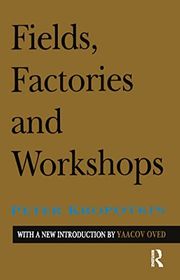
Fields, Factories and Workshops
For readers who want to examine the practical economic organization behind Kropotkin’s political ideals. Its attention to local production and the division of work gives the vision detail, though its industrial evidence and expectations belong to an earlier period.
What it's about
Peter Kropotkin examines how agriculture, industry, and education might be organized around smaller, integrated communities. Drawing on examples of production and labor, he argues for combining intellectual and manual work and reconsidering the separation between town and countryside.

For readers who want anarchist and ecological questions examined through the history of hierarchy. Bookchin’s wide theoretical frame connects social domination with environmental concerns, though the dense argument and sweeping historical interpretations require sustained attention.
What it's about
Murray Bookchin connects ecological problems with the historical development of social hierarchy. Combining anthropology, political theory, and ecological thought, he examines traditions of domination and freedom while proposing a transformation of society toward more sustainable relationships.
Sources
- 1
The 100 Best Anarchist, Communist, & Socialist Books of All Time - Listmuse.com
listmuse.com
- 2
A General Anarchist Reading List | The Library of Unconventional Lives
thelul.org
- 3
The Best Books on Anarchism - Five Books Expert Recommendations
fivebooks.com
- 4
Bibliography for FAQ
anarchistfaq.org
- 5
Anarchist books (483 books)
goodreads.com
- 6
The Ten Best Philosophy Books on Anarchism - The Daily Idea
thedailyidea.org
- 7
Recommended Reading on Anarchism, Marxism and Feminism – Zoe Baker
anarchozoe.com
- 8
Book recomendations : r/Anarchism
reddit.com
- 9
Recommendations for someone new to anarchism : r/Anarchy101
reddit.com







Edited by
Software engineer whose passion for tracking book recommendations from podcasts inspired the creation of MRB.
Lead investor at 3one4 Capital whose startup expertise and love for books helped shape MRB and its growth.
Comments
Spotted a missing book, a wrong order or a mistake? Tell us and we'll fix this page.
We're a reading guide, not the author or publisher, so we can't send books or pass on messages.