
William Peter Blatty Books in Order
See William Peter Blatty books in order, with quick summaries, reading guidance, and notes on The Exorcist, his comedies, memoirs, and later novels.
Last updated:
As an Amazon Associate, we earn from qualifying purchases (at no extra cost to you).
William Peter Blatty books in publication order
15 books
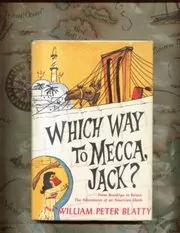
Which Way to Mecca, Jack?
by William Peter Blatty
1960
Blatty turns his early life and time in Beirut into a loose, comic memoir full of self-mockery, culture clashes, and tall tales. It shows the funny side of a writer most readers know for much darker work.
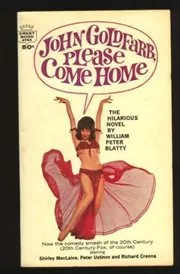
John Goldfarb, Please Come Home
by William Peter Blatty
1963
A onetime football hero turned U-2 pilot crash-lands in the mythical Arab kingdom of Fawzia. To avoid being handed over to the Soviets, John Goldfarb has to coach the ruler's hopeless football team.
I, Billy Shakespeare!
by William Peter Blatty
1965
In this slim satire, the ghost of William Shakespeare returns to answer the people who insist he did not write his own plays. Blatty turns a literary argument into a quick, strange, funny monologue.
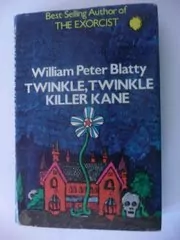
Twinkle, Twinkle, Killer Kane
by William Peter Blatty
1966
After astronaut Billy Cutshaw suffers a breakdown during a moon launch, he is sent to a military asylum under Colonel Hudson Kane. What starts as black comedy turns stranger and darker, circling madness, guilt, and faith.
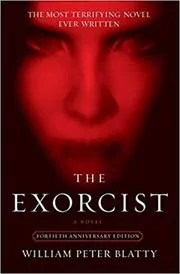
The Exorcist
by William Peter Blatty
1971
When actress Chris MacNeil's daughter Regan begins changing in terrifying ways, doctors fail and Father Damien Karras is drawn into a battle with something inhuman. Blatty makes the horror land through grief, doubt, and the cost of belief.
I'll Tell Them I Remember You
by William Peter Blatty
1973
Blatty looks back on his New York childhood and on the formidable Lebanese mother who kept the family going through poverty and upheaval. Funny and affectionate, it is a portrait of the woman who shaped his voice and faith.
On The Exorcist
by William Peter Blatty
1974
Part memoir and part making-of record, this book traces the real case that sparked The Exorcist and Blatty's path from novel to screenplay. It also reflects on what changed when the story moved to film.
The Ninth Configuration
by William Peter Blatty
1978
In an isolated military castle, Colonel Kane tries to treat officers whose breakdowns may be genuine, staged, or something darker. This reworked version of Twinkle, Twinkle, Killer Kane blends mystery, black comedy, and a serious search for meaning.
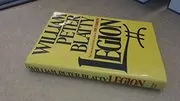
Legion
by William Peter Blatty
1983
Lieutenant Kinderman investigates a string of mutilation murders that echo crimes supposedly ended years earlier with the death of the Gemini Killer. What begins as a police procedural turns into a chilling argument about evil, identity, and the supernatural.
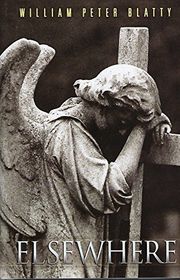
Elsewhere
by William Peter Blatty
1989
A hardheaded realtor gathers a writer, a psychic, and a paranormal expert to spend time in a mansion with a haunted reputation. The ghost hunt soon slips into something sadder and stranger as the house begins revealing its own secrets.
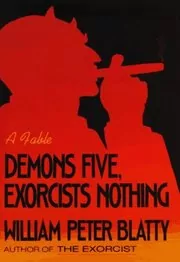
Demons Five, Exorcists Nothing
by William Peter Blatty
1996
A washed-up director takes a studio job that should save his career and walks into a grotesque Hollywood circus of sabotage, ego, and revenge. Blatty turns movie-business misery into a nasty, playful farce.
If There Were Demons Then Perhaps There Were Angels
by William Peter Blatty
1999
In this short memoir, Blatty explains how a 1949 exorcism story stayed with him and slowly became The Exorcist. It is a personal look at faith, inspiration, and the long road from idea to phenomenon.
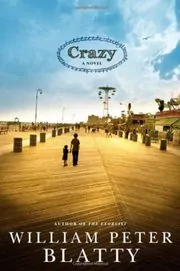
Crazy
by William Peter Blatty
2010
In 1940s New York, young Joey meets Jane, a strange girl who seems to know too much and appear exactly when he needs her. Blatty blends nostalgia, comedy, and mystery with a small but persistent touch of the uncanny.
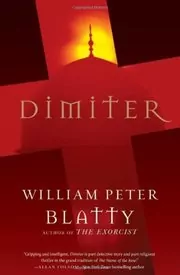
Dimiter / The Redemption
by William Peter Blatty
2010
A silent prisoner escapes torture in 1970s Albania, and the trail leads to baffling deaths in Jerusalem. Detective Peter Meral follows clues that point toward murder, revenge, and something far harder to explain.
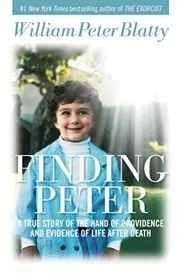
Finding Peter
by William Peter Blatty
2015
After his son Peter dies suddenly, Blatty writes through grief, memory, and a series of experiences he believed were messages from beyond death. It is part family memoir, part argument that love and personality survive the grave.
Where to start with William Peter Blatty
For the essential horror route: The Exorcist → Legion
For Blatty at his strangest and most philosophical: The Ninth Configuration → Legion → Dimiter / The Redemption
For the early comic books: Which Way to Mecca, Jack? → John Goldfarb, Please Come Home → I, Billy Shakespeare!
For memoir and behind-the-scenes reading: I'll Tell Them I Remember You → On The Exorcist → Finding Peter
For a short haunted-house detour: Elsewhere
William Peter Blatty sub-series and character series
William Peter Blatty collections, short stories, and related book types
Short Stories/Novellas
Non-Fiction
Standalone William Peter Blatty books
Author bio
William Peter Blatty was born in New York City on January 7, 1928, the youngest child of Lebanese immigrant parents. He grew up in a family with very little money and was raised mostly by his mother, Mary, after his father left when he was still young. That mix of hardship, humor, and deep Catholic belief stayed with him for the rest of his life, and it shows up again and again in his books.
Money was short, but school mattered.
Blatty won scholarships to Brooklyn Prep and then Georgetown University, where he earned his English degree in 1950. He later completed a master's in English at George Washington University. While he was at Georgetown in 1949, he read newspaper coverage of a Maryland exorcism case. He did not turn it into fiction right away, but the idea sat in the back of his mind for years until it became The Exorcist.
Before writing paid the bills, he tried just about everything. He sold vacuum cleaners door to door, drove a beer truck, worked as a ticket agent, served in the U.S. Air Force in psychological warfare, and later worked for the United States Information Agency in Beirut. He also held publicity jobs in Los Angeles. That winding path mattered. Blatty knew institutions from the inside, and he knew how funny, chaotic, and strange ordinary life could be.
His early books leaned hard into comedy. Which Way to Mecca, Jack? drew on his own background and time in Beirut, and John Goldfarb, Please Come Home and I, Billy Shakespeare! showed how much he liked absurd setups, fast dialogue, and jokes delivered with a straight face. He also wrote screenplays, including the Inspector Clouseau film A Shot in the Dark. Readers who only know him for horror sometimes miss how central comedy was to his voice.
Then came The Exorcist in 1971, and everything changed. Blatty took the old case that had haunted him since college and turned it into a novel about possession, doubt, fear, and sacrifice. He adapted it for the 1973 film and won the Academy Award for Best Adapted Screenplay. The book and movie made him famous, but what keeps them alive is not just shock. It is the very human panic at the center, a mother trying to save her child, and men of faith trying to hold on under pressure.
Still, he was never only a horror writer.
Books like The Ninth Configuration and Legion show the rest of the picture. They carry some of the same spiritual questions as The Exorcist, but they are also full of argument, black humor, wounded men, and long conversations about guilt, evil, and whether grace is real. Much later, he returned with novels such as Dimiter and Crazy, and after the 2006 death of his son Peter he wrote Finding Peter, a memoir shaped by grief and by his belief that love survives death.
In his later years he lived in Bethesda, Maryland, with his wife Julie Alicia Blatty and kept writing well into his eighties. He died there on January 12, 2017. By then he had left behind a body of work that is smaller than many readers expect, but also stranger, funnier, and more wide-ranging than his reputation suggests.



Edited by
Software engineer whose passion for tracking book recommendations from podcasts inspired the creation of MRB.
Lead investor at 3one4 Capital whose startup expertise and love for books helped shape MRB and its growth.
Comments
Did we miss something? Have feedback?
Help us improve this page by sharing your thoughts