
Voyages Extraordinaires Books in Order
Part ofJules Verne Books in OrderSee the Voyages Extraordinaires books by Jules Verne in order, with quick summaries, series background, and help choosing where to start.
Last updated:
As an Amazon Associate, we earn from qualifying purchases (at no extra cost to you).
Voyages Extraordinaires books in publication order
59 books
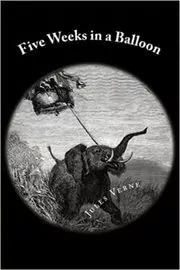
Five Weeks in a Balloon
by Jules Verne
1863
Dr. Samuel Fergusson crosses Africa in a hydrogen balloon with his servant Joe and hunter Richard Kennedy. It is an early Verne adventure full of exploration, improvisation, and sky-high travel over unknown ground.
Journey to the Center of the Earth
by Jules Verne
1864
Professor Lidenbrock, his wary nephew Axel, and guide Hans descend through an Icelandic volcano in search of the Earth's hidden interior. What they find is a subterranean world of ancient wonders and real danger.
The Adventures of Captain Hatteras
by Jules Verne
1864
Captain John Hatteras drives an Arctic expedition farther and farther north, no matter the human cost. Ice, mutiny, hunger, and obsession turn the search for the Pole into one of Verne's harshest adventures.
From the Earth to the Moon
by Jules Verne
1865
The Baltimore Gun Club decides that postwar boredom can be solved with a giant cannon aimed at the Moon. Verne turns big engineering dreams into a brisk, funny, and surprisingly detailed lunar prelude.
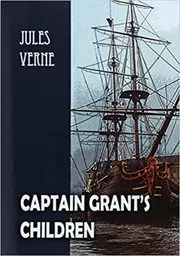
Captain Grant's Children
by Jules Verne
1867
A damaged message in a bottle sends Mary and Robert Grant, Lord Glenarvan, and the brilliant bumbler Paganel across the southern hemisphere. The search for Captain Grant becomes a sweeping family adventure around the world.
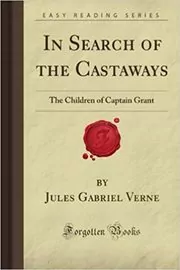
In Search Of The Castaways
by Jules Verne
1867
With only a few words and a latitude to guide them, a rescue party chases clues from South America to Australia and New Zealand. It is one of Verne's warmest and most globe-trotting quest stories.
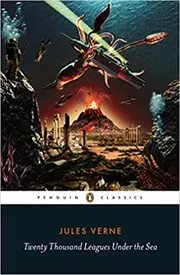
20,000 Leagues Under the Sea
by Jules Verne
1869
Professor Aronnax, Conseil, and Ned Land expect to hunt a sea monster and end up prisoners aboard Captain Nemo's submarine, the Nautilus. Their underwater journey mixes awe, danger, and the mystery of the man who commands the depths.
Recommended by
2 people Richard Branson recommended this book
Richard Branson
Richard Branson recommended this book on his "70 must-read books" blog post.
Richard Branson's recommendation of this book  Alan Kay recommended this book
Alan Kay
"A formative book in so many ways." - Alan Kay
Alan Kay's recommendation of this book
Round The Moon
by Jules Verne
1869
Barbicane, Nicholl, and Michel Ardan are inside the projectile at last, but getting to the Moon is only the beginning. Weightlessness, close lunar passes, and dwindling resources make the sequel tense and inventive.
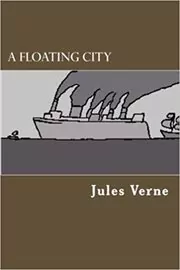
A Floating City
by Jules Verne
1871
Aboard the massive Great Eastern, a transatlantic voyage turns personal when old love, jealousy, and an abusive marriage collide at sea. Verne uses the ship like a whole drifting society under pressure.
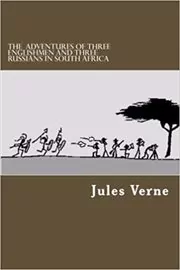
The Adventures of Three Englishmen and Three Russians in South Africa
by Jules Verne
1872
Six scientists set out to measure a meridian in southern Africa, only to have world politics catch up with them. The wilderness is hard enough, then the Crimean War makes the team itself uneasy ground.

Around the World in Eighty Days
by Jules Verne
1873
Phileas Fogg bets that he can circle the globe in eighty days, then sets off with Passepartout and a timetable. Trains, steamers, mishaps, and a detective on his heels make the race irresistible.
The Fur Country
by Jules Verne
1873
Lieutenant Jasper Hobson leads a party to build a far northern outpost, only to learn they are living on a drifting island of ice. Arctic endurance and creeping disaster drive this unusual survival story.
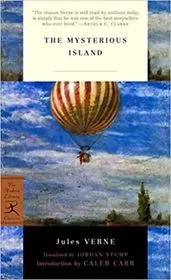
The Mysterious Island
by Jules Verne
1874
A group of Civil War escapees lands on a remote island and survives through ingenuity, labor, and careful planning. Then unexplained rescues suggest that someone, somewhere nearby, is watching over them.
The Survivors of the Chancellor
by Jules Verne
1875
Told as a passenger's diary, this novel follows a doomed ship from hidden fire to wreck and desperate life on a raft. It is one of Verne's bleakest and most hard-edged survival stories.
Michael Strogoff or, The Courier of the Czar
by Jules Verne
1876
The Tsar's courier must cross rebel-torn Siberia to warn Irkutsk about a traitor before it is too late. The mission gives Verne a fast, dangerous road novel powered by endurance and loyalty.
Child of the Cavern
by Jules Verne
1877
An old Scottish coalfield comes back to life when engineer James Starr is summoned to a hidden discovery deep underground. Strange warnings and eerie events haunt the mine before its secrets fully emerge.
Off On A Comet
by Jules Verne
1877
A collision with a comet tears a small piece of Earth into space, carrying a handful of bewildered people with it. Verne mixes altered physics, astronomical wonder, and survival in one of his strangest journeys.
Dick Sand: A Captain at Fifteen
by Jules Verne
1878
When the ship's officers die, fifteen-year-old Dick Sand has to command a crippled vessel with lives depending on him. Sabotage sends the survivors into Africa and straight toward the slave trade.
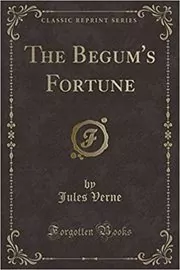
The Begum's Fortune
by Jules Verne
1879
Two heirs use a vast fortune to build rival cities, one devoted to health and justice, the other to war and domination. Verne turns their clash into a sharp tale about science, politics, and power.
The Tribulations of a Chinaman
by Jules Verne
1879
Bored millionaire Kin-Fo decides he wants to die, then promptly changes his mind after arranging his own murder. His frantic chase across China gives Verne one of his funniest and fastest plots.
The Steam House
by Jules Verne
1880
A group of travelers crosses India in a house on wheels pulled by a giant steam elephant. The ingenious machine is great fun, but the aftermath of the 1857 rebellion gives the journey a darker edge.
Eight Hundred Leagues On The Amazon
by Jules Verne
1881
Joam Garral floats down the Amazon on a giant timber raft, hoping to clear his name at journey's end. A blackmailer and a coded document turn the family voyage into a race against disaster.
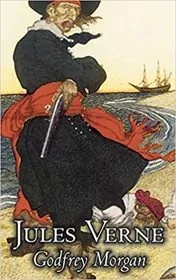
Godfrey Morgan
by Jules Verne
1882
Spoiled Californian Godfrey Morgan expects a pleasant tour of the world and gets shipwrecked instead. Cast away with his hopeless tutor, he has to grow up quickly on an island that will not indulge him.
The Green Ray
by Jules Verne
1882
Helena Campbell puts off marriage until she can see the elusive green flash at sunset. Her search through Scotland becomes a light romantic adventure about weather, timing, and finally knowing one's own heart.
Keraban the Inflexible
by Jules Verne
1883
A stubborn merchant refuses to pay a small Bosphorus crossing tax and chooses an absurdly long route around the Black Sea instead. Verne builds a wonderfully comic travel tale out of pure principle and pride.
The Archipelago On Fire
by Jules Verne
1884
During the Greek War of Independence, Lieutenant Henry d'Albaret hunts pirates and tries to rescue the woman he loves from a ruthless enemy. History, sea action, and personal revenge drive the story together.
The Vanished Diamond: The Star of the South
by Jules Verne
1884
A French engineer creates an enormous diamond in hopes of winning the woman he loves, only for the gem to disappear. The hunt that follows crosses the South African diamond fields and exposes greed at every turn.
Mathias Sandorf
by Jules Verne
1885
After political betrayal destroys his life, Mathias Sandorf survives and remakes himself for a long revenge. Verne's answer to a Monte Cristo tale mixes conspiracy, disguise, and Mediterranean adventure.
The Lottery Ticket
by Jules Verne
1885
A missing lottery ticket stands between a struggling Norwegian family and sudden rescue from poverty. Verne turns the premise into a tense, wintry story about chance, hope, and the people waiting on both.
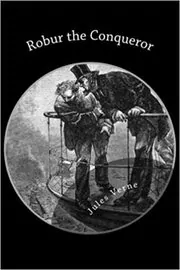
Robur the Conqueror
by Jules Verne
1886
Robur kidnaps his balloon-loving rivals and forces them aboard the Albatross, his heavier-than-air flying machine. The result is an around-the-world aerial adventure and a fierce argument about the future of flight.
North Against South
by Jules Verne
1887
In Civil War Florida, antislavery planter James Burbank becomes the target of Texar, a vindictive pro-slavery enemy. Family danger and political violence turn the conflict into a deeply personal war.
The Flight To France
by Jules Verne
1887
Set against the upheaval of revolutionary war, this novel follows travelers trying to cross a suspicious and dangerous France. Verne keeps the stakes personal, with loyalty, identity, and safe passage always in doubt.
Two Years' Vacation
by Jules Verne
1888
A group of schoolboys is stranded on a Pacific island and must build shelter, share authority, and survive without adults. Rivalries and later human threats make the long exile more than a simple castaway tale.
Family Without A Name
by Jules Verne
1889
In Lower Canada during the 1837 rebellion, the sons of a disgraced traitor fight to redeem their family and aid the cause of independence. Verne ties political history to shame, courage, and sacrifice.
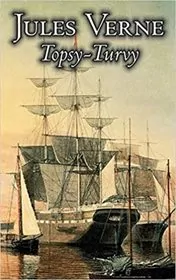
The Purchase of the North Pole: Topsy-Turvy
by Jules Verne
1889
The old Moon-gunners return with a new plan: buy the Arctic and fire a colossal cannon to tilt the Earth for profit. Verne treats giant engineering with both excitement and a healthy sense of absurdity.
Caesar Cascabel
by Jules Verne
1890
After thieves steal their savings, a family of circus performers decides to return from America to France by rolling through Alaska and Siberia. The route is outrageous, and that is exactly why it works.
Mistress Branican
by Jules Verne
1891
Dolly Branican loses both child and husband to the sea, then recovers and leads her own long search into Australia. It is one of Verne's most determined quests, driven by grief, love, and willpower.
Claudius Bombarnac
by Jules Verne
1892
A reporter boards the Transasiatic Railway hoping for a good feature and finds a train full of odd passengers, danger, and surprise heroics. It is travel writing, comedy, and adventure all in one carriage.
The Castle of the Carpathians
by Jules Verne
1892
A supposedly haunted castle in Transylvania hides a story of obsession, lost love, and uncanny technology. Verne leans into Gothic atmosphere while quietly explaining the tricks behind the terror.
Foundling Mick
by Jules Verne
1893
This Irish-set novel follows an orphan from hardship and exploitation to hard-earned independence. Less about gadgets than grit, it shows Verne working in a more social and character-driven mode.
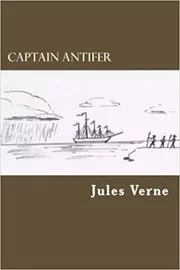
Captain Antifer
by Jules Verne
1894
A seafaring miser chases treasure clues scattered across the globe, each one leading to another leg of the puzzle. The hunt is funny, sprawling, and built on the gap between greed and reality.
Propeller Island
by Jules Verne
1895
A quartet of musicians is invited aboard a floating island-city built for millionaires. Luxury, vanity, and rival factions slowly push the marvelous machine toward chaos in this sly late satire.
Clovis Dardentor
by Jules Verne
1896
Two young men hope to secure an inheritance by being adopted by a wealthy eccentric they meet in North Africa. The scheme leads to comic misunderstandings, mishaps, and a lot of chasing the wrong plan.
Facing The Flag
by Jules Verne
1896
A fragile inventor with a terrifying new weapon is abducted to a pirate stronghold, along with the man assigned to watch him. The question is whether genius will save the world or hand it over.
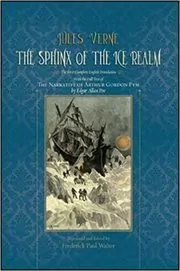
The Sphinx of the Ice / An Antarctic Mystery
by Jules Verne
1897
A southern voyage searching for lost men drifts into the eerie territory of Edgar Allan Poe's Antarctic fiction. Verne delivers ice, dread, and a mystery that feels both literary and physical.
The Survivors of the Jonathan
by Jules Verne
1897
Kaw-djer, a solitary idealist in the Magellanic region, helps shipwrecked settlers build a colony on the edge of the world. Survival is only the start, because power and principle soon collide.
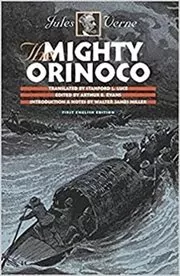
The Mighty Orinoco
by Jules Verne
1898
An expedition up the Orinoco River searches for a missing father and navigates shifting identities along the way. The river journey gives Verne room for geography, danger, and a quietly emotional reveal.
Will Of An Eccentric
by Jules Verne
1899
A Chicago millionaire turns his fortune into a life-sized board game played across the United States. The contestants become pieces on the map, and travel itself becomes the prize and the trap.
The Castaways of the Flag
by Jules Verne
1900
Verne continues the world of *The Swiss Family Robinson* by returning to New Switzerland after survival has turned into settlement. New arrivals and new dangers test whether the island can truly become a homeland.
Sea Serpent
by Jules Verne
1901
A French whaling voyage is shadowed by the sailor Jean-Marie Cabidoulin's terror of a legendary sea monster. The book balances maritime labor, superstition, and the slow strain of a hard voyage.
Village in the Treetops
by Jules Verne
1901
Two adventurers cut through Central African jungle and discover a treetop settlement that may blur the line between ape and human. It is a late Verne tale of exploration with an evolutionary twist.
The Kip Brothers
by Jules Verne
1902
After surviving shipwreck and helping suppress a mutiny, two brothers are blamed for a captain's murder they did not commit. Their fight to clear their names turns into a tale of exile and injustice.
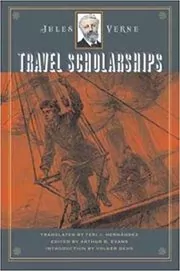
Travel Scholarships
by Jules Verne
1903
A group of Caribbean-born students wins a prize voyage, only to learn their ship has been taken over by escaped criminals. Youthful excitement quickly gives way to danger on the open sea.
Drama In Livonia
by Jules Verne
1904
When a murder in Livonia leaves an innocent professor under suspicion, a young lawyer escapes Siberia to prove the truth. Verne blends political tension with a tight mystery of wrongful accusation.
Master of the World
by Jules Verne
1904
A terrifying machine appears on road, water, and sky, and Inspector Strock is sent to identify its master. The chase leads back to Robur and one of Verne's most forceful warnings about unchecked invention.
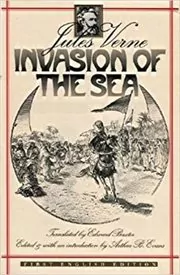
Invasion of the Sea
by Jules Verne
1905
European engineers want to flood part of the Sahara and create an inland sea, but local resistance and nature itself refuse to cooperate. Verne sets grand planning against the limits of control.
The Lighthouse at the End of the World
by Jules Verne
1905
On a lonely island near Tierra del Fuego, lighthouse keepers become prey when pirates seize the station and snuff out its light. The survivors must outlast the outlaws in one of Verne's starkest late adventures.
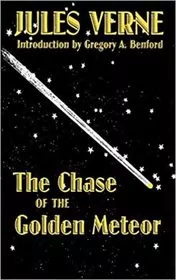
The Chase of the Golden Meteor
by Jules Verne
1908
Two rival amateur astronomers discover a meteor made of gold and trigger a frenzy of vanity and greed. Then an inventor claims he can bring the thing down wherever he likes.
The Secret of Wilhelm Storitz
by Jules Verne
1910
A rejected suitor with a terrible scientific secret threatens a wedding in a Hungarian town. Verne turns jealousy and invisibility into a tense, eerie blend of romance, mystery, and speculative fiction.
Voyages Extraordinaires books in chronological order




The Adventures of Three Englishmen and Three Russians in South Africa
by Jules Verne
1872Voyages Extraordinaires, Book 10


































Series background & context
The Voyages Extraordinaires books are the big home for most of Jules Verne's fiction, but they are not a single ongoing story in the modern franchise sense. Think of them more as a vast shelf of linked adventures. Some are sea stories, some are polar expeditions, some are scientific romances, some are survival tales, and some are almost travelogues with a plot wrapped around them.
That range is the point.
Verne and his publisher shaped the series around a simple but ambitious idea: use fiction to carry readers across the known world, and sometimes beyond it, while folding in the scientific and geographical knowledge of the day. So one book sends a professor under Iceland to a hidden world, another launches a projectile toward the Moon, another circles the globe on a deadline, and another drops readers into the engine room of a submarine years before such a machine felt ordinary.
Many of the best known titles sit here, including Five Weeks in a Balloon, Journey to the Center of the Earth, 20,000 Leagues Under the Sea, Around the World in Eighty Days, The Mysterious Island, and Michael Strogoff. A few characters and threads do cross from book to book, especially Captain Nemo, the Baltimore Gun Club, Ayrton, and some of the robinsonade stories. But most novels stand on their own, which makes the series easy to enter from several different angles.
What links the books is less continuity than temperament. These are stories about motion, curiosity, stubbornness, and the lure of the unknown. Verne likes explorers, engineers, scholars, couriers, castaways, and gifted eccentrics. He also likes systems, routes, schedules, measurements, and machines that almost work too well. The excitement often comes from watching practical minds pushed into wild situations.
The tone shifts more than some new readers expect. There is comedy in books like Kéraban the Inflexible. There is romance and sentiment in others. There are darker works too, especially later on, where technology can feel threatening and politics press harder on the plot. The posthumous books add another wrinkle, since some were heavily revised or completed by Verne's son, Michel.
So the best way to read the Voyages Extraordinaires is not by forcing a single path. It is by picking the corner of Verne that sounds most fun. Start with the sea, the poles, the Moon, the jungle, the island, or the railway. The spirit of the series is the same each time: go farther, look harder, and keep moving.









Edited by
Software engineer whose passion for tracking book recommendations from podcasts inspired the creation of MRB.
Lead investor at 3one4 Capital whose startup expertise and love for books helped shape MRB and its growth.
Comments
Did we miss something? Have feedback?
Help us improve this page by sharing your thoughts