
Viktor Suvorov Books in Order
See Viktor Suvorov books in order, with short summaries, a simple starting guide, and a quick overview of his Cold War and WWII titles.
Last updated:
As an Amazon Associate, we earn from qualifying purchases (at no extra cost to you).
Viktor Suvorov books in publication order
7 books
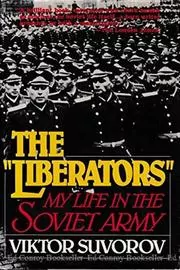
The Liberators
by Viktor Suvorov
1981
Part memoir and part expose, this book follows Suvorov's years as a young Soviet officer, from barracks routine to the 1968 invasion of Czechoslovakia. It shows an army built on fear, bluff, and ritual as much as force.
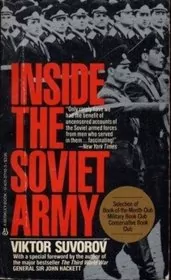
Inside the Soviet Army
by Viktor Suvorov
1982
Suvorov steps back from memoir to map the Soviet war machine, explaining its structure, doctrine, command culture, and hidden assumptions. It is a brisk insider guide to how the military was meant to fight, and why it often worked the way it did.
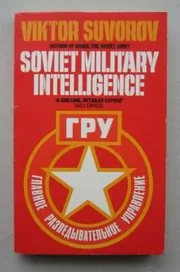
Inside Soviet Military Intelligence
by Viktor Suvorov
1984
A former GRU officer breaks down the Soviet Union's military intelligence service, from recruitment and training to spy networks and sabotage. The book mixes institutional detail with a cold sense of how the system gathered secrets and prepared for war.
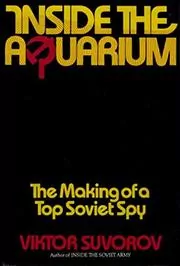
Inside the Aquarium
by Viktor Suvorov
1985
In this tense, partly autobiographical account, Suvorov traces his path from tank officer to GRU insider. Training, loyalty tests, and constant fear turn the spy world into something far harsher than glamorous.
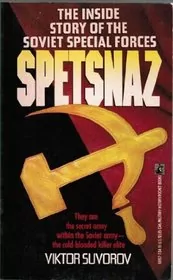
Spetsnaz
by Viktor Suvorov
1988
Suvorov examines Soviet special forces, their training, wartime missions, and place inside the wider military machine. The focus is on sabotage, reconnaissance, and the brutal logic behind units built for the opening hours of a major war.
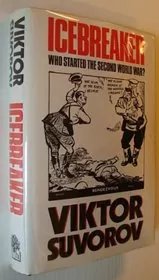
Ice-Breaker
by Viktor Suvorov
1990
In this controversial history, Suvorov argues that Stalin was preparing an offensive war in Europe and that Hitler struck first in 1941. Whether persuasive or not, the book is the starting point for his most debated World War II thesis.
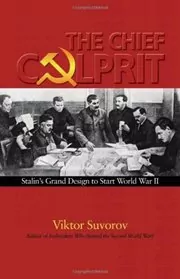
The Chief Culprit
by Viktor Suvorov
2000
This later history expands Suvorov's case that Stalin, not Hitler alone, drove Europe toward world war. He revisits diplomacy, military planning, and timing in a book aimed at strengthening and sharpening the argument from Ice-Breaker.
Where to start with Viktor Suvorov
If you want the most personal entry point: The Liberators → Inside the Aquarium
If you want the broad Soviet military overview: Inside the Soviet Army → Inside Soviet Military Intelligence → Spetsnaz
If you want the GRU and espionage side: Inside Soviet Military Intelligence → Inside the Aquarium
If you want his most debated World War II books: Ice-Breaker → The Chief Culprit
Viktor Suvorov collections, short stories, and related book types
Non-Fiction
Author bio
Viktor Suvorov is the pen name of Vladimir Bogdanovich Rezun, a former Soviet military intelligence officer who rebuilt his life as a writer after defecting to Britain. He was born in 1947 in Barabash, in the Soviet Far East, but he grew up largely in Ukraine, especially around Cherkasy, in a family shaped by army life. His father was a career officer, so barracks, transfers, and military routine were part of the background from the start.
As a boy he entered the Suvorov military school system, first in Voronezh and later in Kalinin, then moved on to the Kyiv Higher Combined Arms Command School. That path was demanding and very specific: it trained young men not just to serve, but to fit into a rigid institution. Long before he became a writer, he was learning how Soviet military culture worked from the inside.
After graduating in 1968, he served as a tank officer and took part in the Warsaw Pact invasion of Czechoslovakia. Later he moved into reconnaissance work and studied at the Military Diplomatic Academy in Moscow, the school that prepared officers for intelligence assignments abroad. Those years gave him the material for many of the books readers still pick up first.
From 1974 to 1978 he worked in Geneva under diplomatic cover for the GRU, the Soviet military intelligence service. In June 1978 he disappeared from Switzerland with his wife and two children and resurfaced in Britain. By then he had decided not to go back.
That break is the hinge point in his whole career.
Once in Britain, he turned experience into prose. His early books, The Liberators, Inside the Soviet Army, and Inside Soviet Military Intelligence, introduced Western readers to the everyday habits, internal logic, and hidden violence of the Soviet system. What people tend to like about them is not polish or heroics, but the feeling that someone who knew the machinery firsthand is showing how it actually ran.
Inside the Aquarium is probably the clearest example of that approach. It follows his path from ordinary army service into the closed world of the GRU, where training, loyalty tests, and fear shape every relationship. The book reads like a spy memoir, but it is most memorable for how unglamorous espionage feels once you are stuck inside the institution.
Later, Suvorov shifted more heavily into World War II history. In Spetsnaz he wrote about Soviet special forces and their role in sabotage and reconnaissance. In Ice-Breaker and The Chief Culprit, he argued that Stalin was preparing his own offensive war and that Hitler's 1941 invasion upset that timetable. Those books sparked years of argument, and they remain the most debated part of his work.
He has lived in Britain since his defection.
For decades he has kept writing and speaking about Soviet and Russian military history. Across his bibliography, the same concerns keep returning: secrecy, chain of command, preparation for war, and the moral cost of obedience. Whatever readers make of his conclusions, his books are hard to separate from the life that produced them.







Edited by
Software engineer whose passion for tracking book recommendations from podcasts inspired the creation of MRB.
Lead investor at 3one4 Capital whose startup expertise and love for books helped shape MRB and its growth.
Comments
Did we miss something? Have feedback?
Help us improve this page by sharing your thoughts