
Humanity's Fire Books in Order
Part ofMichael Cobley Books in OrderSee all the Humanity's Fire books in order by Michael Cobley, with short summaries, series background, reading order, and simple where-to-start advice.
Last updated:
As an Amazon Associate, we earn from qualifying purchases (at no extra cost to you).
Humanity's Fire books in publication order
5 books
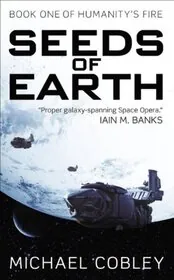
Seeds of Earth
by Michael Cobley
2009
After first contact nearly wipes out humanity, a lost colony world called Darien becomes the center of a vast interstellar struggle. Buried ruins, uneasy alliances, and ancient enemies turn one remote settlement into the key to survival.
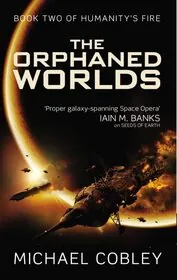
The Orphaned Worlds
by Michael Cobley
2010
Darien is no longer lost, and rival powers close in while Earth can barely intervene. As an ancient hyperspace prison and the threat inside it come into focus, a colonial dispute turns into the opening move of a much larger war.
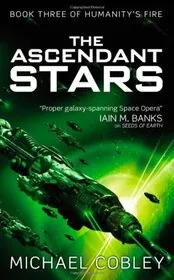
The Ascendant Stars
by Michael Cobley
2011
Darien is under siege from above and below as ancient machine enemies break loose and fleets gather overhead. The trilogy closes on a large-scale clash over whether organic life can hold its ground.
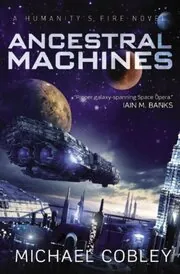
Ancestral Machines
by Michael Cobley
2015
When a smuggling job collapses, Captain Brannan Pyke and his crew are dragged into the Warcage, a brutal chain of worlds bound to an artificial sun. To get out alive, they must navigate tyranny, rebellion, and alien power games.
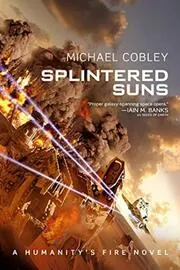
Splintered Suns
by Michael Cobley
2018
Pyke and his crew take on a museum heist that leads to a buried ancient starship and a prize everyone wants. Old rivals, desert hazards, and lost technology turn a simple theft into a fast-moving treasure hunt.
Humanity's Fire books in chronological order
Series background & context
If you want Michael Cobley in full widescreen mode, this is the place to start. Humanity's Fire begins with catastrophe: first contact goes badly, Earth is attacked, and colony ships are sent into deep space as a last gamble to keep the species alive. A century and a half later, Seeds of Earth picks up on Darien, a human colony world shared with the thoughtful alien Uvovo.
Darien matters because it looks like a refuge, but it is not safe or simple. Human settlers, alien neighbors, old machine systems, and buried ruins all sit on top of a past far older than anyone first realizes. Cobley likes large casts, so the books move between colonists, diplomats, soldiers, spies, AIs, and alien factions rather than sticking to a single hero.
The universe is crowded, and it stays that way.
Across The Orphaned Worlds and The Ascendant Stars, the local mystery opens out into full galactic conflict. Darien becomes a prize in a political struggle, but the real danger is older and stranger: ancient machine intelligences, a hyperspace prison, and the possibility of war between organic life and the things that think they have outgrown it. There are fleet battles and hard choices here, but also quieter questions about coexistence, sentience, memory, and what survival costs.
The tone is classic space opera with a dark edge. These books like huge ideas, strange species, engineered worlds, rogue AIs, and history on a million-year scale. But they keep returning to more personal stakes too, who can be trusted, what people owe their communities, and how badly power can warp a cause that once sounded reasonable.
After the main trilogy, Cobley stays in the same setting but shifts the angle. Ancestral Machines takes readers into the Warcage, a monstrous structure of worlds bound to an artificial sun, where Captain Brannan Pyke and his crew get trapped between slavers, rebels, and ancient technologies. Splintered Suns keeps Pyke at the center, this time in a relic-chasing adventure that starts as a heist and grows into a hunt for a buried starship and the secrets locked inside it.
Same universe, different trouble.
That mix is a big part of the appeal. You can read the first three books as one large arc, then move on to the later novels for a more roguish, fast-moving side of the setting. Start with Seeds of Earth if you want the full sweep. Keep going if you like your science fiction packed with alien politics, machine menace, and people trying to stay decent while the sky fills with war.

Edited by
Software engineer whose passion for tracking book recommendations from podcasts inspired the creation of MRB.
Lead investor at 3one4 Capital whose startup expertise and love for books helped shape MRB and its growth.
Comments
Did we miss something? Have feedback?
Help us improve this page by sharing your thoughts