
Valisar Trilogy Books in Order
Part ofFiona McIntosh Books in OrderThe Valisar Trilogy by Fiona McIntosh follows a royal heir fighting a barbarian conqueror. This page lists the books in order with summaries.
Last updated:
As an Amazon Associate, we earn from qualifying purchases (at no extra cost to you).
Valisar Trilogy books in publication order
3 books
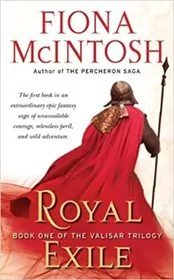
Royal Exile
by Fiona McIntosh
2008
The barbarian warlord Loethar conquers the kingdom of Penraven, slaughtering the royal family to seize their magical bloodline. Leo, the young heir, is whisked away to safety. He must grow up in exile, hiding his identity until he is ready to reclaim his birthright.
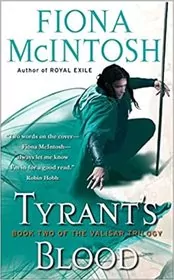
Tyrant's Blood
by Fiona McIntosh
2009
Loethar now rules Penraven, but his hold is tenuous without the full power of the Valisar Enchantment. Leo, living as a humble warrior, begins to gather allies. The time for rebellion is drawing near, but the cost of victory might be the very magic he seeks to protect.
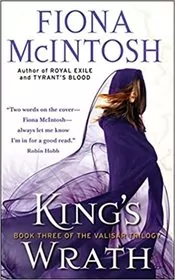
King's Wrath
by Fiona McIntosh
2010
The ultimate confrontation between the rightful heir Leo and the tyrant Loethar unfolds. Alliances shift and the true nature of the Valisar Enchantment is revealed. Leo must decide what kind of king he wants to be if he reclaims his throne.
Valisar Trilogy books in chronological order
Series background & context
The Valisar Trilogy stands as one of Fiona McIntosh’s most savage and compelling ventures into high fantasy. Set within the sprawling Denova Set, the story does not waste time with a slow buildup. It begins with the utter destruction of a dynasty. The kingdom of Penraven has long been the seat of the Valisar monarchs, a family feared and respected for a specific, terrifying gift. But their reign comes to a sudden, bloody end when the barbarian warlord Loethar breaches their walls.
Loethar is a fascinating antagonist because he isn’t simply a destroyer. He is an empire builder with a calculated vision for a unified realm. To achieve this, he needs more than just soldiers; he needs the Valisar Enchantment. This magical ability, strictly hereditary, allows the wielder to bend the will of any subject, ensuring absolute, unbreakable loyalty. Loethar’s method of acquiring this power is gruesome and intimate, involving the consumption of the magic from the fallen king, a choice that immediately establishes the high stakes.
He is a villain who truly believes he is the hero of his own story.
Amidst the chaos of the conquest, the Crown Prince Leo manages to escape execution. He is smuggled out of the palace, leaving behind a life of luxury for a desperate existence in the shadows. Accompanied by his loyal protector, Piven, Leo grows up in hiding, fueled by grief and a singular obsession with vengeance. He is the rightful heir, but he is also a traumatized young man carrying the burden of a stolen legacy. As the years pass, he gathers allies and plots to retake what is his, unaware of just how entrenched Loethar’s rule has become.
The narrative arc across Royal Exile, Tyrant’s Blood, and King’s Wrath is relentless. McIntosh does not rely on simple tropes of good versus evil. Instead, she presents a complex web of loyalties where the "good" guys make questionable choices and the "bad" guys bring stability to a fractured land. We see the cost of the magic not just on the victims, but on the wielders. Other key figures, such as the captured princess Freya and the mysterious Gavriel, add layers of intrigue that complicate Leo’s straightforward desire for revenge.
Ultimately, this series explores the moral complexity of a magic that robs people of their free will. It asks whether order is worth the price of freedom and how far a ruler should go to maintain peace.
It is a dark, gritty journey that keeps you guessing until the very end. The Valisar Trilogy balances epic battles with intimate character dramas, delivering a story where no one is safe and power is always a double-edged sword.





Edited by
Software engineer whose passion for tracking book recommendations from podcasts inspired the creation of MRB.
Lead investor at 3one4 Capital whose startup expertise and love for books helped shape MRB and its growth.
Comments
Did we miss something? Have feedback?
Help us improve this page by sharing your thoughts