
Tintin Books in Order
Explore every Tintin adventure in order, with clear book summaries, Hergé background, reading tips, and simple guidance on the best place to start.
Last updated:
As an Amazon Associate, we earn from qualifying purchases (at no extra cost to you).
Tintin books in publication order
24 books

Tintin in the Land of the Soviets
by Hergé
1929
Young reporter Tintin and Snowy travel from Brussels to Soviet Russia to investigate what life is really like there. Spies, escapes, and wild setbacks make this the fast-moving first adventure in the series.
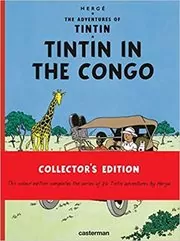
Tintin in the Congo
by Hergé
1930
Tintin and Snowy head to the Belgian Congo, where a reporting trip brings wildlife encounters, narrow escapes, and a run-in with diamond smugglers. It is an early adventure that reflects the colonial attitudes of its era.

Tintin in America
by Hergé
1931
In Chicago, Tintin crosses paths with Al Capone and a host of rival gangsters. His pursuit of organized crime takes him from city streets to the American West, with Snowy close behind.
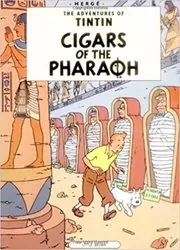
Cigars of the Pharaoh
by Hergé
1932
A cruise and an Egyptian tomb pull Tintin into a far-reaching drug-smuggling mystery. Following clues marked by strange cigars, he travels through Egypt and India while staying one step ahead of his pursuers.
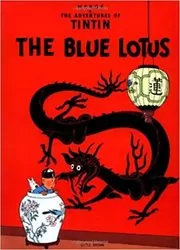
The Blue Lotus
by Hergé
1934
Tintin follows an opium-smuggling case to Shanghai during a tense political crisis. There he meets Chang and uncovers a plot built on sabotage, propaganda, and people willing to profit from conflict.
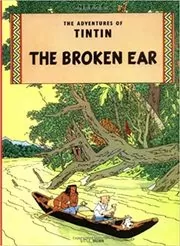
The Broken Ear
by Hergé
1935
When a South American statue disappears from an ethnographic museum, Tintin tracks down the stolen Arumbaya fetish. His search leads to a fictional republic, rival arms dealers, and a dangerous border conflict.
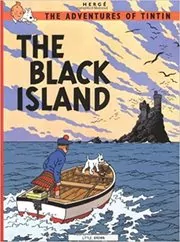
The Black Island
by Hergé
1937
After witnessing a suspicious plane crash, Tintin is framed and hunted by the police. The trail leads to Scotland's Black Island, where counterfeiters and a feared gorilla guard a hidden operation.
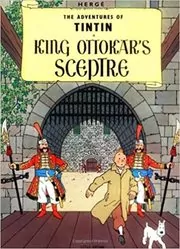
King Ottokar's Sceptre
by Hergé
1938
Tintin travels to Syldavia just as a conspiracy threatens the country's independence. To stop a takeover, he must recover King Ottokar's stolen sceptre before a crucial national ceremony.
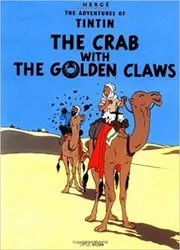
The Crab with the Golden Claws
by Hergé
1940
A case involving crab tins leads Tintin and Snowy to an opium-smuggling network and the deserts of Morocco. Along the way, Tintin meets Captain Haddock, a sailor who becomes his closest ally.
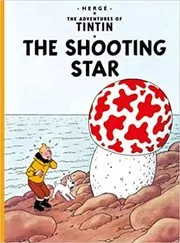
The Shooting Star
by Hergé
1941
A meteorite crashes into the Arctic Ocean, and Tintin joins a scientific race to reach it first. On the strange fragment, the expedition faces giant fungi, bad weather, and ruthless competition.
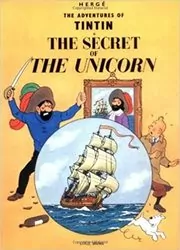
The Secret of the Unicorn
by Hergé
1942
A model ship bought at a flea market contains a clue to Captain Haddock's ancestor and the pirate Red Rackham. Tintin must find three hidden parchments while thieves close in on the secret.
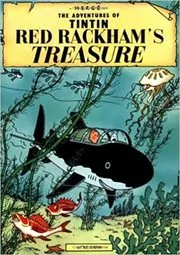
Red Rackham's Treasure
by Hergé
1943
Tintin, Captain Haddock, and the newly introduced Professor Calculus set sail to find a pirate treasure. Their expedition brings diving, a shark-shaped submarine, and surprises that change Haddock's life at home.
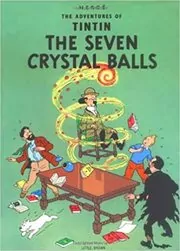
The Seven Crystal Balls
by Hergé
1943
Seven members of a South American expedition fall into unexplained comas after disturbing an Incan tomb. When Professor Calculus vanishes, Tintin and Captain Haddock follow a trail of curses, dreams, and danger.
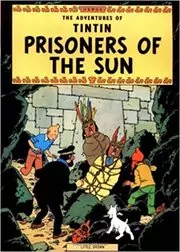
Prisoners of the Sun
by Hergé
1946
Tintin and Captain Haddock travel to Peru to rescue Professor Calculus and end the mystery begun in *The Seven Crystal Balls*. With help from young Zorrino, they cross mountains and jungle toward a hidden temple.
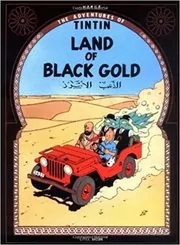
Land of Black Gold
by Hergé
1948
Sabotaged fuel is causing explosions across Europe, and Tintin follows the trail to the Middle East. In Khemed, he confronts old enemy Dr. Müller and a scheme that puts a young emir in danger.
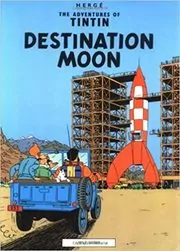
Destination Moon
by Hergé
1950
Tintin, Haddock, and Snowy arrive at a secret Syldavian research center, where Professor Calculus is building a Moon rocket. Sabotage, spies, and Haddock's impatience complicate every stage of the mission.
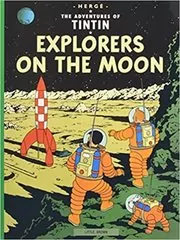
Explorers on the Moon
by Hergé
1952
The Moon rocket finally launches, carrying Tintin and his friends into a perilous new world. Once there, dwindling oxygen, equipment failures, and a hidden threat test the crew's courage and trust.
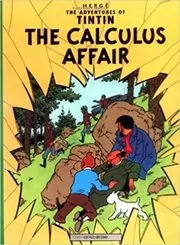
The Calculus Affair
by Hergé
1954
Professor Calculus invents a weapon that uses ultrasonic waves to destroy objects, making him a target for rival secret services. Tintin and Captain Haddock race across Europe after he is kidnapped by Bordurian agents.
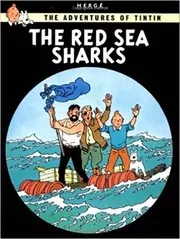
The Red Sea Sharks
by Hergé
1956
A coup in Khemed draws Tintin and Captain Haddock into an international plot involving weapons smugglers and human trafficking. Their search takes them from the Middle East to the Red Sea and a dangerous cargo ship.

Tintin in Tibet
by Hergé
1958
After learning that his friend Chang may have survived a plane crash in the Himalayas, Tintin refuses to give up hope. He and Captain Haddock face snowstorms, steep climbs, and rumors of a yeti.
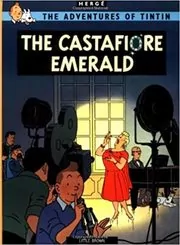
The Castafiore Emerald
by Hergé
1961
A missing emerald turns Marlinspike Hall upside down when opera star Bianca Castafiore becomes Captain Haddock's unexpected guest. Tintin investigates theft, gossip, and false leads without ever leaving the estate.
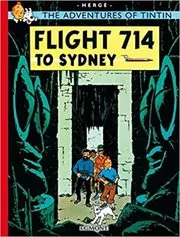
Flight 714 to Sydney
by Hergé
1966
Tintin and his friends board a private jet bound for Sydney, only to be hijacked to a remote Indonesian island. A sinister plot surrounds eccentric millionaire Laszlo Carreidas and the group's mysterious captors.
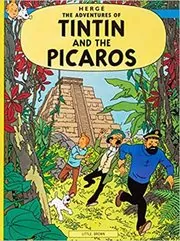
Tintin and the Picaros
by Hergé
1975
Tintin returns to San Theodoros when Captain Haddock and Professor Calculus are caught up in a political crisis. Joining General Alcazar's Picaros, he tries to rescue friends without becoming part of a bloody coup.
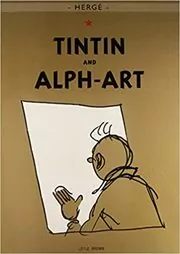
Tintin and Alph-Art
by Hergé
1986
Tintin investigates an art-world mystery involving forged modern works, a suspicious guru, and old enemy Rastapopoulos. Hergé left the story unfinished at his death, so it remains an intriguing final fragment.
Where to start with Tintin
For the full original journey: Tintin in the Land of the Soviets → Tintin in the Congo → Tintin in America → Cigars of the Pharaoh
For the classic Tintin team: The Crab with the Golden Claws → The Secret of the Unicorn → Red Rackham's Treasure
For a big two-part mystery: The Seven Crystal Balls → Prisoners of the Sun
For science-fiction adventure: Destination Moon → Explorers on the Moon
For a moving standalone story: The Blue Lotus → Tintin in Tibet
Author bio
Hergé was the pen name of Georges Remi, the Belgian cartoonist who created Tintin and Snowy. Born in Brussels on May 22, 1907, he grew up in the city and spent most of his working life there. His pen name came from reversing his initials, R.G., a small bit of wordplay that became one of comics' best-known signatures.
At Saint-Boniface college, Remi later said he was bored to death. He joined the Boy Scouts in 1921, drew for scout magazines, and picked up the nickname Inquisitive Fox. Those early drawings gave him a place to practice clear, quick storytelling long before Tintin arrived.
It started with a newspaper job.
After school, Remi worked in the subscription department at the Brussels newspaper Le Vingtième Siècle. Military service interrupted his early career, but in 1928 he was put in charge of its new youth supplement, Le Petit Vingtième. He designed, supervised, and illustrated it, then created a young reporter and his white fox terrier for its pages.
Tintin and Snowy first appeared on January 10, 1929. Their first trip, later collected as Tintin in the Land of the Soviets, was fast, broad, and full of cliffhangers. Hergé later viewed those earliest stories as improvised work, but readers could already see his instinct for pacing, visual jokes, and sending a hero into trouble without much warning.
A key change came in 1934, when Hergé met the Chinese art student Tchang Tchong-jen in Brussels. Their friendship helped push him toward deeper research and more care with the real places and people behind his stories. The Blue Lotus, set amid the Japanese invasion of China, marks that shift, and it also introduces Chang, Tintin's loyal friend.
The cast kept growing.
Captain Haddock arrives in The Crab with the Golden Claws, bringing temper, seafaring language, and a much-needed dose of chaos. Professor Calculus follows in Red Rackham's Treasure. With Snowy, the detective pair Thomson and Thompson, opera singer Bianca Castafiore, and others, they turned Tintin's solo reporting trips into a lively shared world.
Hergé's stories range from pirate clues in The Secret of the Unicorn and Red Rackham's Treasure to a carefully imagined Moon mission in Destination Moon and Explorers on the Moon. He returned often to crooked businessmen, secret police, smugglers, invented countries, lost objects, and friends who need help. Under the chases and slapstick, the books make room for loyalty, curiosity, and the occasional very bad plan.
In 1950, he founded Studios Hergé, where a team helped with the increasingly detailed later albums. His wartime work for Le Soir, a newspaper published under German occupation, brought scrutiny after the war, but he continued creating Tintin stories for decades. He married Fanny Vlamynck in Brussels in 1977 and died there on March 3, 1983. His final Tintin project, Tintin and Alph-Art, remained unfinished, leaving the series with one last mystery still open.












Edited by
Software engineer whose passion for tracking book recommendations from podcasts inspired the creation of MRB.
Lead investor at 3one4 Capital whose startup expertise and love for books helped shape MRB and its growth.
Comments
Did we miss something? Have feedback?
Help us improve this page by sharing your thoughts