
Timothy Egan Books in Order
Explore Timothy Egan books in order, with short summaries, where to start advice, and a clear guide to his history, travel, and Northwest writing.
Last updated:
As an Amazon Associate, we earn from qualifying purchases (at no extra cost to you).
Timothy Egan books in publication order
10 books
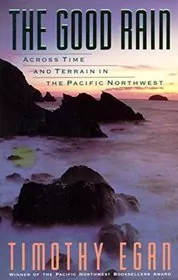
The Good Rain
by Timothy Egan
1990
Using Theodore Winthrop's 1850s journey as a loose guide, Egan travels through the Pacific Northwest's rivers, forests, towns, and coast. It is a regional portrait that blends travel, history, politics, and a strong feel for place.
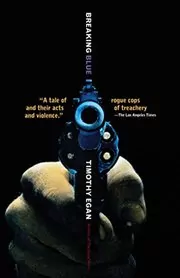
Breaking Blue
by Timothy Egan
1992
A sheriff reopening a 1935 Washington murder case uncovers black-market crime, police corruption, and a code of silence that lasted for decades. Egan turns the investigation into a tense true-crime story about justice inside the ranks.
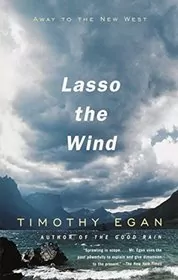
Lasso the Wind
by Timothy Egan
1998
Egan crosses the modern American West, from old communities to brash boomtowns, asking who gets to shape the land. The book mixes travel writing, history, and sharp reporting about preservation, development, and power.
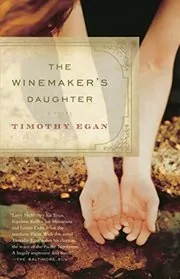
The Winemaker's Daughter
by Timothy Egan
2004
When Brunella Cartolano visits her family's drought-hit Northwest vineyard, she is pulled into a fight over water, land, and family legacy. As grief and suspicion grow, the search for answers turns dangerous.
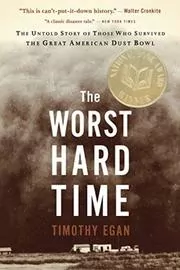
The Worst Hard Time / The Long Darkness
by Timothy Egan
2005
Egan follows Dust Bowl families across the High Plains as drought, wind, and reckless farming turn daily life into a fight for air and survival. It is intimate history about one of America's worst environmental disasters.
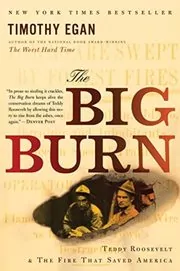
The Big Burn
by Timothy Egan
2009
This book recreates the 1910 wildfire that tore through forests in Idaho, Montana, and Washington, overwhelming thousands of firefighters. Egan ties the disaster to Theodore Roosevelt, Gifford Pinchot, and the early fight over conservation.
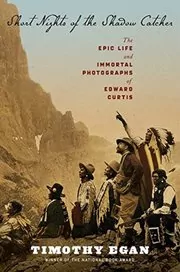
Short Nights of the Shadow Catcher
by Timothy Egan
2011
Egan traces photographer Edward Curtis from Seattle fame to decades of exhausting fieldwork among Indigenous communities across North America. It is a vivid life of obsession, ambition, and the making of an enormous visual record.
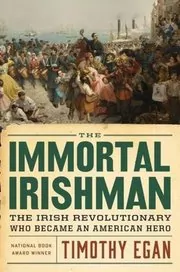
The Immortal Irishman
by Timothy Egan
2016
Thomas Francis Meagher moves through famine-era Ireland, a Tasmanian prison colony, New York politics, Civil War battlefields, and frontier Montana. Egan uses his wild, unfinished life to tell a larger Irish American story.
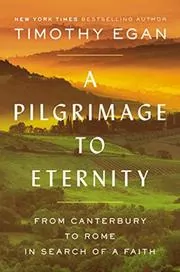
A Pilgrimage to Eternity
by Timothy Egan
2019
After his mother's death, Egan walks the Via Francigena from Canterbury to Rome, testing his own faith along the way. Travel memoir, family history, and church history meet on a long road through France, Switzerland, and Italy.

A Fever in the Heartland
by Timothy Egan
2023
Egan tells how D.C. Stephenson helped the Ku Klux Klan seize extraordinary power in 1920s Indiana, and how Madge Oberholtzer's testimony helped bring him down. It is a fast-moving history of white supremacy, corruption, and resistance.
Where to start with Timothy Egan
For sweeping environmental history: The Worst Hard Time / The Long Darkness → The Big Burn
For vivid lives and human-scale history: Short Nights of the Shadow Catcher → The Immortal Irishman → A Fever in the Heartland
For Northwest place writing and reportage: The Good Rain → Breaking Blue → Lasso the Wind
For a more personal, reflective book: A Pilgrimage to Eternity
If you want his one novel: The Winemaker's Daughter
Timothy Egan collections, short stories, and related book types
Non-Fiction
Author bio
Timothy Egan was born in Seattle in 1954 and grew up in Spokane, in a large Irish Catholic family. His mother loved books and history, and she also taught him to pay attention to the Northwest landscape, not just live inside it. Those two loyalties, story and place, still sit at the center of almost everything he writes.
He is one of those writers who keeps asking what land, weather, and memory do to ordinary people.
As a young man, Egan took a winding route into writing. He worked on a farm, in a factory, and at a fast-food counter while spending nearly seven on-and-off years in college. At the University of Washington, he wrote for the student paper, learned how much he liked journalism's mix of argument and reporting, and found a form roomy enough for both narrative and public life.
Campus papers turned curiosity into a career.
After starting out at the Seattle Post-Intelligencer, he spent many years reporting for The New York Times, especially on the West. An early break came while he was stringing for the paper during the Exxon Valdez disaster in Alaska. In 2001, he shared a Pulitzer Prize with a Times team for reporting on race in America, and later he also wrote opinion columns.
His early books show how broad his map was from the start. The Good Rain is part travel book, part regional history, part a close look at the Pacific Northwest. Breaking Blue returns to eastern Washington for a real 1935 murder case and the police silence around it. Lasso the Wind opens the frame wider, moving across the modern West and asking who gets to shape a place, the people who want to preserve it or the people determined to cash it in.
Egan is especially good at telling large American stories through a handful of lives. In The Worst Hard Time he follows families through the Dust Bowl and shows how greed, bad farming, and drought turned the High Plains into a place where people fought just to breathe. The Big Burn does something similar with the wildfire of 1910, tying one devastating fire to Theodore Roosevelt, Gifford Pinchot, and the early fight over conservation and public land.
He also likes characters who refuse to stay in one lane. Short Nights of the Shadow Catcher follows photographer Edward Curtis through decades of obsession, travel, and loss as he tries to document Native life across North America. The Immortal Irishman takes up Thomas Francis Meagher, rebel, exile, Civil War leader, and Montana governor. In both books, Egan is drawn to people with oversized plans, and to the personal cost that comes with following them for too long.
His later work turns more openly inward without leaving history behind. A Pilgrimage to Eternity, written after his mother's death, follows his walk along the Via Francigena from Canterbury to Rome as he thinks about belief, family, and the long shadow of the church. A Fever in the Heartland swings back to narrative history, telling how D.C. Stephenson helped the Ku Klux Klan seize power in 1920s Indiana, and how Madge Oberholtzer's testimony helped bring him down.
Across all these books, certain patterns keep returning: the West, weather, power, faith, migration, public land, and people caught inside forces much larger than themselves. Egan lives in Seattle now, not far from where his story started, and that feels fitting. He has spent a long career showing how a place can shape a person, and how a person can help a place tell on itself.





Edited by
Software engineer whose passion for tracking book recommendations from podcasts inspired the creation of MRB.
Lead investor at 3one4 Capital whose startup expertise and love for books helped shape MRB and its growth.
Comments
Did we miss something? Have feedback?
Help us improve this page by sharing your thoughts