
Thomas Savage Books in Order
Browse Thomas Savage books in order, with short summaries, where to start, and a quick guide to his Montana novels, family sagas, and standalone fiction.
Last updated:
As an Amazon Associate, we earn from qualifying purchases (at no extra cost to you).
Thomas Savage books in publication order
13 books
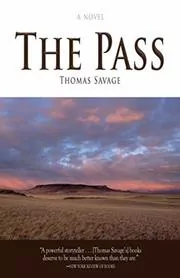
The Pass
by Thomas Savage
1944
Set in a newly settled valley around 1910, this debut follows rancher Jess Bentley as the railroad, brutal weather, and plain bad luck test the life he is trying to build with Beth.

Lona Hanson
by Thomas Savage
1948
Lona Hanson inherits a Montana ranch and falls for a hired hand, but love is only one force shaping her fate. Savage builds a tough frontier story around pride, desire, and power.

A Bargain with God
by Thomas Savage
1953
Father Raymond Ferris serves a poor, struggling church in Beacon Hill, where the building may not survive. The crisis pulls together working people, believers, and skeptics in a warm, unsentimental neighborhood story.
Trust in Chariots
by Thomas Savage
1961
A lonely Boston insurance salesman and a hard-used Chicago teenager meet on the road through a shared love of cars. Their unlikely partnership becomes a last chance at dignity, loyalty, and home.

The Power of the Dog
by Thomas Savage
1967
On a Montana ranch, brothers Phil and George Burbank are thrown off balance when George marries the widow Rose. Phil's slow, cruel campaign against her may have found its match in Rose's son, Peter.

Daddy's Girl
by Thomas Savage
1970
Chris looks back on Marty Linehan, the magnetic college friend he never really gets over. Their bond survives marriages, affairs, illness, and drink, while Marty keeps chasing the father and freedom she cannot quite recover.
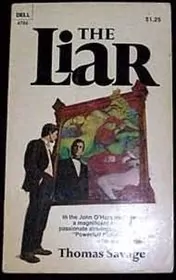
The Liar
by Thomas Savage
1970
Hal Sawyer spends a lifetime shading the truth, but his deepest feeling is love for the son he barely knows. As father and son build themselves on half-truths, Savage turns a family story raw and tender.
A Strange God
by Thomas Savage
1974
Jack Reed, a successful Boston insurance broker from a thin past, tries to buy his children the secure life he never had. Instead, ambition, class anxiety, and family misunderstandings push the Reeds toward loss.
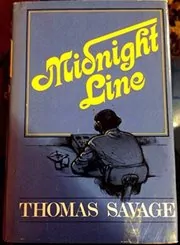
Midnight Line
by Thomas Savage
1976
Tom Westbrook hosts a late-night Boston call-in show and listens to other people's troubles for a living. Then a strange birthday call sends him back to Montana, Maxine, and the possibility of a grown son he never knew.
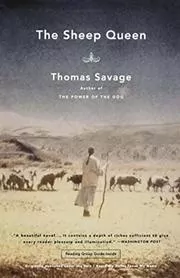
I Heard My Sister Speak My Name / The Sheep Queen
by Thomas Savage
1977
The Sweringen family of Idaho is ruled by Emma, the formidable Sheep Queen. Across generations, love, disappointment, adoption, and family history keep drawing relatives back to the ranch that defines them.

Her Side of It
by Thomas Savage
1981
Bill Reese, a modest college teacher, pieces together the life of novelist Liz Chandler Phillips from memory, letters, and scraps she leaves behind. It becomes a sharp, sad portrait of talent worn down by money, loneliness, and drink.
For Mary, with Love
by Thomas Savage
1983
Mary Skoning, the daughter of a Danish dairy farmer near Chicago, heads west to Montana and keeps reaching for a larger life. Told by a boyhood friend, the novel follows charm, ambition, and the cost of social climbing.
The Corner of Rife and Pacific
by Thomas Savage
1988
In Grayling, Montana, the fates of the generous Metlens and the harder Connards shape a town from the 1890s to the 1920s. Savage turns local history into a family saga about luck, power, and decline.
Where to start with Thomas Savage
If you want the best-known entry point: The Power of the Dog
If you want early Montana ranch fiction: The Pass → Lona Hanson
If you want a big family saga: I Heard My Sister Speak My Name / The Sheep Queen → The Corner of Rife and Pacific
If you want later psychological fiction: A Strange God → Midnight Line → Her Side of It
Standalone Thomas Savage books
Author bio
Thomas Savage was born in Salt Lake City in 1915, but the emotional map of his work was drawn farther north, on ranches in Idaho and southwestern Montana. After his parents divorced when he was very young, he moved with his mother first to Idaho and then to the Brenner cattle ranch in Beaverhead County, Montana. He was sent into Dillon for high school, and the distance between ranch life and town life stayed with him for the rest of his career.
He knew the West from the inside, and he never turned it into easy legend.
As a young man he studied in Missoula, met the novelist and professor Brassil Fitzgerald, and soon fell for Fitzgerald's daughter Elizabeth. Around the same time his short piece "The Bronc Stomper" appeared in Coronet in 1937, a small break that mattered. He followed Elizabeth to Colby College in Maine, married her in 1939, and both graduated in 1940. They would both go on to become novelists.
The years after college were restless. Savage and Elizabeth lived briefly in Chicago, went back to Montana to work on the family ranch, and then moved east again. He wrote while taking on all kinds of jobs, ranch hand, wrangler, welder, plumber, salesman, teacher, and he later taught at Suffolk University and Brandeis. He also dropped the Brenner surname and went back to Savage, a small change that says a lot about how divided he often felt between the life he had inherited and the life he wanted.
His first novel, The Pass, arrived in 1944 and announced many of the things he would keep worrying at, hard weather, family strain, money, pride, and the cost of trying to belong. Lona Hanson followed in 1948, and the sale of its movie rights gave him a level of financial security he had not had before. In 1953 he published A Bargain with God, a Boston novel that showed he could write beyond ranch country without losing his feel for damaged, hopeful people.
He kept leaving Montana, but Montana kept showing up in the books.
That is especially true of The Power of the Dog, his 1967 novel about the Burbank brothers, cruelty, repression, and a ranch household turned into a battleground. It sold modestly at first, but later became the book most readers know him by, especially after the 2021 film adaptation brought him a much larger audience. Readers who stay with Savage usually find more than one favorite, the big family sweep of I Heard My Sister Speak My Name, later reissued as The Sheep Queen, the sharp, sad intelligence of Her Side of It, or the town-building saga of The Corner of Rife and Pacific.
Again and again, Savage wrote about outsiders, men trapped in rigid ideas of masculinity, women forced to work around other people's rules, and families that could shelter you or crush you, sometimes in the same afternoon. His prose is lean, but the emotional weather is never simple. Even when the settings change from Montana to Boston or Maine, his characters tend to live with the same old pressures, class anxiety, loneliness, sexual secrecy, and the fear of being found out.
His personal life had some of the same tensions. He was married to Elizabeth Savage for fifty years, and they had three children. He was also a gay man, something he handled privately for much of his life, and that pressure runs quietly but powerfully through many of his novels. The couple lived for years in Georgetown, Maine, later built a home on Whidbey Island in Washington, and Elizabeth was an important first reader of his work.
After Elizabeth died in 1989, Savage later lived in Seattle, San Francisco, and finally Virginia Beach, near his daughter, where he died in 2003. He never became a household name in his lifetime. But his books last, and once readers find them, they tend to wonder why it took so long.














Edited by
Software engineer whose passion for tracking book recommendations from podcasts inspired the creation of MRB.
Lead investor at 3one4 Capital whose startup expertise and love for books helped shape MRB and its growth.
Comments
Did we miss something? Have feedback?
Help us improve this page by sharing your thoughts