
Thomas Harris Books in Order
Browse Thomas Harris books in order, from Black Sunday to the Hannibal Lecter novels, with quick summaries, series background, and where to start.
Last updated:
As an Amazon Associate, we earn from qualifying purchases (at no extra cost to you).
Thomas Harris books in publication order
6 books
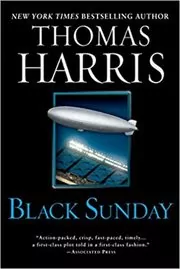
Black Sunday
by Thomas Harris
1975
A terrorist plot aims to turn the Super Bowl into a massacre, and time is running out to stop it. Harris builds the thriller around damaged pilot Michael Lander and the investigators racing to find him first.
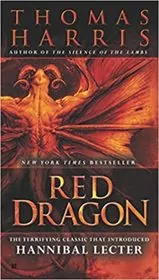
Red Dragon
by Thomas Harris
1981
Retired FBI profiler Will Graham is pulled back into the hunt for a family killer known as the Tooth Fairy. To stop him, Graham must revisit the mind of Hannibal Lecter, the monster who nearly destroyed him.
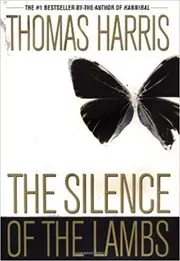
The Silence of the Lambs
by Thomas Harris
1988
FBI trainee Clarice Starling is sent to interview imprisoned psychiatrist Hannibal Lecter while agents hunt Buffalo Bill. Lecter's clues may help solve the case, but every visit becomes a test of nerve and insight.
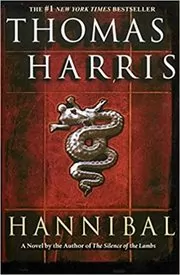
Hannibal
by Thomas Harris
1999
Seven years after Lecter's escape, Clarice Starling is in trouble at the FBI while several enemies close in on him. Their separate hunts collide in a dark pursuit that stretches from America to Florence.
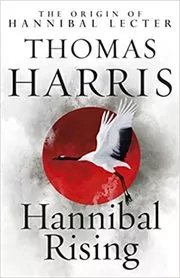
Hannibal Rising
by Thomas Harris
2006
This prequel follows Hannibal Lecter from wartime childhood in Eastern Europe to medical school in France. As old trauma hardens into revenge, Harris traces the making of the monster.
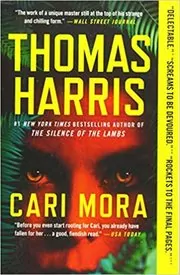
Cari Mora
by Thomas Harris
2019
On Miami Beach, Colombian refugee Cari Mora cares for a mansion hiding cartel gold. When sadistic trafficker Hans-Peter Schneider closes in on the treasure, her own hard-won survival skills become her best defense.
Recommended by
1 person Stephen King recommended this book
Stephen King
"Reading his prose is like running a slow hand down cold silk." - Stephen King
Stephen King's recommendation of this book
Where to start with Thomas Harris
If you want the core Lecter story: Red Dragon → The Silence of the Lambs → Hannibal
If you want the most famous place to begin: The Silence of the Lambs → Hannibal
If you want Lecter's origin after the mystery is in place: Red Dragon → The Silence of the Lambs → Hannibal → Hannibal Rising
If you want standalone thrillers: Black Sunday → Cari Mora
Thomas Harris sub-series and character series
Standalone Thomas Harris books
Author bio
Thomas Harris was born in Jackson, Tennessee, in 1940 and grew up in Rich, Mississippi, where his family lived on a farm near the Coldwater River. He was a bookish kid, and later attended Clarksdale High School, where his mother taught biology. That mix of rural quiet, close observation, and early reading stayed with him.
At Baylor University in Waco, he majored in English and graduated in 1964. While other students were sleeping, Harris was often working nights as a police reporter in town. That job gave him something he would use for the rest of his career: a close feel for police work, crime scenes, and the way official language can sound calm even when the facts are awful. He was also writing dark short stories on the side.
He started as a reporter, and he never really stopped thinking like one.
In 1968 he moved to New York and joined the Associated Press, where he worked as a reporter and editor on crime stories. He covered robberies, murders, and riots, and magazine assignments also took him to Mexico. The reporting years gave him more than material. They taught him patience, precision, and the habit of looking past the headline to the human damage underneath it.
Harris turned that experience into Black Sunday in 1975, a tense novel built around a terrorist plot aimed at the Super Bowl. Six years later he published Red Dragon, the book that introduced Will Graham and Dr. Hannibal Lecter. Readers who click with Harris tend to like the same things: exact prose, procedural detail that never feels like homework, and the sense that every small clue is connected to something much worse. Graham is a good example of what Harris does best. He is not a superhero, he is a man whose talent for understanding killers leaves him exposed to them.
Then came The Silence of the Lambs, which paired Lecter with FBI trainee Clarice Starling and changed the shape of his career. The book is remembered not just for its shocks, but for the strange intimacy of the conversations between Clarice and Lecter, and for Clarice herself, who has to stay steady while nearly everyone around her tries to size her up. Many readers come back to the novel because she feels so grounded under pressure. The 1991 film adaptation became a major hit and swept the top Academy Awards.
Harris has published only a small number of novels, but they linger.
Hannibal and Hannibal Rising pushed deeper into Lecter's world, while Cari Mora brought Harris back to Miami with a different kind of heroine, a Colombian refugee caught in a violent hunt for buried gold. Across all six novels, he returns again and again to obsession, appetite, trauma, disguise, and the dangerous pull between hunters and predators. He also likes characters who notice one detail more than everyone else, then pay a price for seeing clearly. Even when the plots get extreme, the emotional machinery underneath them is usually very human: fear, vanity, hunger, loneliness, revenge.
For decades Harris kept a very low profile and gave few interviews. When he did speak again around the release of Cari Mora, after many years mostly out of view, he sounded less like a celebrity author and more like the same watchful working reporter, careful with words and not very interested in fame. He has said writing can be slow, and some days the work is only a paragraph. That patience helps explain why the gaps between his books can be so long.
In recent years, Harris has lived in South Florida, spent summers in Sag Harbor with his longtime partner Pace Barnes, and talked about his long connection to a seabird rescue in Miami, where he volunteered for years. It is a good last detail for understanding him. The man who wrote some of the coldest scenes in modern suspense also spent part of his life helping injured birds.







Edited by
Software engineer whose passion for tracking book recommendations from podcasts inspired the creation of MRB.
Lead investor at 3one4 Capital whose startup expertise and love for books helped shape MRB and its growth.
Comments
Did we miss something? Have feedback?
Help us improve this page by sharing your thoughts