
Thomas Hardy Books in Order
Browse Thomas Hardy's novels and poems in order, with book summaries, story backgrounds, and guidance on the best place to start reading today.
Last updated:
As an Amazon Associate, we earn from qualifying purchases (at no extra cost to you).
Thomas Hardy books in publication order
20 books
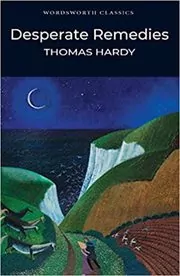
Desperate Remedies
by Thomas Hardy
1871
After her father's sudden death, Cytherea Graye must earn her living as a lady's maid to the secretive Miss Aldclyffe. Her love for architect Edward Springrove and the dangerous attentions of steward Aeneas Manston pull her into a twisting plot of deception and peril.
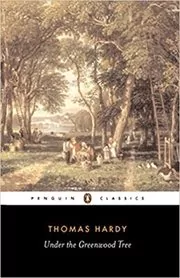
Under the Greenwood Tree
by Thomas Hardy
1872
In the Dorset parish of Mellstock, carrier Dick Dewy falls in love with new schoolmistress Fancy Day while their village choir fights to survive the vicar's plan for a modern organ. A gentle portrait of courtship, community, and rural music in Hardy's Wessex.
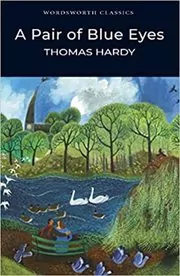
A Pair of Blue Eyes
by Thomas Hardy
1873
On the windswept Cornish coast, Elfride Swancourt, a vicar’s sheltered daughter, is courted by modest architect’s assistant Stephen Smith and his sophisticated mentor Henry Knight. Their love triangle exposes class snobbery, shifting loyalties, and the painful cost of trying to please conflicting expectations.
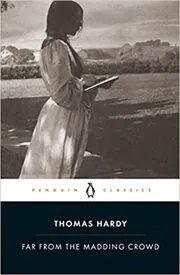
Far From the Madding Crowd
by Thomas Hardy
1874
Independent farm owner Bathsheba Everdene inherits a Dorset estate and finds herself pursued by steadfast shepherd Gabriel Oak, respectable landowner William Boldwood, and dazzling soldier Frank Troy. Their tangled affections play out against seasons of hard agricultural work, pride, jealousy, and quiet endurance.
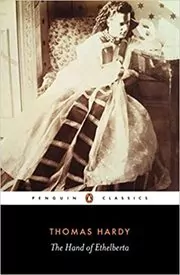
The Hand of Ethelberta
by Thomas Hardy
1876
Ethelberta, a clever young widow from a working-class family, reinvents herself in London as a society storyteller while concealing her humble origins. As she juggles suitors and family loyalties, Hardy offers a witty, unusually comic look at ambition, performance, and class climbing.
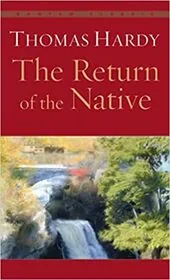
The Return of the Native
by Thomas Hardy
1878
Back on bleak Egdon Heath after a successful career in Paris, Clym Yeobright dreams of educating the poor, while the beautiful, restless Eustacia Vye longs to escape. Their desires collide with those of Thomasin and Damon Wildeve in a brooding tale of passion and fate.
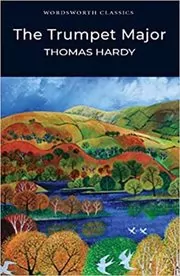
The Trumpet-Major
by Thomas Hardy
1880
During the Napoleonic invasion scare, quiet Anne Garland lives near the military camp above an English seaside town and attracts three suitors: loyal trumpeter John Loveday, his impulsive sailor brother Bob, and blustering yeoman Festus Derriman. Romance unfolds against drill, rumours of war, and village life.
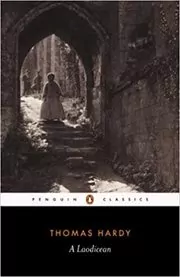
A Laodicean
by Thomas Hardy
1881
When Paula Power inherits a crumbling castle from her self-made father, she finds herself torn between modern progress and old aristocratic charm. Architect George Somerset, soldier Captain De Stancy, and scheming photographer William Dare draw her into a story of wavering loyalties, forged evidence, and self-discovery.
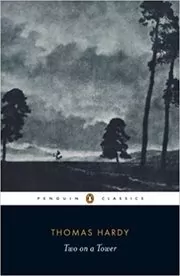
Two on a Tower
by Thomas Hardy
1882
Lady Constantine, lonely in her marriage and life on a Dorset estate, discovers a young astronomer, Swithin St Cleeve, observing the stars from an old tower. Their secret relationship, crossing barriers of age and class, unfolds beneath immense night skies and the pressures of convention.
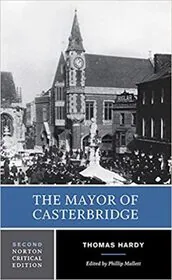
The Mayor of Casterbridge
by Thomas Hardy
1886
Drunk at a country fair, young labourer Michael Henchard rashly sells his wife and child to a passing sailor. Years later, as a respected mayor and grain merchant, he must face their return and the rise of his genial rival Donald Farfrae in a powerful study of character and remorse.
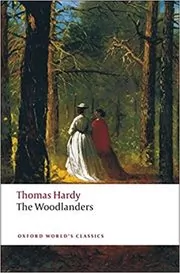
The Woodlanders
by Thomas Hardy
1887
In a remote woodland village, timber merchant’s daughter Grace Melbury returns from school polished and ambitious, no longer sure she can marry faithful woodsman Giles Winterborne. Her marriage to charming doctor Edred Fitzpiers tangles desire, pride, and class prejudice in a quietly devastating story of love and disappointment.

The Withered Arm
by Thomas Hardy
1888
Jealous milkmaid Rhoda Brook fixates on her former lover’s pretty young wife, Gertrude, and dreams of grappling with her in the night. When Gertrude’s arm mysteriously shrivels, suspicion, folk magic, and guilt bind the two women in one of Hardy’s most haunting short tales.
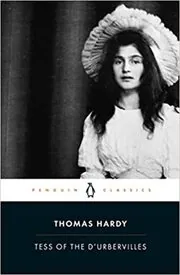
Tess of the D'Urbervilles
by Thomas Hardy
1891
When her poor family learns they may descend from the old d'Urberville line, Tess Durbeyfield is pushed to seek help from wealthy relatives and falls under the power of Alec d'Urberville. Later, idealistic Angel Clare seems to offer love and escape, until past and prejudice return to haunt them.
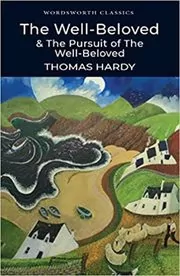
The Well-Beloved
by Thomas Hardy
1892
Sculptor Jocelyn Pierston spends decades on the Isle of Slingers chasing his shifting ideal of womanhood, the Well-Beloved, through three generations of the Caro family. His restless infatuations explore the gap between imagined perfection and the real people he fails to see clearly.

Our Exploits at West Poley
by Thomas Hardy
1893
Written as a story for boys, this short novel follows village children who discover a cave system and experiment with diverting a river that powers a mill. Their daring exploits quickly have unintended consequences for two rival communities and the adults who depend on the water.
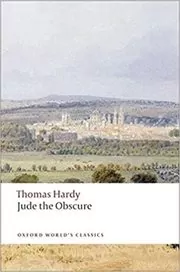
Jude the Obscure
by Thomas Hardy
1895
Jude Fawley, a poor country stonemason, dreams of university and a life of study in the city of Christminster. His tangled relationships with earthy Arabella Donn and questioning cousin Sue Bridehead expose the rigid attitudes to class, marriage, and faith that crush his hopes.

Collected Short Stories
by Thomas Hardy
1928
This volume brings together many of Hardy’s short stories, from gothic-inflected pieces to sharply observed village dramas. Lovers, labourers, and wanderers cross paths in Wessex lanes and parlours, offering concentrated glimpses of the themes that shape his longer novels.

Hardy: Poems
by Thomas Hardy
1977
This small hardcover selection draws poems from across Hardy’s career, including love lyrics, war pieces, rural sketches, and reflective monologues. It’s an accessible way to sample his poetic voice without tackling the entire collected works.

The Complete Poems
by Thomas Hardy
1977
Gathering more than nine hundred poems, this comprehensive edition traces Hardy’s development from early Wessex landscapes to late, experimental pieces. It showcases his clear-eyed meditations on time, war, love, belief, and memory, along with many narrative ballads and character sketches.

Woman Much Missed
by Thomas Hardy
2023
Named after one of Hardy’s most famous elegies, this pocket collection focuses on poems written after the death of his first wife, Emma. The lyrics dwell on haunting memory, regret, and revisited places, offering an intimate window into his late emotional world.
Where to start with Thomas Hardy
If you're new to Hardy and want one classic novel: Far From the Madding Crowd → e Under the Greenwood Tree
If you like darker, tragic stories: Tess of the D'Urbervilles → e Jude the Obscure
If you enjoy intense character drama in small towns: The Mayor of Casterbridge → e The Return of the Native → e The Woodlanders
If you're curious about Hardy as a poet: The Complete Poems → e Woman Much Missed → e Hardy: Poems
If you prefer shorter works first: The Withered Arm → e Our Exploits at West Poley → e Collected Short Stories
Thomas Hardy collections, short stories, and related book types
Short Stories/Novellas
Collections
Children's Books
Everyman's Library Pocket Poets Books
Standalone Thomas Hardy books
Author bio
Thomas Hardy was born on 2 June 1840 in the hamlet of Higher Bockhampton, just outside Dorchester in Dorset, England. His father was a stonemason and builder, his mother a well-read former servant who filled the cottage with stories and ballads. She taught him at home before he walked to the village school, where he learned Latin and discovered that books could widen a life that seemed very small.
As a teenager Hardy showed promise but had no money for university. At sixteen he was apprenticed to a local architect in Dorchester, learning to measure churches, restore crumbling stonework, and draw meticulous plans. In his spare hours he read widely, from the Greek tragedians to contemporary philosophy, and began drafting poems in exercise books he kept to himself.
In 1862 he moved to London, working for an architectural firm that specialised in church design. The city gave him museums, libraries and lectures, but it also sharpened his sense of class barriers; he never quite felt he belonged in the drawing offices and dining rooms where he worked. Early each morning, and late at night, he wrote poems and tried his hand at fiction.
Concern over his health and a growing homesickness drew Hardy back to Dorset after five years. While assessing a church in remote north Cornwall he met Emma Gifford, the outgoing rector’s sister-in-law who encouraged his writing and became the model for several early heroines. Around the same time he finished a first, unpublishable novel and then completed Desperate Remedies, which finally appeared in print in 1871.
Through the 1870s and 1880s Hardy gave up architecture and published a run of novels that fixed his reputation: Under the Greenwood Tree, A Pair of Blue Eyes, Far From the Madding Crowd, The Return of the Native, The Mayor of Casterbridge and The Woodlanders among them. Set in a semi-imaginary region he called Wessex, these books drew on farm routines, market towns and heathland he knew first-hand, and on the pressures industrial change brought to rural communities.
Later came the fiercely argued novels Tess of the D'Urbervilles and Jude the Obscure, which challenged Victorian ideas about marriage, sexuality, education and religious authority. The storm of criticism that followed Jude convinced Hardy to stop writing fiction altogether. From the mid-1890s on he devoted himself almost entirely to poetry, the form he had quietly cared most about since youth.
His first collection, Wessex Poems, was followed by a steady stream of volumes that mixed ballads, dramatic monologues and austere, questioning lyrics. He wrote about harvests and country lanes, but also about scientific discovery, disappearing beliefs and the casualties of the First World War. After Emma died suddenly in 1912, he revisited the Cornish scenes of their courtship and poured his grief and guilt into a group of elegies now often called the Poems of 1912–13.
Hardy spent his later decades at Max Gate, the red-brick house he designed on the edge of Dorchester, walking the surrounding fields and revising his work. In 1914 he married his longtime friend and former secretary Florence Dugdale, who helped manage his correspondence and collaborated on the official account of his life. Visitors ranging from young novelists to local neighbours dropped by to talk about books, politics and the changing countryside.
He died at Max Gate on 11 January 1928, aged eighty-seven. In a compromise that suited his divided fame as both regional storyteller and national poet, his ashes were buried in Poets’ Corner at Westminster Abbey while his heart was laid to rest in Stinsford churchyard. Today readers still turn to his novels and poems for their vivid Wessex landscapes, unflinching sense of fate and chance, and their clear-eyed sympathy for people caught between private desire and public expectation.







Edited by
Software engineer whose passion for tracking book recommendations from podcasts inspired the creation of MRB.
Lead investor at 3one4 Capital whose startup expertise and love for books helped shape MRB and its growth.
Comments
Did we miss something? Have feedback?
Help us improve this page by sharing your thoughts