
Thomas E Ricks Books in Order
Browse Thomas E. Ricks books in order, with quick summaries, reading paths, and where-to-start tips for his history, politics, and crime titles.
Last updated:
As an Amazon Associate, we earn from qualifying purchases (at no extra cost to you).
Thomas E Ricks books in publication order
12 books
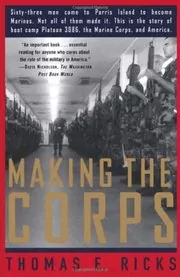
Making the Corps
by Thomas E Ricks
1997
Following Marine Platoon 3086 from Parris Island into its first year of service, Ricks shows how recruits are stripped down and remade. The result is part boot camp chronicle, part study of military culture in America.
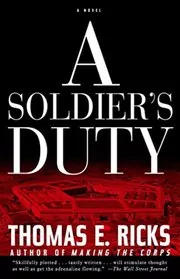
A Soldier's Duty
by Thomas E Ricks
2001
Majors Cindy Sherman and Bud Lewis land prized Pentagon jobs and stumble into a secret movement of officers resisting White House policy. As duty, ambition, and romance collide, dissent inside the military turns dangerous.
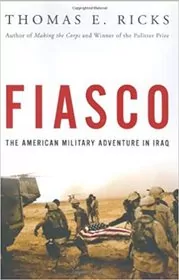
Fiasco
by Thomas E Ricks
2006
Ricks reconstructs the invasion and occupation of Iraq through interviews, documents, and reporting from the field. It is a sharp account of how early battlefield success gave way to political and strategic failure.
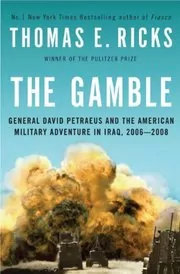
The Gamble
by Thomas E Ricks
2009
This follow-up to Fiasco traces the Iraq War from late 2005 through the surge, focusing on the internal battles that reshaped American strategy. Ricks follows commanders, assumptions, and consequences in close detail.
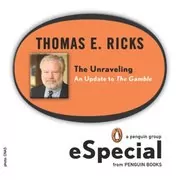
The Unraveling
by Thomas E Ricks
2010
A short companion to The Gamble, this e-special revisits Iraq after the book's main events and asks what had changed. Ricks looks at the shifting war, the American debate, and the trouble still ahead.
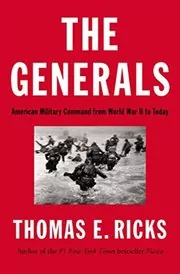
The Generals
by Thomas E Ricks
2012
Ricks studies American military leadership from World War II to Iraq, asking why accountability weakened after the Marshall and Eisenhower era. He profiles strong commanders, failed ones, and the systems that shaped them.
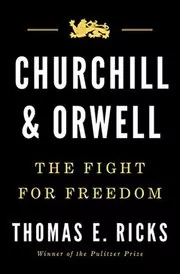
Churchill and Orwell
by Thomas E Ricks
2017
This dual biography pairs Winston Churchill and George Orwell as two very different defenders of freedom. Ricks follows their parallel lives and shows how both pushed back against authoritarianism, propaganda, and political self-deception.
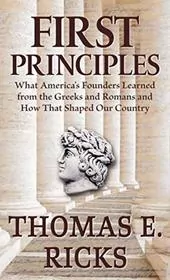
First Principles
by Thomas E Ricks
2020
Ricks examines how the first four presidents were shaped by Greek and Roman writers, and how that education influenced the new republic. It is a lively look at ideas behind the Constitution, leadership, and public life.
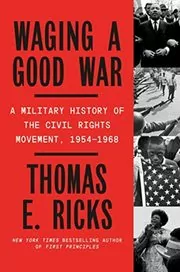
Waging a Good War
by Thomas E Ricks
2022
Looking at the civil rights movement through strategy, training, and organization, Ricks follows leaders from Montgomery to Memphis. He argues that disciplined planning, not passion alone, helped turn protest into lasting political change.
Recommended by
1 person Anne Lamott recommended this book
Anne Lamott
"I really loved this book, and I think you will too, especially if you are interested in how social change can be brought about non-violently." - Anne Lamott
Anne Lamott's recommendation of this book

Everyone Knows But You
by Thomas E Ricks
2024
After a family tragedy, FBI agent Ryan Tapia starts over in Maine and is pulled into the murder of a fisherman whose body turns up on federal land. The case leads him into island loyalties, Native politics, drugs, and rare fish.

We Can't Save You
by Thomas E Ricks
2025
Ryan Tapia is assigned to watch a growing Native-led climate protest in Maine, then finds himself pulled between his orders and his conscience. As pressure builds from Washington, the case turns into a test of loyalty and survival.

Big Money, Small Town
by Thomas E Ricks
2026
Now working as a private investigator, Ryan Tapia takes up the case of a doctor suffering from cobalt poisoning near a new Maine mine. Toxic water, local power, and old grudges make the search for answers increasingly dangerous.
Where to start with Thomas E Ricks
If you want his Iraq War reporting first: Fiasco → The Gamble → The Unraveling
If you want books on military culture and leadership: Making the Corps → The Generals
If you want big-idea history: Churchill and Orwell → First Principles → Waging a Good War
If you want his Maine crime fiction: Everyone Knows But You → We Can't Save You → Big Money, Small Town
If you want a political military thriller: A Soldier's Duty
Thomas E Ricks sub-series and character series
Thomas E Ricks collections, short stories, and related book types
Non-Fiction
Author bio
Thomas E. Ricks was born in Massachusetts in 1955 and grew up in New York and Afghanistan. That mix of places gave him an unusually wide view of America, both from inside it and from far away. It helps explain why so much of his writing is interested in power, institutions, and the stories nations tell about themselves.
He graduated from Yale in 1977, then taught English and literature in Hong Kong. He has said that period helped steer him toward journalism. After early work in editing and magazines, he built a long reporting career, spending seventeen years at The Wall Street Journal and then covering the U.S. military for The Washington Post from 2000 to 2008.
He was part of Pulitzer-winning reporting teams at both papers.
Ricks reported on U.S. military activity in Somalia, Haiti, Bosnia, Kosovo, Afghanistan, Iraq, and elsewhere. That kind of work taught him how large organizations talk, how they protect themselves, and how people inside them handle failure. It also shaped his books, which tend to balance big strategic questions with the lived detail of people doing hard jobs.
His first book, Making the Corps, follows a Marine platoon from boot camp at Parris Island into its first year of service. People often come to it for the insider access, but stay for the larger question underneath it: how does a tough, tightly bound culture get made? He later reached a much wider audience with Fiasco, his account of the Iraq War, and became known as a writer who could cut through official language without losing sight of the human cost.
He did not stay only with battlefield history. The Generals looks at American military leadership from World War II forward and asks why accountability weakened over time. First Principles moves back to the founding era and studies how George Washington, John Adams, Thomas Jefferson, and James Madison were shaped by Greek and Roman thought. In both books, he treats history as something argued over by real people, not something sealed behind glass.
He likes books that ask how people organize themselves.
That same interest runs through Waging a Good War, his study of the civil rights movement as a campaign built on training, discipline, logistics, and courage. It also shows up in his fiction. The Ryan Tapia novels move his attention to Maine, where crime, politics, Native communities, and environmental pressure intersect in quiet towns and rough coastal spaces. These are patient, place-based mysteries led by a man who notices before he talks.
There is a Maine thread in his own life as well. He worked in the Maine woods when he was young and later trapped lobsters while living on an island in Penobscot Bay. That practical feel for place comes through in the Ryan Tapia books, which care as much about local codes and landscapes as they do about plot.
He now divides his time between Texas and Maine. It feels fitting. His books, whether they are about Marines, presidents, protesters, or detectives, are usually trying to answer the same stubborn question: what do people do when the official version of events stops matching the world right in front of them?







Edited by
Software engineer whose passion for tracking book recommendations from podcasts inspired the creation of MRB.
Lead investor at 3one4 Capital whose startup expertise and love for books helped shape MRB and its growth.
Comments
Did we miss something? Have feedback?
Help us improve this page by sharing your thoughts