
The Well of Echoes Books in Order
Part ofIan Irvine Books in OrderSee The Well of Echoes books in order by Ian Irvine, with short summaries, reading order, series background, and help deciding where to start.
Last updated:
As an Amazon Associate, we earn from qualifying purchases (at no extra cost to you).
The Well of Echoes books in publication order
4 books
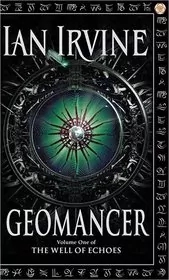
Geomancer
by Ian Irvine
2001
In a losing war against the lyrinx, crystal worker Tiaan awakens the lethal gift of geomancy. Falsely accused and hunted by both sides, she becomes the key to a power that could save humanity or destroy it.
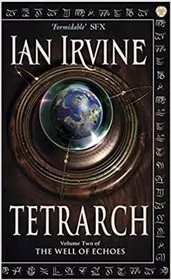
Tetrarch
by Ian Irvine
2002
Santhenar is losing the war, the Aachim have invaded, and Tiaan is being hunted through a ruined city. Nish and Irisis are pulled deeper into the crisis as vengeance, politics, and geomancy threaten to break the world.
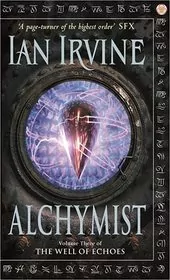
Alchymist
by Ian Irvine
2003
Humanity's great battle collapses when its source of power fails. Tiaan is a prisoner, Nish is branded a traitor, and Flydd is sent to die as a slave while the lyrinx surge toward victory.
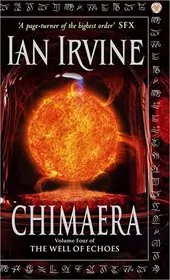
Chimaera
by Ian Irvine
2004
Flydd and his allies are marked for death, and Nish is the only one left who might save them. To do it he must outwit old enemies, survive his own guilt, and strike back before Santhenar falls.
The Well of Echoes books in chronological order
Series background & context
The Well of Echoes returns to Santhenar, but it is a different kind of fantasy from The View from the Mirror. Two centuries have passed, and the world now feels harsher, more industrial, and more militarised. Humanity is locked in a long, draining war with the lyrinx, intelligent winged predators from the void who are fighting for a world of their own. Crystals power machines, battle clankers roll into war, and everyone is living under the strain.
The series begins with Tiaan, a lonely crystal worker in a manufactory, whose life changes when she awakens the forbidden gift of geomancy. Tiaan is one of Irvine's classic protagonists, clever, capable, and badly unprepared for the scale of the trouble coming at her. Around her gather other major players, including Nish, insecure and compromised but hard to ignore, Irisis, brilliant and dangerous in her own way, and the old scrutator Xervish Flydd, who spends much of the series trying to hold a collapsing world together.
Everything is under pressure.
That is the feeling these books do especially well. The war is going badly. Political leadership is rotten or panicked. The technology that keeps civilisation running is fragile. Secrets are everywhere, and nearly every useful power comes with a cost attached. Irvine leans into siege conditions, desperate journeys, military disaster, and the grinding emotional wear of living in a world that may already be lost. The setting matters a lot here. Manufactories, ruined cities, battlefields, council chambers, and strange high places all shape the story.
The ongoing thread is not just the war with the lyrinx, though that is huge. It is also about who gets to control knowledge, power, and invention when survival is on the line. Geomancy, crystal technology, and old rivalries pull the books forward, while the main cast keep colliding in complicated ways. Few people stay simple for long. Friends betray each other. Enemies become necessary. Small failures spread outward until they become catastrophes.
The tone is darker and grimmer than the earlier quartet, though still recognisably Irvine. There is plenty of action, but also a lot of attention to consequence, exhaustion, and the way institutions fail under stress. If The View from the Mirror is the great old tale of lost history returning, The Well of Echoes is the war story, the one where everyone is trying to keep the machine running while the whole structure shakes apart.
It is one of the strongest entry points for readers who want epic fantasy with more smoke, iron, and pressure in it.







Edited by
Software engineer whose passion for tracking book recommendations from podcasts inspired the creation of MRB.
Lead investor at 3one4 Capital whose startup expertise and love for books helped shape MRB and its growth.
Comments
Did we miss something? Have feedback?
Help us improve this page by sharing your thoughts