
The View from the Mirror Books in Order
Part ofIan Irvine Books in OrderSee The View from the Mirror books in order by Ian Irvine, with short summaries, reading order, series background, and help deciding where to start.
Last updated:
As an Amazon Associate, we earn from qualifying purchases (at no extra cost to you).
The View from the Mirror books in publication order
4 books
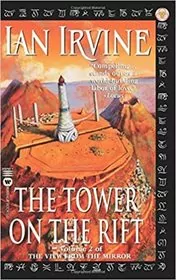
The Tower on the Rift
by Ian Irvine
1998
Thurkad has fallen, Karan is half-mad, and Llian has been abducted by Tensor, who wants the Twisted Mirror for revenge. The chase across the Dry Sea leads to forbidden magic, a lost fortress, and disaster on a world-changing scale.
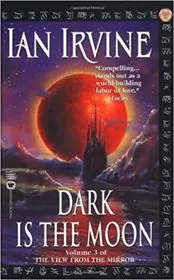
Dark is the Moon
by Ian Irvine
1999
Rulke escapes his prison and begins building an unstoppable war machine. As Llian falls into his trap and Karan becomes central to a terrible plan, the allies race to recover lost spells before the Way is opened.
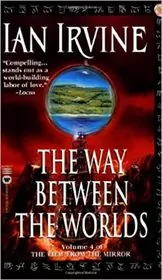
The Way Between the Worlds
by Ian Irvine
1999
The Forbidding is broken and creatures from the Void are spilling into Santhenar. Karan, Llian, and their uneasy allies face impossible choices as old betrayals surface and the fate of the Three Worlds hangs by a thread.
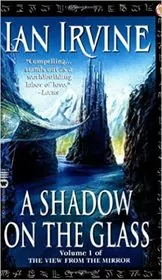
A Shadow on the Glass
by Ian Irvine
2000
Llian uncovers a deadly ancient secret just as Karan steals the treacherous Mirror of Aachan. Hunted across Santhenar by warlords and sorcerers, they stumble into a war that could tear three worlds apart.
The View from the Mirror books in chronological order
Series background & context
The View from the Mirror is where Ian Irvine's Three Worlds epic really begins. It opens on Santhenar, a world weighed down by ancient grudges, broken treaties, and the kind of buried history that never stays buried for long. Old humans, Aachim, Faellem, and Charon all carry scars from wars that should have ended ages ago. Then dangerous relics and older secrets begin to surface, and those old wounds split open again.
At the center of the series are Karan and Llian. Karan is brave, decent, and more vulnerable than she wants anyone to know, while Llian is a brilliant Tale-spinner whose curiosity and ambition can get him into as much trouble as any enemy. They are not larger-than-life conquerors. They are people trying to keep up while the world lurches toward disaster, and a lot of the series' pull comes from watching them grow, fail, and keep going.
The past never stays buried here.
The first book, A Shadow on the Glass, kicks things off with the Mirror of Aachan, a magical object so dangerous that nobody who wants it can be trusted with it. From there the story widens into a long struggle over who controls history, who understands the old betrayals, and who will survive if the barrier between worlds fails. There are necromancers, warlords, immortal manipulators, lost fortresses, haunted landscapes, and spells that feel genuinely risky. Magic in these books is not neat or comforting. It breaks minds, corrupts motives, and leaves damage behind.
What makes the quartet stand out is how much weight Irvine gives to history and consequence. Battles matter, but so do old lies, family curses, wounded pride, and the stories people tell themselves about what happened long ago. Llian's work as a chronicler is not just background color, it becomes part of the conflict. In this series, getting the story right can matter almost as much as winning a war.
The tone is classic epic fantasy, but it is not clean or heroic in a simple way. The books are big, crowded, and often morally messy. Allies make terrible decisions. Villains can be persuasive. Even the people trying to save the world are capable of vanity, fear, and weakness. If you like fantasy that combines long journeys, strange magic, old-world atmosphere, and characters who feel very human under pressure, this is the place to start with Irvine.
It is also the foundation stone for everything that follows in the wider Three Worlds cycle.






Edited by
Software engineer whose passion for tracking book recommendations from podcasts inspired the creation of MRB.
Lead investor at 3one4 Capital whose startup expertise and love for books helped shape MRB and its growth.
Comments
Did we miss something? Have feedback?
Help us improve this page by sharing your thoughts